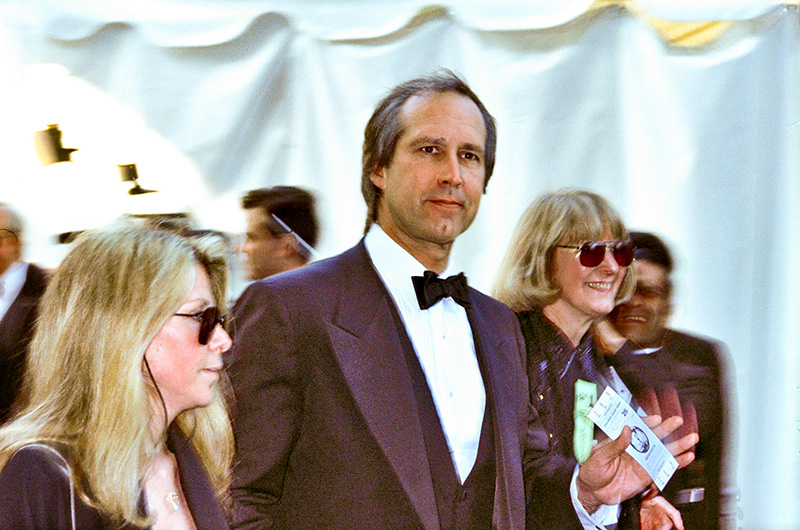
Terry Sweeney, the first openly gay cast member of Saturday Night Live, had some harsh words for actor Chevy Chase, a member of the show’s original cast who has returned to host multiple times.
"Chevy is one of those turds you flush down the toilet but it comes back up again and again," the 75-year-old Sweeney, best remembered for his exaggerated impression of First Lady Nancy Reagan, told the New York Post.
Sweeney’s comments come as a new CNN documentary, I'm Chevy Chase, and You're Not, directed by Marina Zenovich, is set to premiere on January 1 at 8 p.m.
The hit HBO Max series Heated Rivalry is drawing more online search interest than many real-life NHL stars, underscoring the show’s breakout popularity beyond traditional hockey audiences.
According to Cyd Zeigler of Outsports, Google Trends data from the past 30 days reveals that searches for the show’s fictional romantic leads, Shane Hollander and Ilya Rozanov, consistently outpaced searches for several prominent NHL players throughout most of December.
More strikingly, searches for "Heated Rivalry" briefly surpassed searches for "NHL" itself in late December, coinciding with the release of the Season 1 finale.
A New York City subway rider was slashed in the face earlier this month by an unidentified assailant who took offense to him kissing his transgender partner. The attack occurred around 7:50 p.m. on January 10 aboard a southbound No. 6 train as it traveled through Manhattan.
According to police, the 28-year-old victim was kissing his partner when the suspect began shouting anti-gay slurs. The verbal abuse quickly escalated into a physical confrontation. During the argument, the suspect struck the victim with a sharp object, causing a deep laceration on the right side of his face, according to New York CW affiliate WPIX.
These are challenging times for news organizations. And yet it’s crucial we stay active and provide vital resources and information to both our local readers and the world. So won’t you please take a moment and consider supporting Metro Weekly with a membership? For as little as $5 a month, you can help ensure Metro Weekly magazine and MetroWeekly.com remain free, viable resources as we provide the best, most diverse, culturally-resonant LGBTQ coverage in both the D.C. region and around the world. Memberships come with exclusive perks and discounts, your own personal digital delivery of each week’s magazine (and an archive), access to our Member's Lounge when it launches this fall, and exclusive members-only items like Metro Weekly Membership Mugs and Tote Bags! Check out all our membership levels here and please join us today!