Obama: Boy Scouts should allow gay members
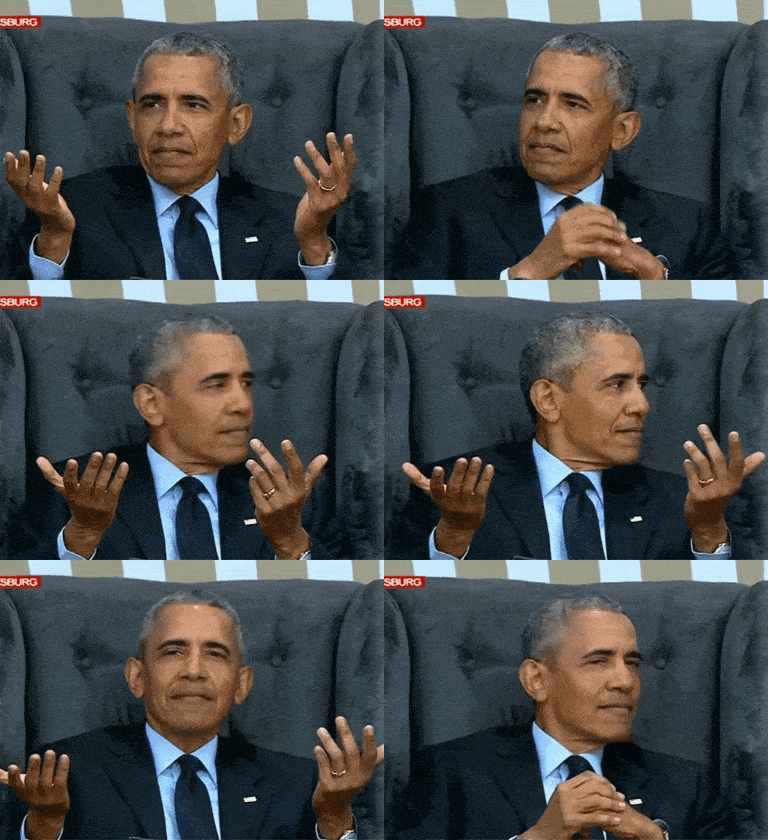
President Barack Obama reiterated his oppositions to the Boy Scouts’ longstanding ban on gay members and leaders during an interview with CBS News.
In an interview that aired shortly before the Super Bowl on Sunday, Obama was asked if the Boy Scouts of America should be open to gays. “Yes,” the president responded.
“My attitude is that gays and lesbians should have access and opportunity the same way everybody else does, in every institution and walk of life,” Obama said. “The Scouts are a great institution that are promoting young people and exposing them to opportunities and leadership that will serve people for the rest of their lives, and I think that nobody should be barred for that.”
When the BSA decided in August to uphold the 102-year-old organization’s discriminatory ban, Obama expressed through a spokesman his opposition to the BSA’s decision.
“The President believes the Boy Scouts is a valuable organization that has helped educate and build character in American boys for more than a century. He also opposes discrimination in all forms, and as such opposes this policy that discriminates on basis of sexual orientation,” White House spokesman Shin Inouye told Metro Weekly last August.
Obama’s remarks come days before the more than 70 members of the BSA’s board of directors are set to consider ending the national ban on out gay members and leaders on Wednesday, adding further pressure to the organization.
On Monday, a number of Boy Scouts who have battled the organization’s gay ban are set to deliver 1.4 million signatures collected by various Change.org petitions to the BSA’s national headquarters in Dallas calling for an end to the ban.
The Human Rights Campaign is also pressuring the BSA, running a full-page ad in the Dallas Morning News today urging readers to call on the BSA to end “anti-gay bigotry.” While some advocates have heralded the news that the BSA would end their national gay ban, HRC has argued the end of the national ban does not go far enough.
“While the proposed change is a step in the right direction, we can’t pretend that passing the buck to the local level will eliminate anti-gay discrimination because it won’t,” HRC communications vice president Fred Sainz said in a statement.
Indeed, lifting the national ban would allow local charters to decide if they will choose to exclude gay members, shifting discrimination to the local level.
“This would mean there would no longer be any national policy regarding sexual orientation, and the chartered organizations that oversee and deliver Scouting would accept membership and select leaders consistent with each organization’s mission, principles, or religious beliefs,” BSA spokesman Deron Smith said in a statement last week. “BSA members and parents would be able to choose a local unit that best meets the needs of their families.”
Supporters of the gay ban are also lobbying the BSA, arguing that ending the discriminatory ban would open the door to pedophilia and upend Scouting values.
In an “Alert” sent to supporters of the Family Research Council, FRC President Tony Perkins distributed the phone numbers of several members of the BSA’s board and a sample phone script for supporters of the gay ban to use.
“Please do not jeopardize the safety and moral integrity of Scouting in the interest of social activism,” the script reads in part. “The proposal to relegate the decision on homosexual leaders to local chartered organizations sends the wrong signal from the national body: that political correctness ultimately triumphs over character.”
The Mormon church, United Methodist Church and Catholic Church have the most Boy Scout members of the faith-based groups involved in the BSA. All three churches have stood by the BSA’s gay ban.


Support Metro Weekly’s Journalism
These are challenging times for news organizations. And yet it’s crucial we stay active and provide vital resources and information to both our local readers and the world. So won’t you please take a moment and consider supporting Metro Weekly with a membership? For as little as $5 a month, you can help ensure Metro Weekly magazine and MetroWeekly.com remain free, viable resources as we provide the best, most diverse, culturally-resonant LGBTQ coverage in both the D.C. region and around the world. Memberships come with exclusive perks and discounts, your own personal digital delivery of each week’s magazine (and an archive), access to our Member's Lounge when it launches this fall, and exclusive members-only items like Metro Weekly Membership Mugs and Tote Bags! Check out all our membership levels here and please join us today!