An image of Manning sent in a April 24, 2010, email coming out to her supervisor (Photo: Chelsea Manning, via U.S. Army file).
Transgender soldier and inmate at the U.S. Disciplinary Barracks Chelsea Manning announced late Tuesday night that she had ended a five-day hunger strike after receiving assurances from the U.S. Army that she will be able to receive the recommended treatment for gender dysphoria. That treatment will involve gender confirmation surgery, which was recommended by her psychologist in April.
Since first being taken into custody in 2010, Manning says she has been subjected to long stretches in solitary confinement during her court martial and has been denied medical treatment for gender dysphoria. After suing to receive that treatment, the Army allowed her to receive hormone therapy. But it denied her the ability to get confirmation surgery or to grow her hair longer than the prescribed length for male prisoners at the all-male Disciplinary Barracks. Those denials led Manning to launch the hunger strike, even though she noted there was a possibility she could become incapacitated or die as a result.
“I am unendingly relieved that the military is finally doing the right thing,” Manning said in a statement. “I applaud them for that. This is all that I wanted — for them to let me be me. But it is hard not to wonder why it has taken so long. Also, why were such drastic measures needed? The surgery was recommended in April 2016. The recommendations for my hair length were back in 2014. In any case, I hope this sets a precedent for the thousands of trans people behind me hoping they will be given the treatment they need.”
Manning’s lawyer with the American Civil Liberties Union, Chase Strangio, released his own statement celebrating the decision to permit his client to receive gender confirmation surgery.
“This is a monumental day for Chelsea, who can now enjoy some peace knowing that critically needed medical care is forthcoming,” Strangio said. “This medical care is absolutely vital for Chelsea as it is for so many transgender people — in and out of prison — who are systemically denied treatment solely because they are transgender. Thankfully the government has recognized its constitutional obligation to provide Chelsea with the medical care that she needs and we hope that they will act without delay to ensure that her suffering does not needlessly continue.”
But Strangio also noted that the government has not acquiesced on the issue of hair length. For many transgender people, part of their treatment for gender dysphoria involves accepting their identity by altering their physical appearance or adopting grooming standards to better reflect their gender identity. He also criticized the government for subjecting Manning to a disciplinary board hearing stemming from a suicide attempt in July, which Strangio argues was caused by the previous denial of treatment.
“Given the recognition of Chelsea’s health care needs, we hope that she is immediately permitted to grow her hair consistent with the standard for female military prisoners and that all charges related to her suicide attempt and the investigation that followed are dropped,” he said.
Manning is currently serving a 35-year prison sentence at the Disciplinary Barracks in Fort Leavenworth, Kansas, for releasing more than 700,000 government files containing sensitive information to the online government watchdog site Wikileaks. Manning’s leak of classified document is still considered one of the largest such leaks in American history. She has tried to appeal her conviction, arguing that she was acting as a “whistleblower” in bringing the information to the public’s attention.
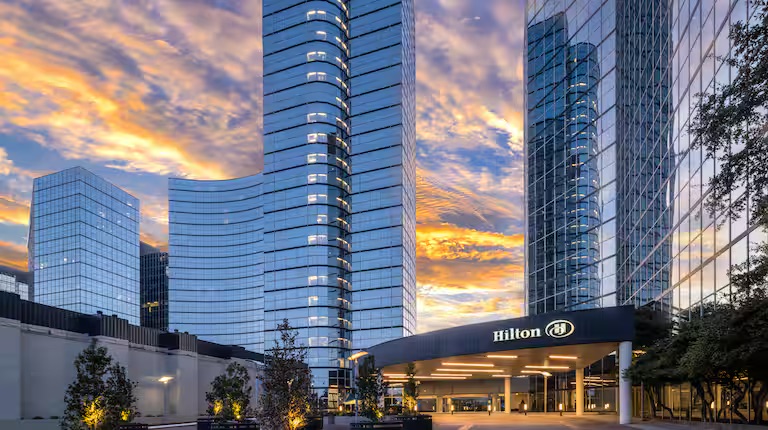
A transgender woman has filed a lawsuit against hotel giant Hilton, alleging that she was assaulted by a security guard at the Hilton Dallas Lincoln Centre while she was a registered guest.
According to the complaint, filed in the 192nd Civil District Court in Dallas County, Kimberly Barnett, an Afro-Latina transgender woman from Nebraska, was staying at the hotel in late June while attending Dallas Pride Weekend and other LGBTQ events.
Barnett returned to the Hilton Dallas Lincoln Centre around 3:45 a.m. on June 24 and attempted to "valet her vehicle," according to the lawsuit.
In late November, the University of Oklahoma placed Mel Curth on administrative leave after the transgender graduate teaching assistant gave a student a zero on an essay about gender roles.
The essay cited the Bible to defend traditional gender roles and described transgender people as "demonic." Curth and the course's instructor, Megan Waldron, said the paper failed to meet basic academic standards due to a lack of empirical evidence. Both noted that the paper cited no scholarly sources and failed to offer an evidence-based critique of the assigned article, which argued that children who do not conform to rigid gender stereotypes are more likely to face bullying and negative mental health outcomes.
A New York City subway rider was slashed in the face earlier this month by an unidentified assailant who took offense to him kissing his transgender partner. The attack occurred around 7:50 p.m. on January 10 aboard a southbound No. 6 train as it traveled through Manhattan.
According to police, the 28-year-old victim was kissing his partner when the suspect began shouting anti-gay slurs. The verbal abuse quickly escalated into a physical confrontation. During the argument, the suspect struck the victim with a sharp object, causing a deep laceration on the right side of his face, according to New York CW affiliate WPIX.
These are challenging times for news organizations. And yet it’s crucial we stay active and provide vital resources and information to both our local readers and the world. So won’t you please take a moment and consider supporting Metro Weekly with a membership? For as little as $5 a month, you can help ensure Metro Weekly magazine and MetroWeekly.com remain free, viable resources as we provide the best, most diverse, culturally-resonant LGBTQ coverage in both the D.C. region and around the world. Memberships come with exclusive perks and discounts, your own personal digital delivery of each week’s magazine (and an archive), access to our Member's Lounge when it launches this fall, and exclusive members-only items like Metro Weekly Membership Mugs and Tote Bags! Check out all our membership levels here and please join us today!







You must be logged in to post a comment.