Amber McLaughlin – Jeremy S. Weis/Federal Public Defender Office, via Death Penalty Action Network.
The first openly transgender woman set to be executed in the United States has asked Missouri’s governor for clemency, citing mental health issues.
Amber McLaughlin, 49, has asked Missouri Gov. Mike Parson to block her execution, scheduled for Jan. 3, 2023 in Bonne Terre, Missouri.
McLaughlin was convicted in the 2003 killing of 45-year-old Beverly Guenther, who was raped and stabbed to death in St. Louis County. McLaughlin and Guenther had dated on and off for about a year prior to her death, and even lived together briefly, but a messy break-up led Guenther to seek restraining orders against McLaughlin, according to the St. Louis Post-Dispatch.
McLaughlin was arrested in connection with Guenther’s disappearance, and led police to the body, which McLaughlin had driven to an area of south St. Louis close to the Mississippi River. McLaughlin had thrown Guenther’s clothes in a garbage bin before driving off, but police were able to make DNA matches based on blood in McLaughlin’s car and found McLaughlin’s DNA on Guenther’s body.
McLaughlin was found guilty of the murder, but a jury deadlocked on whether to impose the death penalty or sentence McLaughlin to life in prison without parole. Judge Steven Goldman then sentenced McLaughlin to death, exercising a provision — which only exists in Missouri and Indiana — of the law that allows a judge to impose the death penalty if a jury deadlocks on punishment.
Defenders of McLaughlin have expressed concerns that the jury in McLaughlin’s trial was never presented with “crucial mental health evidence” that could have influenced their decision on how to punish her.
U.S. Reps. Cori Bush and Emanuel Cleaver recently urged Parson to stop the execution, citing those concerns. A federal judge had previously ordered a new sentencing hearing in 2016, citing separate concerns about the effectiveness of McLaughlin’s lawyers and faulty jury instructions. But a federal appeals court reinstated the death penalty in 2021.
McLaughlin’s defense lawyers have argued that McLaughlin, who has an IQ of 82, has “borderline intellectual and personality disorders, intermittent explosive disorder and learning disorders,” as well as deficient language skills and trouble with cognitive ability and common sense.
In their letter seeking clemency, they also cited her traumatic childhood — including a foster parent who allegedly rubbed feces in McLaughlin’s face, an adoptive father who was a policeman, who used a taser and nightstick on McLaughlin, and an adoptive mother who forced McLaughlin and her siblings to drown pregnant pet cats — as contributing to McLaughlin’s lengthy criminal history prior to her relationship with Guenther, and her ongoing psychological problems, including suicidal ideation. They also claimed McLaughlin has expressed remorse for the murder.
A petition sponsored by Death Penalty Action Network, calling on Parson to halt the execution and commute her sentence to life in prison, has garnered over 4,300 signatures, calling her sentence unconstitutional due to the loophole exploited by Judge Goldman, citing the mental health issues that were never brought up at trial, and casting aspersions on former St. Louis County prosecutor Robert McCullouch for the number of individuals sentenced to death during his tenure.
If the execution is not halted, McLaughlin would be the first transgender inmate executed in the United States, according to the anti-execution Death Penalty Information Center.
McLaughlin’s scheduled execution would be the third to take place in Missouri in the past nine months — an increase from recent years. Missouri has executed the fifth-highest number of people — 93 — of any state since the U.S. Supreme Court reinstated capital punishment in 1976, according to the Death Penalty Information Center.
The prisoners involved in Missouri’s two executions in 2022 — those of Kevin Johnson, convicted of killing a St. Louis area police officer he blamed for his younger brother’s death; and Carmen Deck, convicted of killing a couple during a robbery at their home — previously made similar requests of Parson, who declined to block either execution, according to CBS News. A fourth prisoner, Leonard Taylor, is set to be executed on Feb. 7, and Missouri’s attorney general has asked the Missouri Supreme Court to set execution dates for two other inmates sometime next year.
Kelli Jones, a spokeswoman for Parson, said the governor’s office is reviewing McLaughlin’s request for clemency carefully.
“These are not decisions that the Governor takes lightly,” Jones told CBS.
McLaughlin, 49, is currently being held in Potosi Correctional Center, where all capital punishment inmates are held. She is being housed in the men’s prison, based on Missouri Department of Corrections’ policy, which bases assignments on “genitalia rather on gender identity,” a department spokeswoman told the Post-Dispatch.
McLaughlin’s lawyers said she was previously rooming with another transgender woman but is not living in isolation ahead of her execution date.
While in prison, McLaughlin befriended Jessica Hicklin, a transgender inmate paroled last year who won a federal lawsuit challenging the Missouri Department of Corrections’ “freeze-frame” policy, in which transgender inmates were denied gender-affirming care unless they had been receiving hormone therapy prior to their incarceration, as unconstitutional back in 2018.
Hicklin, who would visit McLaughlin for an hour every Friday at the Potosi Correctional Center, told the Post-Dispatch that McLaughlin — who has since been diagnosed with gender dysphoria by two doctors, but has not received hormone therapy — would talk about how she felt “trapped” and about “how hard life was living.”
“She just wanted somebody to care for her and somebody to love her and somebody to recognize her for who she is,” Hicklin said.
McLaughlin told the newspaper in a phone interview that people should know she is mentally ill, and sees her pending execution as a “sad thing,” adding: “I don’t agree with it.”
Nepal has elected its first-ever transgender woman to parliament, with the election commission confirming last week that 37-year-old LGBTQ rights advocate Bhumika Shrestha will serve as a lawmaker from the centrist Rastriya Swatantra Party, which secured 182 of 275 seats earlier this month.
In Nepal, voters cast two ballots in parliamentary elections: one elects 165 members from single-member constituencies using first-past-the-post voting, while the other fills 110 seats from party lists distributed proportionally based on the overall vote.
Jer Auntey Pleasant, a 25-year-old San Antonio man, has been sentenced to four concurrent 50-year prison terms -- totaling 200 years -- for the murders of 54-year-old Larry Wilson and 22-year-old Joseph West, whom he met through the gay dating app Grindr, as well as for shooting a third victim during an attempted robbery and sexually assaulting a minor.
The sentences were imposed by Judge Kristina Escalona of Texas' 186th District Court.
According to prosecutors, Pleasant first used the Grindr app to meet a victim in March 2022. When the two met, Pleasant allegedly shot the victim during a robbery attempt. In July of that year, he allegedly sexually assaulted a 13-year-old, with DNA evidence identifying him as the perpetrator, the district attorney's office said.
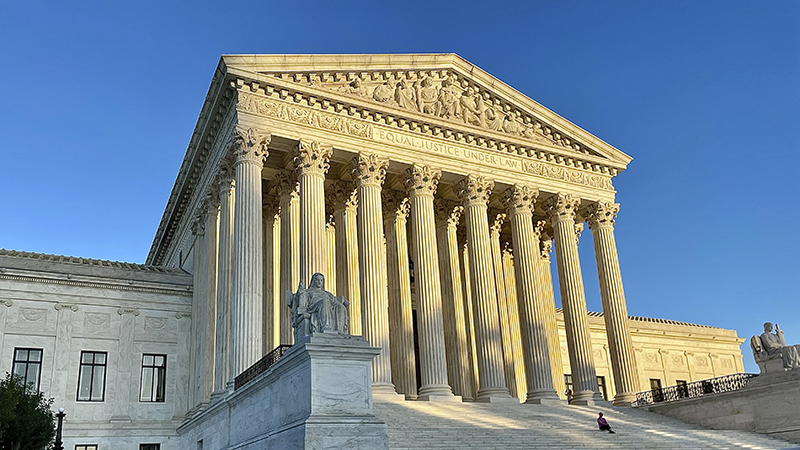
The U.S. Supreme Court has struck down Colorado’s ban on conversion therapy for minors, siding with a Christian "talk therapist" who argued the law violated her First Amendment rights.
The 8-1 ruling doesn't strike down, but effectively undermines conversion therapy bans in 22 other states and the District of Columbia by establishing a precedent in which therapists’ conversations with patients can be deemed a form of constitutionally protected speech.
The court found that Colorado’s law, though limited to licensed professionals, does not override free speech protections, and that the First Amendment protects therapists’ right to speak freely, even when their views conflict with government policy. Writing for the majority, Justice Neil Gorsuch said that "professional speech" is not a separate category and is entitled to protection.
These are challenging times for news organizations. And yet it’s crucial we stay active and provide vital resources and information to both our local readers and the world. So won’t you please take a moment and consider supporting Metro Weekly with a membership? For as little as $5 a month, you can help ensure Metro Weekly magazine and MetroWeekly.com remain free, viable resources as we provide the best, most diverse, culturally-resonant LGBTQ coverage in both the D.C. region and around the world. Memberships come with exclusive perks and discounts, your own personal digital delivery of each week’s magazine (and an archive), access to our Member's Lounge when it launches this fall, and exclusive members-only items like Metro Weekly Membership Mugs and Tote Bags! Check out all our membership levels here and please join us today!








You must be logged in to post a comment.