A bill introduced in Oklahoma would not only bar doctors from prescribing transition-related health care treatments to youth suffering from gender dysphoria, but would criminalize any medical provider who prescribes such treatments to adults in their late teens and twenties.
The measure, introduced by Sen. David Bullard (R-Durant), would make any physician who prescribes gender-affirming treatments for gender dysphoria to anyone under the age of 26 — or who refers a patient to a medical professional who provides such treatments — guilty of a felony.
The law would allow doctors who prescribe such treatments to be prosecuted for up to 40 years after prescribing the treatments, and would allow anyone who undergoes such treatments but later experiences regret to sue within that same 40-year time period.
Additionally, the law would deem prescribing any such procedures or treatments as “unprofessional conduct” that would result in the loss of the doctor’s license to practice.
The bill would bar public funds from being granted to any organization that provides such procedures to anyone under the age of 26, and gender-affirming treatments — whether puberty blockers, hormone therapy, or gender confirmation surgery — could not be performed in any facility owned by the state or a local government, or recommended by any physician or health care professional who is employed by the state or a local government.
As is common with most bills barring gender-affirming care, the bill grants an exemption for doctors to recommend surgery or other procedures that seek to force intersex individuals to alter their bodies in order to conform to a specific assigned sex. Additionally, there is an exemption for doctors treating people who have experienced complications from undergoing transition-related care, and another exemption that would allow certain procedures, such as a hysterectomy, that are needed to treat a disorder or illness that would otherwise place the patient at risk of death or serious injury.
“The bill is a restriction on transgender medicine and procedures just making sure that we have it restricted to an age where cognitive development is mature,” Bullard, who is a teacher by profession, told Oklahoma City-based CBS affiliate KWTV. “The brain is not fully developed until 25.”
Billard previously authored a bill last year that became law, requiring all restrooms and changing rooms in public schools to be expressly designated for a specific biological sex.
A separate, but similar, bill filed by State Rep. Jim Olsen (R-Sallisaw) last year would bar physicians from providing gender-affirming treatments to any patient under the age of 21, carrying a penalty of a $100,000 fine and up to a decade in prison for any violations.
Bullard noted that doctors who prescribe gender-affirming care to individuals who are otherwise legally recognized as adults have a lot to lose by violating the law, endangering their ability to practice and opening themselves up to lawsuits from former patients.
“Their Hippocratic oath…was ‘to do no harm’ and so that is what this surgery or these procedures do,” Bullard said.
Critics of the bill say that the bill’s penalties will effectively inhibit any practicing physician from recommending any gender-affirming treatments, and could lead some to refuse to treat transgender individuals altogether — effectively leaving those suffering from gender dysphoria on their own.
“We know things like puberty blockers can have a dramatic difference in someone’s ability to stay alive. To disrupt suicidality if they are a transgender young person,” Nicole McAfee, the executive director of Freedom Oklahoma, told KWTV.
“There is a lot of debate about different ages, [but] any of these bans are harmful,” added McAfee. “What we are talking about is an expansion of the Oklahoma legislature choosing to disrupt best practice medical care in this case for transgender people.”
A Kansas judge has temporarily blocked the state from enforcing its law banning minors from accessing non-surgical transition-related treatments such as hormones or puberty blockers.
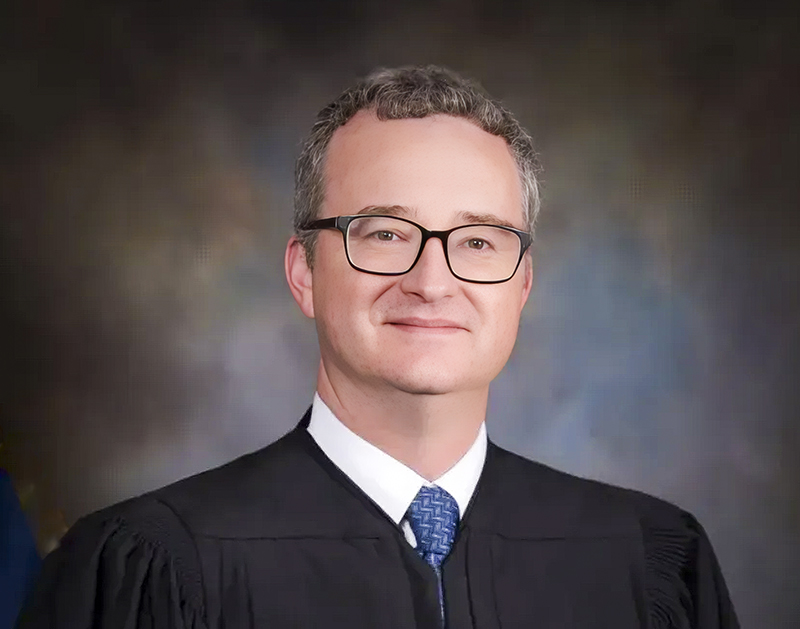
On May 15, Judge Carl Folsom III of the State District Court in Douglas County granted a temporary injunction blocking the state from enforcing the law, finding that it likely violated parents' rights to make decisions about their children's health and wellbeing.
In his 117-page ruling, Folsom -- who was appointed by Democratic Gov. Laura Kelly -- wrote that transgender children were likely to suffer "irreparable harm" if the ban on transition-related hormonal treatments remained in effect. He also cited testimony asserting that gender-affirming, non-surgical treatments for minors are safe, effective, and medically credible.
A Mississippi high school is facing backlash after a Facebook post celebrating the salutatorian of its 2026 graduating class referred to the transmasculine student by his deadname and appeared to digitally alter his face to make him appear more feminine.
The post, published May 17 by D'Iberville High School in Biloxi, Mississippi, congratulated student Jonas Hole on his achievement. The accompanying photo showed Hole in his U.S. Army Junior ROTC uniform.
"Pride. Tradition. Excellence. Congratulations to our DHS Salutatorian," the post reads, using Hole's deadname.
Colorado has approved a bill allowing survivors of conversion therapy to sue licensed providers regardless of when the therapy occurred.
The measure, sponsored by State Reps. Alex Valdez (D-Denver), an out gay man, and Karen McCormick (D-Hygiene), along with Sens. Lisa Cutter (D-Littleton) and Kyle Mullica (D-Northglenn), allows people subjected to sexual orientation or gender identity change efforts to sue licensed mental health professionals for damages. Entities that hired or supervised providers engaging in conversion therapy could also be sued.
These are challenging times for news organizations. And yet it’s crucial we stay active and provide vital resources and information to both our local readers and the world. So won’t you please take a moment and consider supporting Metro Weekly with a membership? For as little as $5 a month, you can help ensure Metro Weekly magazine and MetroWeekly.com remain free, viable resources as we provide the best, most diverse, culturally-resonant LGBTQ coverage in both the D.C. region and around the world. Memberships come with exclusive perks and discounts, your own personal digital delivery of each week’s magazine (and an archive), access to our Member's Lounge when it launches this fall, and exclusive members-only items like Metro Weekly Membership Mugs and Tote Bags! Check out all our membership levels here and please join us today!








You must be logged in to post a comment.