Utah Gov. Spencer Cox – Photo: Utah Reps, via Flickr
Utah Republican Gov. Spencer Cox has signed a bill into law that bans gender confirmation surgeries and puts a moratorium on hormone treatments for any new transgender patients under the age of 18.
The bill, SB 16, introduced by Sen. Mike Kennedy (R-Alpine), a practicing family physician, forbids transition-related surgical treatments for minors and places a moratorium, effective immediately, on hormonal treatments for minors who have not been treated for gender dysphoria for at least six months.
Those minors who have previously been diagnosed and have been receiving puberty blockers will continue to be able to receive treatment uninterrupted.
The bill requires the Department of Health and Human Services to conduct a “systematic review” of medical evidence regarding the short- and long-term effects of transition-related hormone treatments for minors and make recommendations to the legislature about when hormone treatments should and should not be recommended by a physician.
It also requires healthcare providers to meet certain requirements before prescribing hormone treatments for the purposes of transition.
The bill, which passed the Senate on a largely party-line vote, was approved by the House in place of a more stringent bill, HB 132, which would have imposed an across-the-board ban on all transition-related treatments for minors suffering from gender dysphoria.
Proponents of the bill claim it’s needed to protect minors from pursuing potentially irreversible procedures that they may later come to regret if their feelings of gender dysphoria resolve on their own.
They also claim that pausing such treatments, coupled with the mandated medical review called for in the bill, allows doctors to better examine the long-term effects of gender-affirming treatments and determine whether it is better to forego them.
But critics of SB 16 note that, because there is no sunset date on the moratorium, it effectively acts as a ban on transgender youth accessing puberty blockers, meaning transgender individuals would have to go through regular puberty and wait until adulthood to begin hormone treatments for the purposes of transitioning.
They also note that surgical treatments are rarely recommended or performed on minors.
“Legislation that impacts our most vulnerable youth requires careful consideration and deliberation. While not a perfect bill, we are grateful for Sen. Kennedy’s more nuanced and thoughtful approach to this terribly divisive issue,” Cox said in a statement after signing the bill, according to Salt Lake City FOX affiliate KSTU.
“More and more experts, states and countries around the world are pausing these permanent and life-altering treatments for new patients until more and better research can help determine the long-term consequences,” Cox added. “We will continue to push the Legislature for additional resources to organizations that work to help this important Utah community. While we understand our words will be of little comfort to those who disagree with us, we sincerely hope that we can treat our transgender families with more love and respect as we work to better understand the science and consequences behind these procedures.”
The night before Cox signed the bill into law, a few dozen LGBTQ youth and allies protested outside the governor’s office and urged him to veto the bill.
During the House committee hearing on both SB 16 and HB 132, lawmakers heard from people who favor and oppose allowing youth to access gender-affirming care.
“I am not delusional. I am not confused. I am transgender whether you agree with me or not, and I do not need your protection,” Oliver Day, a 16-year-old transgender male, testified before the House Health and Human Services Committee, according to the Deseret News.
Day said he spent the first 14 years of his life “trapped inside a body I hated. A body that did not reflect who I truly was,” arguing that, for some minors, gender-affirming care could prevent them from feelings of depression, anxiety, or suicidal ideation.
“Giving trans people the medical access for what they need can save a life, because I know that it saved mine,” he said.
But others, like Erin Brewer, who described herself as formerly transgender, argued in favor of the more restrictive HB 132, on the grounds that there need to be more guardrails to prevent minors from accessing medical treatments they may eventually regret.
Brewer claimed her own feelings of gender dysphoria stemmed from a childhood sexual assault, rather than actually being trangender.
“I have no doubt that if I had taken puberty blockers and cross-sex hormones, I would have done everything I could have to obtain them, including threatening suicide, because I was that desperate to change myself,” she said. “It would have been so much easier to kill myself as a girl in [the] attempt to be a boy … rather than work through the difficult feelings of my trauma.”
LGBTQ groups have largely denounced the bill, with Equality Utah suggesting that it may pursue legal action against the new law, echoing legal fights in other states that have imposed such restrictions.
“This is essentially a ban on access to medical care for transgender youth,” Marina Lowe, the policy director for Equality Utah, told the Deseret News. “Everywhere one has been passed, there is litigation because it’s the government stepping in between parents and children and their doctors.”
The American Civil Liberties Union, also hinted at possible future legal action.
“This is a devastating and dangerous violation of the rights and privacy of transgender Utahns, their families, and their medical providers,” Chase Strangio, deputy director for transgender justice at the ACLU’s LGBTQ & HIV Project, said in a statement.
“Claims of protecting our most vulnerable with these laws ring hollow when lawmakers have trans children’s greatest protectors — their parents, providers, and the youth themselves — pleading in front of them not to cut them off from their care. I want transgender youth in Utah to know this fight is not over, and we won’t stop defending your autonomy and freedom until each and every one of you can access the care you need.”
The Human Rights Campaign, the nation’s top LGBTQ advocacy organization, blasted Cox for signing the bill, noting that gender transition takes many forms and is based on an individual patients’ needs.
HRC noted that “social transition,” such as changes in name, pronouns, style of dress, and outward gender presentation — all of which involve no medical interventions but can be considered a form of treatment for gender dysphoria — are not “irreversible.”
Additionally, the organization argued that transition-related medical treatments are usually only prescribed when a person has severe forms of gender dysphoria that endanger their well-being or life, and, as such, are medically necessary.
Such treatments are typically made in consultation with medical experts, mental health professionals, and minors’ parents, and are supported by a number of major medical organizations.
“In signing this bill into law, Governor Cox has directly placed the LGBTQ+ youth he previously claimed to want to protect in harm’s way,” Cathryn Oakley, HRC’s state legislative director and senior counsel, sad in a statement. “Denying transgender and non-binary youth — an extremely vulnerable group already — access to medically necessary, age-appropriate and scientifically supported medical care is dangerous, spiteful, and flies in the face of the recommendations of every major medical group in this country.
“Parents, doctors, and transgender youth together discuss possible care and make the deeply individualized decision about what kind of care is most appropriate for each young person.”
A Kansas judge has temporarily blocked the state from enforcing its law banning minors from accessing non-surgical transition-related treatments such as hormones or puberty blockers.
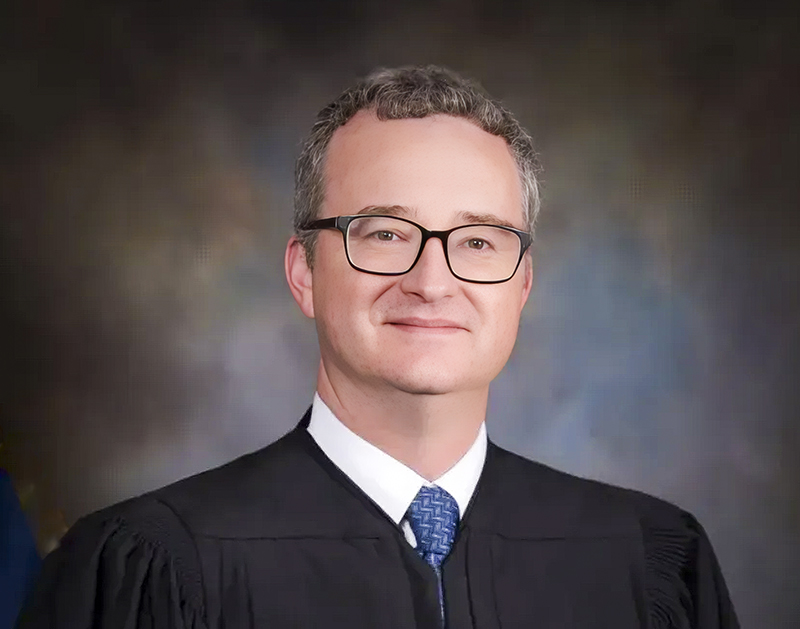
On May 15, Judge Carl Folsom III of the State District Court in Douglas County granted a temporary injunction blocking the state from enforcing the law, finding that it likely violated parents' rights to make decisions about their children's health and wellbeing.
In his 117-page ruling, Folsom -- who was appointed by Democratic Gov. Laura Kelly -- wrote that transgender children were likely to suffer "irreparable harm" if the ban on transition-related hormonal treatments remained in effect. He also cited testimony asserting that gender-affirming, non-surgical treatments for minors are safe, effective, and medically credible.
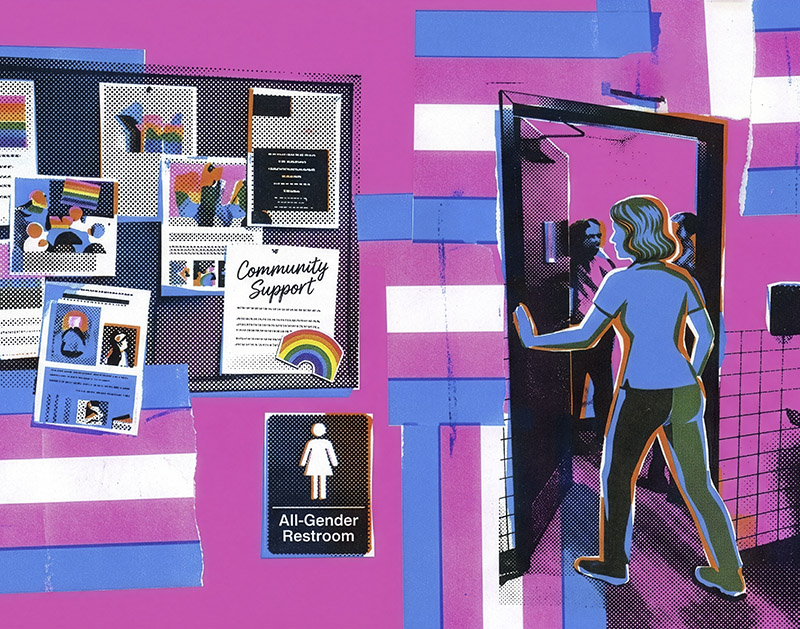
A federal judge has granted a preliminary injunction blocking Idaho from enforcing a law that could penalize transgender people with up to five years in prison for using public bathrooms that do not align with their assigned sex at birth.
The law, known as HB 752, was set to take effect on July 1 after being signed by Republican Gov. Brad Little earlier this year. However, the injunction bars police from enforcing the law's bathroom restrictions. It does not apply to similar restrictions on access to changing rooms, which the lead plaintiffs -- six transgender Idahoans -- have not challenged.
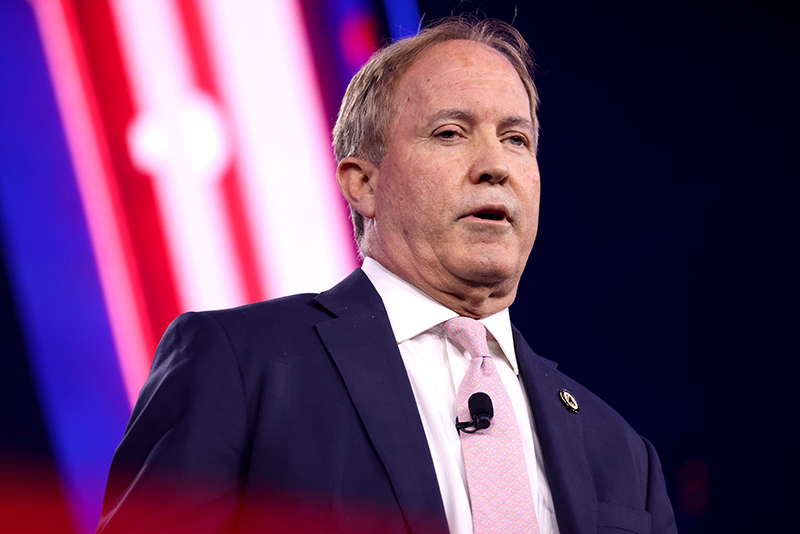
Texas Attorney General Ken Paxton has secured a settlement requiring Texas Children's Hospital to establish what he called the nation's first-ever "detransition clinic" for patients who previously received gender-affirming care.
Under the settlement, negotiated with Paxton's office and the U.S. Department of Justice, Texas Children's must provide free medical care to patients who underwent gender transition procedures, according to a press release.
The clinic is intended to help patients stop hormone treatments or seek medical care related to detransitioning. Under the settlement, Texas Children's will fund all services provided through the clinic for its first five years.
These are challenging times for news organizations. And yet it’s crucial we stay active and provide vital resources and information to both our local readers and the world. So won’t you please take a moment and consider supporting Metro Weekly with a membership? For as little as $5 a month, you can help ensure Metro Weekly magazine and MetroWeekly.com remain free, viable resources as we provide the best, most diverse, culturally-resonant LGBTQ coverage in both the D.C. region and around the world. Memberships come with exclusive perks and discounts, your own personal digital delivery of each week’s magazine (and an archive), access to our Member's Lounge when it launches this fall, and exclusive members-only items like Metro Weekly Membership Mugs and Tote Bags! Check out all our membership levels here and please join us today!









You must be logged in to post a comment.