Screenshot of the U.S. Census Bureau website – Photo: U.S. Census Bureau
The U.S. Census Bureau plans to test questions designed to collect information on respondents’ sexual orientation and gender identity on its American Community Survey (ACS) starting this summer and continuing into next year.
The ACS is an ongoing annual survey that collects detailed demographic, housing, and socioeconomic data from respondents with the intent of providing in-depth information about various communities within the United States and how they are changing.
The statistics from the ACS are frequently used by the federal government, private-sector businesses, and not-for-profit organizations to allocate needed funding or services, address shifts in demographics, or plan for emergencies.
As part of the process for adding new questions to the ACS, the Census Bureau tests potential questions to evaluate the quality of data collected.
The bureau has said it is testing the questions on sexual orientation and gender identity “to meet the needs of other federal agencies that have expressed interest in or have identified legal uses for the information, such as enforcing civil rights and equal employment measures.”
Public comments on the proposed questions are encouraged and are being accepted through May 30.
The bureau will then submit the questions to the Office of Management and Budget for final approval before the test surveys can begin this summer.
The proposed questions on the survey follow the protocols of the ACS, with one person asked to respond to the survey on behalf of an entire household.
The demographic questions, including those about sexual orientation or gender identity, are asked about people 15 years of age or older. The survey can be responded to online, by paper questionnaire, or by phone.
Within the survey, one question asks about a household member’s assigned sex at birth, with a follow-up question inquiring about their gender. Respondents have the following options: male, female, transgender, nonbinary, or “uses a different term,” with a box to write in any additional terms.
A separate question asks about household members’ sexual orientation, offering the following choices: “gay or lesbian,” “straight, that is not gay or lesbian,” “bisexual,” and a fourth write-in option for any different term used by the individual.
Currently, the only question related to LGBTQ identity on census surveys asks whether a respondent is married to someone of the same sex.
Last September, the Census Bureau asked the Biden administration for permission to begin the testing phase of questions on sexual orientation and gender identity.
The public comment period opened in February 2024, with most comments being generally supportive of the inclusion of LGBTQ-centric questions — though some criticized the wording of the possible responses.
Gary Gates, a retired demographer, told the Associated Press in February that he supported additional questions to provide a greater understanding of LGBTQ communities in the United States.
But he took issue with the possible responses, including the designation of a person as “straight, that is not gay or lesbian.”
“The phrase is patently offensive,” Gates said at the time. “Not being gay is hardly an accurate definition of a straight identity…. Why emphasize that they specifically are not gay? It is simply not an adequate description of straight identity.”
Other commenters criticized the separation of “transgender” identity from “male” or “female,” noting that many transgender people identify as male or female in their daily lives.
There were also criticisms for the lack of inclusion of intersex individuals in gender identity, and the omission of asexual or pansexual from the options for sexual orientation — although others argued that asexual and pansexual can be included in the write-in space for “uses a different term.”
Not all people are supportive of the change.
Some conservatives have taken issue with the mere inclusion of any LGBTQ-related questions in Census Bureau surveys.
Republican Sens. Marco Rubio (Fla.) and J.D. Vance (Ohio) wrote a letter to Robert Santos, the director of the Census Bureau, opposing “polarizing and unscientific questions on gender identity.”
The senators claimed the inclusion of questions about gender identity was “politicizing” the ACS.
“Biology determines gender, not subjective belief, and the bureau should not jeopardize the legitimacy of crucial statistical information by endorsing unscientific and untrue concepts like gender identity,” they wrote.
“For generations, the American people have looked to the U.S. Census as an unbiased, authoritative source describing the objective reality of life in America. It is not worth sacrificing this trust to advance controversial social ideas through government surveys.”
Two men were beaten and subjected to anti-gay slurs in what police believe was a bias-motivated attack in downtown Manhattan last month.
The victims, ages 31 and 37, were walking on Broadway near West 29th Street around 7:30 p.m. on July 31 when two men approached them and made anti-LGBTQ remarks, according to the New York Daily News.
The assailants then repeatedly punched and kicked the victims while shouting homophobic slurs, according to police. The suspects fled south on Broadway.
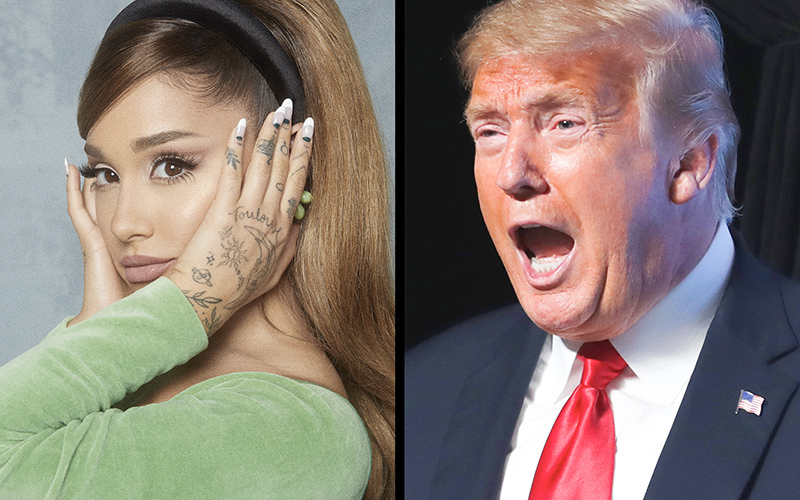
For the second time this summer, Ariana Grande has rebuked President Donald Trump's administration for using her music in a social media post.
The latest dispute erupted after the Team Trump account added Grande's 2024 hit "We Can't Be Friends (Wait for Your Love)" to a TikTok post that repurposed one of its lyrics.
The post quotes the lyric "Me and my truth we sit in silence..." before adding: "...men can't have babies and should never compete in women's sports."
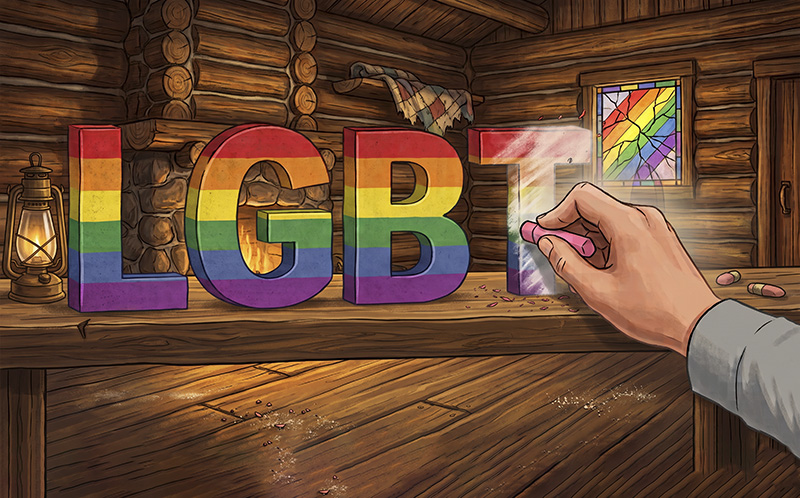
The board of directors of Log Cabin Republicans, a gay conservative political advocacy group that touts itself as dedicated to "building a more inclusive GOP," announced that it was dropping support for transgender rights from its mission.
Since its founding in the late 1970s, the group has promoted conservative values and policies -- grounded in the constitutional principles of equal protection under the law, limited government, and individual freedom -- while advocating for equal rights and fairness regardless of sexual orientation.





The U.S. Census Bureau plans to test questions designed to collect information on respondents’ sexual orientation and gender identity on its American Community Survey (ACS) starting this summer and continuing into next year.
The ACS is an ongoing annual survey that collects detailed demographic, housing, and socioeconomic data from respondents with the intent of providing in-depth information about various communities within the United States and how they are changing.
The statistics from the ACS are frequently used by the federal government, private-sector businesses, and not-for-profit organizations to allocate needed funding or services, address shifts in demographics, or plan for emergencies.
As part of the process for adding new questions to the ACS, the Census Bureau tests potential questions to evaluate the quality of data collected.
The bureau has said it is testing the questions on sexual orientation and gender identity “to meet the needs of other federal agencies that have expressed interest in or have identified legal uses for the information, such as enforcing civil rights and equal employment measures.”
Public comments on the proposed questions are encouraged and are being accepted through May 30.
The bureau will then submit the questions to the Office of Management and Budget for final approval before the test surveys can begin this summer.
The proposed questions on the survey follow the protocols of the ACS, with one person asked to respond to the survey on behalf of an entire household.
The demographic questions, including those about sexual orientation or gender identity, are asked about people 15 years of age or older. The survey can be responded to online, by paper questionnaire, or by phone.
Within the survey, one question asks about a household member’s assigned sex at birth, with a follow-up question inquiring about their gender. Respondents have the following options: male, female, transgender, nonbinary, or “uses a different term,” with a box to write in any additional terms.
A separate question asks about household members’ sexual orientation, offering the following choices: “gay or lesbian,” “straight, that is not gay or lesbian,” “bisexual,” and a fourth write-in option for any different term used by the individual.
Currently, the only question related to LGBTQ identity on census surveys asks whether a respondent is married to someone of the same sex.
Last September, the Census Bureau asked the Biden administration for permission to begin the testing phase of questions on sexual orientation and gender identity.
The public comment period opened in February 2024, with most comments being generally supportive of the inclusion of LGBTQ-centric questions — though some criticized the wording of the possible responses.
Gary Gates, a retired demographer, told the Associated Press in February that he supported additional questions to provide a greater understanding of LGBTQ communities in the United States.
But he took issue with the possible responses, including the designation of a person as “straight, that is not gay or lesbian.”
“The phrase is patently offensive,” Gates said at the time. “Not being gay is hardly an accurate definition of a straight identity…. Why emphasize that they specifically are not gay? It is simply not an adequate description of straight identity.”
Other commenters criticized the separation of “transgender” identity from “male” or “female,” noting that many transgender people identify as male or female in their daily lives.
There were also criticisms for the lack of inclusion of intersex individuals in gender identity, and the omission of asexual or pansexual from the options for sexual orientation — although others argued that asexual and pansexual can be included in the write-in space for “uses a different term.”
Not all people are supportive of the change.
Some conservatives have taken issue with the mere inclusion of any LGBTQ-related questions in Census Bureau surveys.
Republican Sens. Marco Rubio (Fla.) and J.D. Vance (Ohio) wrote a letter to Robert Santos, the director of the Census Bureau, opposing “polarizing and unscientific questions on gender identity.”
The senators claimed the inclusion of questions about gender identity was “politicizing” the ACS.
“Biology determines gender, not subjective belief, and the bureau should not jeopardize the legitimacy of crucial statistical information by endorsing unscientific and untrue concepts like gender identity,” they wrote.
“For generations, the American people have looked to the U.S. Census as an unbiased, authoritative source describing the objective reality of life in America. It is not worth sacrificing this trust to advance controversial social ideas through government surveys.”