The U.S. Equal Employment Opportunity Commission (EEOC) has ordered employees to stop processing claims from LGBTQ individuals alleging violations of their rights under Title VII of the Civil Rights Act, which prohibits discrimination on the basis of “sex.”
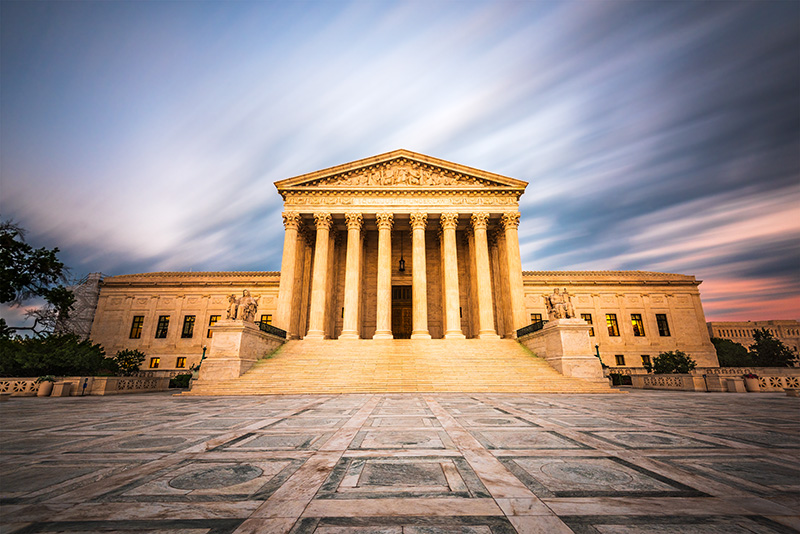
In a 2020 court case, the U.S. Supreme Court found that the federal civil rights law’s protections extend to instances where employees have been fired or denied promotions due to their sexual orientation or gender identity.
The finding in that case runs counter to the Trump administration’s recent executive orders refusing to recognize gender identity as valid and recognizing “sex” as fixed and congruent with one’s assigned sex at birth.
It is unclear when, if ever, the EEOC will resume processing complaints from LGBTQ people alleging sex-based discrimination under Title VII. Two individuals with knowledge of the situation told HR Divethat additional guidance will be forthcoming.
However, the EEOC told HR Dive that it is still accepting complaints and does not reject charges of discrimination.
Andrea Lucas, a Republican who is Acting Chair of the EEOC, recently announced that the agency would roll back several Biden administration policies that sought to extend protections to LGBTQ people and inform them of their rights under Title VII.
Citing President Trump’s executive order, Lucas announced her intention to refocus the agency’s purpose around “protecting women from sexual harassment and sex-based discrimination in the workplace by rolling back the Biden administration’s gender identity agenda.”
Lucas said she would prioritize defending “the biological and binary reality of sex and related rights,” remove the EEOC’s “pronoun app,” remove “X” and “Mx.” gender markers from agency forms, and remove materials “promoting gender ideology” from the agency’s website.
Legal experts say that while the removal of gender identity and sexual orientation references from the EEOC website may indicate that the administration is deprioritizing complaints of LGBTQ discrimination, the Supreme Court’s ruling remains binding.
So, even if the agency deprioritizes processing complaints, there are other ways that workers could pursue legal action against discriminatory employers in court.
Additionally, many states have their own laws prohibiting employment-based discrimination, meaning workers could sue under those statutes.
“Even if the [EEOC] shifts its focus, employers must still comply with federal protections against LGBTQ+ discrimination,” Louise Ryder, a senior employment law attorney at The Spiggle Law Firm, told Forbes magazine.
The U.S. Equal Employment Opportunity Commission (EEOC) will limit its enforcement of certain gender-identity discrimination claims against members of the Christian Employers Alliance under a new settlement.
The Christian Employers Alliance (CEA), a group representing Christian employers, sued the EEOC in January 2025, arguing that the agency "improperly applied Title VII of the Civil Rights Act of 1964 to force employers to affirm and accommodate" transgender employees, reports HR Brew.
CEA claims the agency did this under the Biden administration, including through 2024 guidance addressing pronoun use and access to facilities consistent with employees' gender identity. The group also objected to the EEOC's position on employer-sponsored insurance coverage for gender-affirming care, arguing that these requirements could conflict with some members' religious beliefs.
The U.S. Supreme Court has rejected an emergency request from the Trump administration to overturn a lower court's order blocking restrictions on gender-affirming medical care and social accommodations for transgender inmates in federal prisons, as reported by Chris Geidner at Law Dork.
On the first day of his second term, President Donald Trump signed an executive order defining sex as biologically determined at conception and refusing to recognize transgender identities. The order also directed the Federal Bureau of Prisons to change its policies governing transgender inmates, including where they are housed and their access to medications, clothing, and canteen items.
President Donald Trump used an anti-transgender slur in an October 5 social media post attacking Annie Andrews, South Carolina's Democratic nominee for the U.S. Senate seat previously held by the late Republican Sen. Lindsey Graham.
In the Truth Social post, Trump paired Andrews' first name with a rhyming anti-transgender slur.
"Annie 'Trannie' Andrews is running against our wonderful Darline Graham for the Senate in South Carolina," Trump wrote in an endorsement of Graham. "Darline is a High Quality person, maybe the Highest, and Annie Trannie is not, in particular, as it pertains to representing the Values of the Great People of South Carolina -- She is in favor of Transgender for Everyone, Open Borders, Defunding the Police, High Taxes, a Weak Military, and will absolutely fight to take your guns away -- In other words, she is against our Great Second Amendment!"






You must be logged in to post a comment.