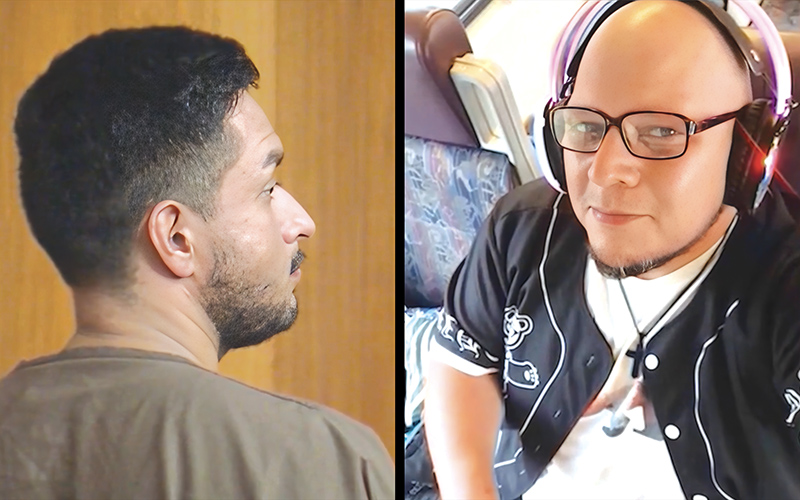
D.C. resident Jevaughn Mark was sentenced to 15 years in federal prison for selling fentanyl disguised as ketamine (“Special K”) to two gay men who died after using the drug.
Mark, 33, also known as “Ledo,” ran what prosecutors described as a “prolific drug delivery service.” He previously pleaded guilty to distributing 40 grams or more of fentanyl, 500 grams or more of cocaine, and possessing a firearm.
As part of his plea deal, Mark accepted responsibility for the deaths of 38-year-old attorney Brandon Román and 28-year-old Robert Barletta, a historic preservation expert who owned a home renovation business.
Police responding to a 911 call found the men unconscious at Barletta’s home on December 27, 2023. Román was pronounced dead at the scene. Barletta died two days later at Washington Hospital Center.
In addition to the 15-year prison term, U.S. District Judge Tanya Chutkan ordered Mark to serve five years of supervised release after completing his sentence.
“This defendant peddled poisonous drugs, marketed as ketamine but containing fentanyl, to unsuspecting people,” said U.S. Attorney Jeanine Ferris Pirro in a statement. “When challenged by multiple customers, he disregarded the alarms they sounded and continued selling the same product. This blatant disregard for human life — in the name of profit — is unconscionable.”
“Criminals like Jevaughn Mark pose a deadly threat by selling drugs with fentanyl, which users unknowingly consume, often leading to their deaths,” said DEA Special Agent in Charge Ibrar Mian. “Illegal drug distribution affects the very foundations of our families and communities, so every time we take criminals like Mark off the streets, lives are saved.”
According to court documents, from at least January 2021 until their arrests in March 2024, Mark and his brother, Angelo, sold drugs to multiple people across the D.C. area, often delivering the narcotics in person.
Mark reportedly texted clients a drug “menu” that included “raw pure” and regular cocaine. He added “ketamine” to the list in November 2023, just a month before Román and Barletta’s deaths.
On December 26, 2023, Mark sold 3.5 grams of “raw” cocaine and three grams of “ketamine” to Román. Text messages showed it was the first time Román had purchased “ketamine” from him.
The Drug Enforcement Administration tested the leftover “ketamine” found at Barletta’s home and confirmed it contained fentanyl, the animal tranquilizer xylazine, and caffeine. Investigators at the scene also recovered text messages that led them to Mark.
Between January 10 and March 13, 2024, undercover officers with the Metropolitan Police Department and the Drug Enforcement Administration made six controlled purchases totaling about 127 grams of fentanyl and 18 grams of cocaine. Each time, the officer asked to buy ketamine, but Mark instead provided fentanyl, sometimes mixed with other drugs.
More than 2 milligrams of fentanyl can be lethal, causing respiratory failure and death.
After obtaining an indictment in March 2024, law enforcement executed a search warrant at Mark’s primary residence, recovering one unloaded handgun, one loaded handgun reported stolen from Virginia, cocaine, fentanyl, other drugs, drug trafficking paraphernalia, body armor, and $38,914 in cash.
Law enforcement later executed a second warrant at another residence linked to Mark, where they found his brother, 30-year-old Angelo Mark. From Angelo’s bedroom, officers recovered seven firearms, 900 rounds of ammunition, dozens of pills, cocaine, fentanyl, drug trafficking paraphernalia, and about $5,000 in cash.
On April 9, 2024, both brothers were charged in a superseding 17-count indictment alleging they participated in a broader conspiracy with other, not-yet-named individuals to distribute large amounts of fentanyl and cocaine throughout the D.C. area.
According to court records, Angelo Mark waived his right to a jury trial earlier this month and pleaded guilty to conspiracy to distribute and possess with intent to distribute, as well as possession of a firearm in furtherance of a drug trafficking offense. He remains in custody ahead of a sentencing hearing scheduled for October 1.
King Tyra, best known under his former stage name Tyra Sanchez, has announced an apparent lawsuit against RuPaul, Michelle Visage, and World of Wonder (WOW) Productions, alleging “intentional infliction of emotional distress, defamation, false light, and tortious interference with prospective economic advantage,” according to a Statement of Claim he posted to social media.
In a Facebook post, the winner of the second season of RuPaul’s Drag Race claimed there has been a “systematic and malicious campaign” to “discredit and destroy career and livelihood.”
Fredi Rivera will serve 21 years in prison after pleading no contest to voluntary manslaughter for the September 2023 fatal shooting of gay rights activist Daniel Landeros in Bakersfield’s Yokuts Park.
While Rivera, 29, agreed to the plea deal -- downgraded from an initial first-degree murder charge -- he refused to admit guilt in the 43-year-old’s death, according to Bakersfield NBC affiliate KGET.
The plea deal makes it more difficult to bring civil lawsuits against Rivera, for whom a guilty plea would have served as a formal admission of fault in Landeros’s death.
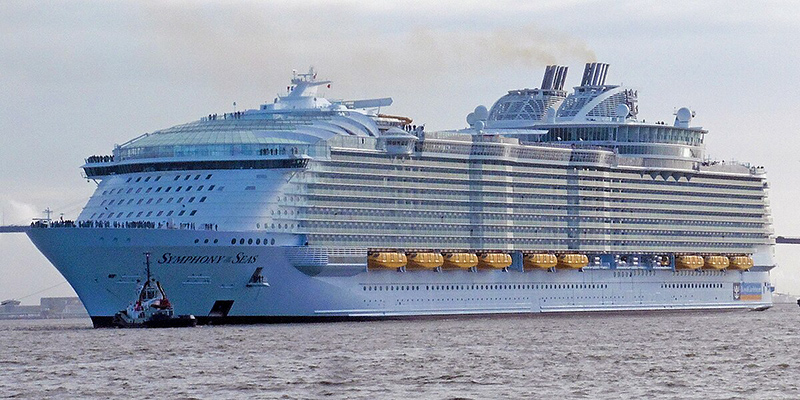
On Sunday, February 1, U.S. Customs and Border Protection (CBP) officers were screening luggage belonging to more than 5,500 passengers aboard Royal Caribbean's Symphony of the Seas at PortMiami's Terminal A ahead of an Atlantis Events-chartered LGBTQ cruise billed as the "world's biggest gay festival at sea."
During that inspection, several suitcases were flagged and opened on suspicion of containing contraband.
CBP officers determined that the quantities involved were too small in some cases for Homeland Security Investigations and referred the cases to the Miami-Dade County Sheriff's Office, which was assisting with drug interdiction efforts.
These are challenging times for news organizations. And yet it’s crucial we stay active and provide vital resources and information to both our local readers and the world. So won’t you please take a moment and consider supporting Metro Weekly with a membership? For as little as $5 a month, you can help ensure Metro Weekly magazine and MetroWeekly.com remain free, viable resources as we provide the best, most diverse, culturally-resonant LGBTQ coverage in both the D.C. region and around the world. Memberships come with exclusive perks and discounts, your own personal digital delivery of each week’s magazine (and an archive), access to our Member's Lounge when it launches this fall, and exclusive members-only items like Metro Weekly Membership Mugs and Tote Bags! Check out all our membership levels here and please join us today!







You must be logged in to post a comment.