The owners of Pink Pony, a new gay nightclub in Sydney, have apologized and vowed to change the club’s name following backlash from the local LGBTQ community.
Kevin Du-Val and Michael Lewis — the owner and manager of the popular gay club Palms — had planned to open their new multi-level venue on Oxford Street, the main drag in Darlinghurst known for its vibrant LGBTQ nightlife, in early December.
But the club’s name — which the owners said in a since-deleted social media post was “unashamedly inspired by its namesake song that resonates so profoundly within our community,” referring to lesbian singer Chappell Roan’s hit “Pink Pony Club” — sparked controversy after they described the type of patrons they hoped to attract, seemingly at the expense of others, according to 9News.
“In line with our experience and our passion, Pink Pony is being created specifically for 18-35 (state of mind) gay men who love to dance and get sweaty to high-powered dance music in a safe space that is theirs to enjoy,” Du-Val and Lewis wrote in the now-deleted post.
Speaking with Gay Sydney News, Lewis said women would be welcome at the club, but added that “our desire is that [the crowd] is predominantly gay boys, and when I say predominantly, I’m sort of talking 90 percent plus.”
“Obviously, we’ve got legal hurdles…in terms of how much we can vet the crowd while still complying with the law,” he added, referring to Australia’s Sex Discrimination Act, which prohibits exclusion based on gender, gender identity, or sexual orientation.
The Australian Human Rights Commission can grant temporary exemptions to the law, but it’s unclear whether the club would qualify.
The club owners were quickly roasted on social media over Pink Pony’s name and proposed door policy, with many calling it ironic and accusing the pair of being exclusionary.
“Appropriating lesbian culture for your own money/benefit for gay men,” wrote Heaps Gay, a queer events organizer, in response to the club owners’ post. “This had the potential to be so great for our community and for Oxford Street. Sad.”
Heaps Gay later addressed the controversy in its own Facebook post, calling the situation “disappointing” and labeling the Pink Pony owners “tone deaf.”
“Imagine calling it Pink pony club when the song clearly says ‘where boys and girls can all be queens every single day.’ They’ve really not read the room on this one,” one user responded.
“Gay guy misogyny is a helluva drug,” another user wrote in response to Heaps Gay.
Commenters on the owners’ since-deleted post were equally critical.
“So it’s gay men only, but the name of the club is a song by a female lesbian pop star? Oh, I fear they missed the mark with this one,” a user wrote.
“Why would you name a club after a hit song by a lesbian pop star, and it’s not a lesbian bar?” another user wrote.
This week, Du-Val and Lewis changed their social media handle to “new name coming soon” and posted an apology on the club’s Instagram page.
“Firstly we would like to sincerely apologise for any hurt or offense we have caused members of our extended LGBQTI+ family with the announcement of our upcoming project,” the post reads. “In hindsight, our communication was clumsy and very poorly worded. Clearly the choice of ‘Pink Pony’ as a name was also an error of judgement given Chappell Roan’s well deserved reverence with queer Women…. [W]e are sorry.”
The post reiterated that all members of the queer community will be welcome at the yet-to-be-named club. It emphasized that there was never an intention to impose a door policy excluding any group.
“In hindsight we can see how our nomination of a preferred mix was tone deaf and hurtful and once again we sincerely apologise,” the post concludes. “At the end of the day the vibe of venue and the music and those it resonates with will dictate the crowd. Everyone is just looking to find their tribe and a place to belong.”
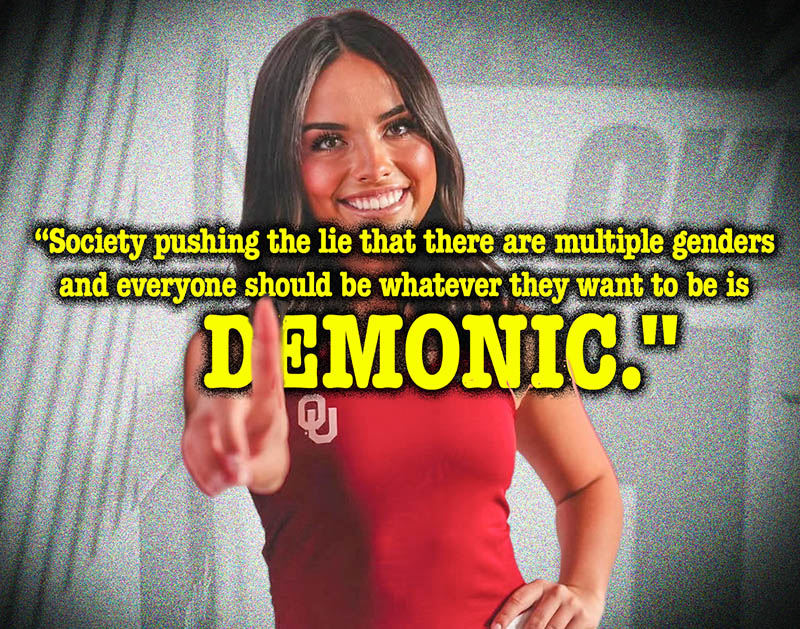
In late November, the University of Oklahoma placed Mel Curth on administrative leave after the transgender graduate teaching assistant gave a student a zero on an essay about gender roles.
The essay cited the Bible to defend traditional gender roles and described transgender people as "demonic." Curth and the course's instructor, Megan Waldron, said the paper failed to meet basic academic standards due to a lack of empirical evidence. Both noted that the paper cited no scholarly sources and failed to offer an evidence-based critique of the assigned article, which argued that children who do not conform to rigid gender stereotypes are more likely to face bullying and negative mental health outcomes.
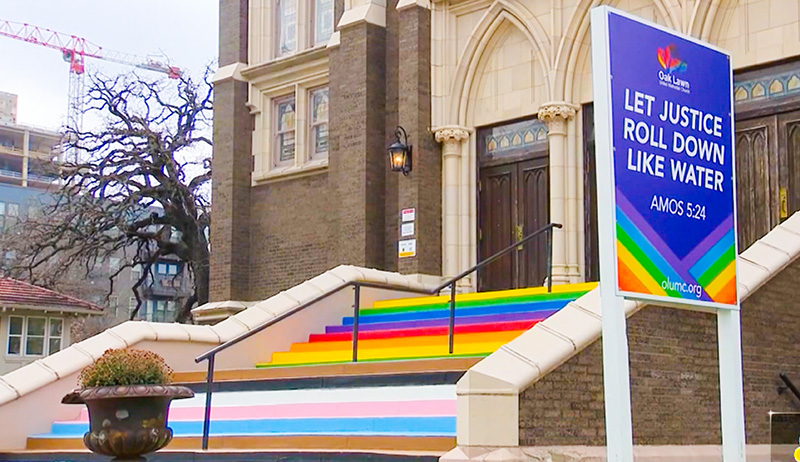
The Dallas Landmark Commission unanimously approved rainbow-colored steps outside Oak Lawn United Methodist Church as a temporary art installation, allowing the display to remain for up to three years despite objections that they violate historic preservation codes.
As a designated historic site, Oak Lawn United Methodist Church is required to seek city approval before making major exterior changes, including paint colors, according to Dallas-area PBS/NPR affiliate KERA.
The LGBTQ-welcoming church did not submit an application to the landmark commission before repainting its exterior steps in the colors of the "Progress Pride" flag, incorporating the traditional rainbow along with black and brown stripes and the blue, pink, and white of the transgender Pride flag.
Documentaries generally don't need an onscreen host. The camera can play host, and real-life stories can tell themselves, with offscreen prompting from research and production, and shrewd direction and editing providing context.
If a filmmaker wants to put the prompting onscreen, there's a delicate art to inserting themselves or an on-camera host into the story without stealing the spotlight from their subject.
Ryan Ashley Lowery, director and creator of the LGBTQ doc Light Up, is anything but delicate in inserting himself and two on-camera host-interviewers -- Michael Mixx and Maurice Eckstein -- into the film's still-compelling portrait of Atlanta's "community of Black same gender loving men and trans women."
These are challenging times for news organizations. And yet it’s crucial we stay active and provide vital resources and information to both our local readers and the world. So won’t you please take a moment and consider supporting Metro Weekly with a membership? For as little as $5 a month, you can help ensure Metro Weekly magazine and MetroWeekly.com remain free, viable resources as we provide the best, most diverse, culturally-resonant LGBTQ coverage in both the D.C. region and around the world. Memberships come with exclusive perks and discounts, your own personal digital delivery of each week’s magazine (and an archive), access to our Member's Lounge when it launches this fall, and exclusive members-only items like Metro Weekly Membership Mugs and Tote Bags! Check out all our membership levels here and please join us today!





You must be logged in to post a comment.