Swiss tennis player Mika Brunold has come out as gay, becoming only the second active male professional tennis player in the sport’s history to do so.
In a late November Instagram post, Brunold shared the news with fans and the wider sports world.
“One of the most important things I’ve learned is that success on the court isn’t just about physical skill — it’s about discovering your personality and staying true to yourself,” Brunold wrote. “That’s why I feel it’s time for me to open up and share with you that I’m gay.”
The 21-year-old also wrote candidly about his experience as a gay man, noting that it “doesn’t just mean loving the same gender,” but often includes fear of rejection, pressure to remain silent about his identity, and isolation from feeling different.
Brunold reached a career-high ATP singles ranking of No. 289 in August and said he hopes his decision will reduce stigma around openly gay athletes and encourage others to live openly.
“I think it’s not talked about enough in sports,” he wrote. “I believe that in an ideal world, we wouldn’t even need to ‘come out’ at all.”
Other professional athletes voiced their support.
Belgian tennis legend Kim Clijsters, a former world No. 1 in women’s singles, replied to Brunold’s post with a heart emoji.
Queer American gymnast and Olympic gold medalist Laurie Hernandez also welcomed Brunold publicly.
“congrats-welcome to the party🥹♥️,” Hernandez wrote in an Instagram reply.
Brunold’s announcement follows that of Brazil’s Joao Lucas Reis da Silva, who publicly came out in late 2024 via a simple Instagram post wishing his boyfriend a happy birthday.
“I didn’t think about it… I just wanted to post a picture with him,” Reis da Silva said of his boyfriend, actor and model Gui Sampaio. He had been out to friends and family for five years before the post.
Nevertheless, many LGBTQ athletes still feel pressure to remain closeted, believing it is safer for their careers.
According to the American Psychiatric Association, nearly 80% of young LGBTQ athletes are not out to their coaches, citing fear of rejection. As a result, only 20% to 29% of LGBTQ youth participate in sports, compared to 68% of their non-LGBTQ peers.
Stories like Brunold’s and Reis da Silva’s may help create a more welcoming sports culture and make it easier for young LGBTQ athletes to compete openly.
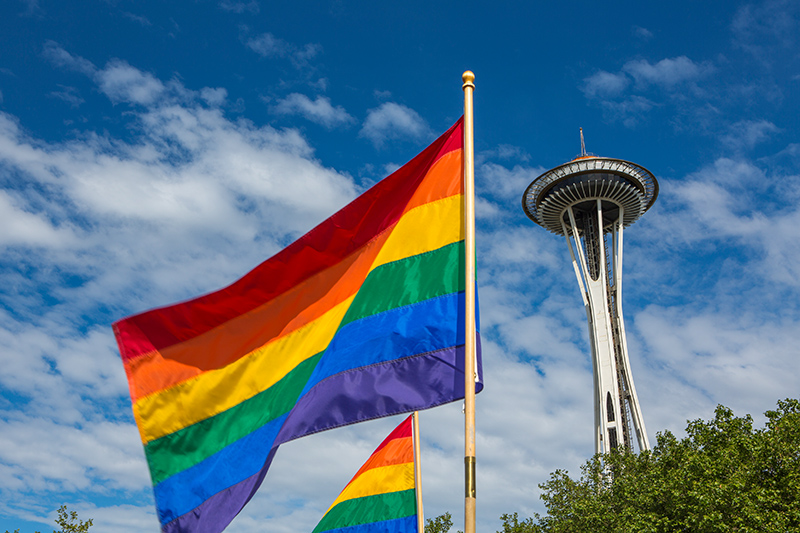
Seattle's local organizing committee for the 2026 FIFA World Cup is moving ahead with a first-of-its-kind "Pride Match" at Lumen Field on June 26, coinciding with the city's Pride Weekend, even though the scheduled game will feature Iran and Egypt, two countries that criminalize homosexuality.
The Pride-adjacent branding was created by the host city, not FIFA, the governing body of international soccer, which has not endorsed the designation.
When FIFA was planning the match schedule, Seattle was in line to host either New Zealand versus Belgium or Egypt versus Iran on June 26. Vancouver ultimately received the New Zealand-Belgium game, leaving Seattle with Egypt versus Iran, reports Outsports.
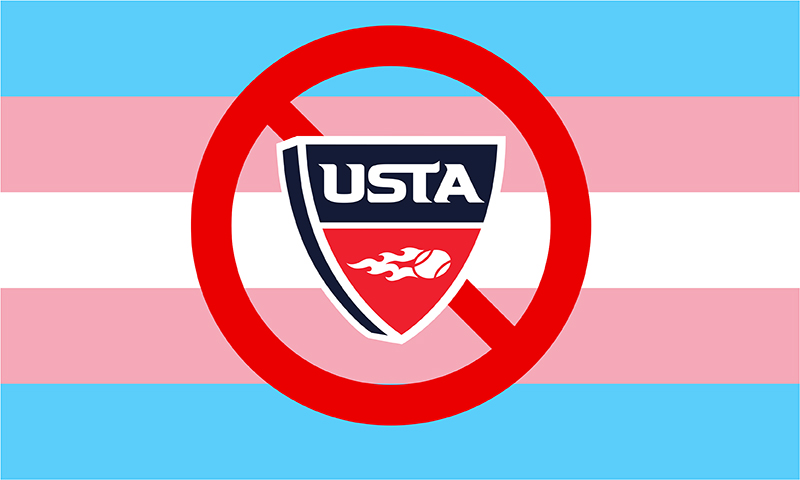
The United States Tennis Association, the national governing body for tennis in the United States, has quietly banned transgender athletes from competing in women's events.
As first reported by independent journalist Marisa Kabas in her newsletter The Handbasket, the USTA revised its "Player Eligibility Policy" page on October 25 with no prior warning or public announcement.
Under the revised policy -- which applies to all sex-specific junior and adult leagues, tournaments, and competitions, whether Olympic, professional, or recreational -- only athletes who meet the USTA's definition of a woman or girl may compete in events designated for women or girls.
Jason Collins, the former NBA center who made history in 2013 as the league’s first openly gay active player, has revealed that he has been diagnosed with Stage 4 glioblastoma, an aggressive, incurable form of brain cancer.
"A few months ago, my family released a short statement saying I had a brain tumor. It was simple, but intentionally vague. They did that to protect my privacy while I was mentally unable to speak for myself and my loved ones were trying to understand what we were dealing with," Collins told ESPN reporter Ramona Shelburne in a lengthy statement.
These are challenging times for news organizations. And yet it’s crucial we stay active and provide vital resources and information to both our local readers and the world. So won’t you please take a moment and consider supporting Metro Weekly with a membership? For as little as $5 a month, you can help ensure Metro Weekly magazine and MetroWeekly.com remain free, viable resources as we provide the best, most diverse, culturally-resonant LGBTQ coverage in both the D.C. region and around the world. Memberships come with exclusive perks and discounts, your own personal digital delivery of each week’s magazine (and an archive), access to our Member's Lounge when it launches this fall, and exclusive members-only items like Metro Weekly Membership Mugs and Tote Bags! Check out all our membership levels here and please join us today!





You must be logged in to post a comment.