The United States Tennis Association, the national governing body for tennis in the United States, has quietly banned transgender athletes from competing in women’s events.
As first reported by independent journalist Marisa Kabas in her newsletter The Handbasket, the USTA revised its “Player Eligibility Policy” page on October 25 with no prior warning or public announcement.
Under the revised policy — which applies to all sex-specific junior and adult leagues, tournaments, and competitions, whether Olympic, professional, or recreational — only athletes who meet the USTA’s definition of a woman or girl may compete in events designated for women or girls.
The USTA policy adopts the definition of “female” set forth in an executive order issued in January by President Donald Trump. The order recognizes only assigned sex at birth, referring to women or girls as “adult and juvenile human females,” with female defined as “a person belonging, at conception, to the sex that produces the large reproductive cell.”
The policy also states that “any athlete” may compete in USTA events designated for men or boys, provided their USTA account “reflects their Gender Competition category as male.”
According to Kabas, the policy change came in response to a directive from the US Olympic & Paralympic Committee and the International Olympic Committee, both of which previously revised their guidelines to comply with Trump’s order by banning transgender athletes. The International Olympic Committee is expected to implement a blanket ban on transgender athletes in women’s events at the 2028 Los Angeles Summer Olympic Games.
Before publishing the revised policy, the USTA circulated an internal, unpublished “frequently asked questions” (FAQ) document instructing staff on how to respond to inquiries about the ban, indicating the organization had been preparing for the change for some time.
One example posed to USTA Customer Care and Section/State District personnel was why the ban applies only to transgender women and not trans men. The suggested response reads: “The purpose of [Trump’s executive order] is to protect opportunities for women and girls to compete in sports. Transgender males are perceived as having no impact on the fairness or safety of the women’s category, which is the sole focus of the order.”
Another question in the FAQ asks whether birth certificates will be required when a player purchases a USTA membership or registers for an event. Officials are instructed to say that birth certificates aren’t required, but that the USTA “reserves the right to request documentation to support attestations submitted during the event registration or membership purchase process, or in the event an eligibility challenge.”
The FAQ also notes that if a transgender woman who previously competed in tournaments re-registers as male to comply with the new policy, all ranking points accrued up to that point — which affect seedings and ensure players face opponents of similar ability — will be “zeroed out.”
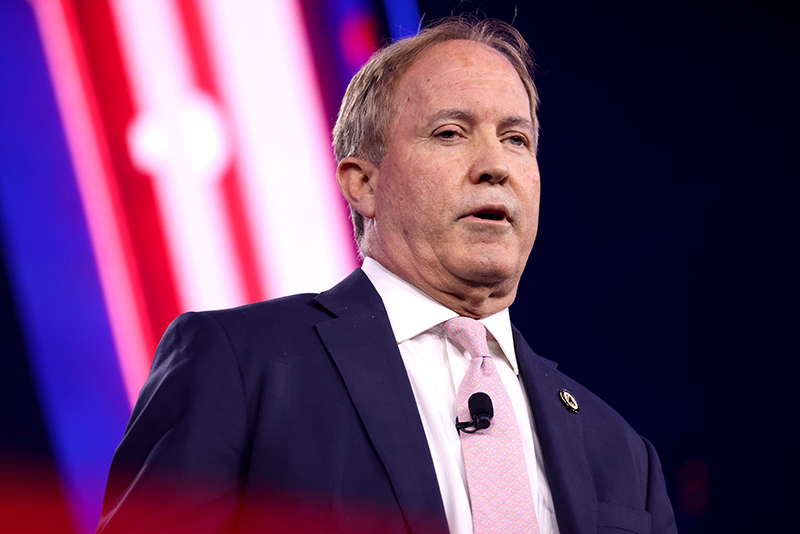
The policy change came shortly after Texas Republican Attorney General Ken Paxton — who is running for the U.S. Senate next year — announced an investigation into USTA’s Texas league for allegedly allowing transgender women to compete as women, in violation of Texas law. As Kabas writes in The Handbasket, “It’s unclear if USTA National’s policy change is related to Paxton’s investigation, but the timing is certainly curious.”
One transgender recreational player highlighted by Kabas is 61-year-old Valerie, who has competed in women’s events for a St. Louis-area USTA league since 2019, shortly after transitioning. She was informed in mid-November — before the new policy took effect — that she would no longer be eligible to compete as a woman.
The policy change was so secretive that even her team’s co-captains were unaware of it until Valerie told them she’d be stepping away from the sport she loves and at which she’d excelled since joining the league.
“Everything would have just gone on as normal until someone maybe might have found that policy and filed a complaint because they didn’t like it, and that’s how I would become aware of it,” Valerie told Kabas, describing how under the radar the eligibility change was, and how quickly it was adopted.
Kabas reached out to the USTA seeking comment on why no public announcement was made, and if one is forthcoming, but received no reply.
Brock McGillis, the first openly gay professional hockey player, told PinkNews that he "wholeheartedly" disagrees with the idea that HBO’s Heated Rivalry will encourage more hockey players to come out.
McGillis, 42, played in the Ontario Hockey League and United Hockey League during a nine-year professional career from 2001 to 2010 and came out publicly in 2016. While he now advocates for greater LGBTQ inclusion in hockey, McGillis said the series -- which has drawn attention for its steamy gay sex scenes -- is just as likely to keep gay players closeted.
Texas Republican Attorney General Ken Paxton has launched a "tip line" urging residents to report to state authorities people they believe are transgender for using restrooms that do not align with their sex assigned at birth -- a violation of Texas’ bathroom ban.
In a statement announcing the tip line on his office’s website, Paxton said the bathroom ban -- known as the "Texas Women's Privacy Act" -- is intended to protect women and girls from "mentally ill men wanting to violate their basic right to privacy" in restrooms, locker rooms, and other changing facilities.
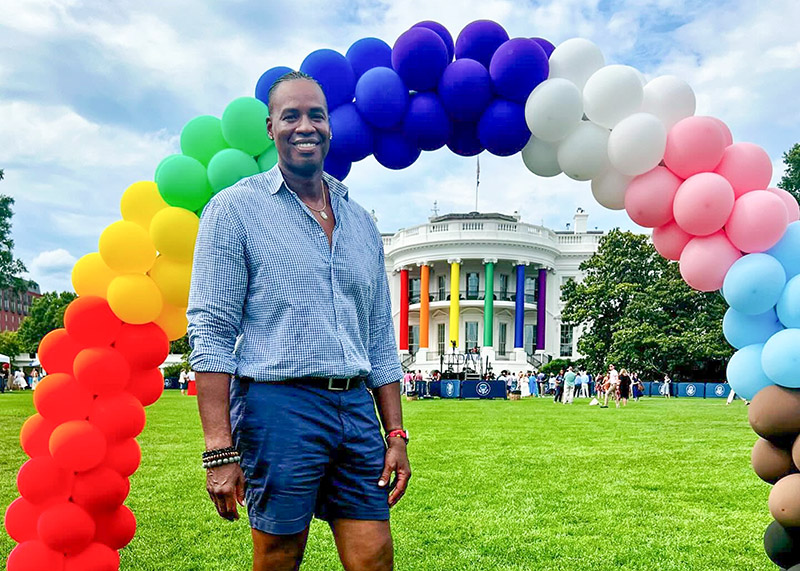
Jason Collins, the former NBA center who made history in 2013 as the league’s first openly gay active player, has revealed that he has been diagnosed with Stage 4 glioblastoma, an aggressive, incurable form of brain cancer.
"A few months ago, my family released a short statement saying I had a brain tumor. It was simple, but intentionally vague. They did that to protect my privacy while I was mentally unable to speak for myself and my loved ones were trying to understand what we were dealing with," Collins told ESPN reporter Ramona Shelburne in a lengthy statement.
These are challenging times for news organizations. And yet it’s crucial we stay active and provide vital resources and information to both our local readers and the world. So won’t you please take a moment and consider supporting Metro Weekly with a membership? For as little as $5 a month, you can help ensure Metro Weekly magazine and MetroWeekly.com remain free, viable resources as we provide the best, most diverse, culturally-resonant LGBTQ coverage in both the D.C. region and around the world. Memberships come with exclusive perks and discounts, your own personal digital delivery of each week’s magazine (and an archive), access to our Member's Lounge when it launches this fall, and exclusive members-only items like Metro Weekly Membership Mugs and Tote Bags! Check out all our membership levels here and please join us today!








You must be logged in to post a comment.