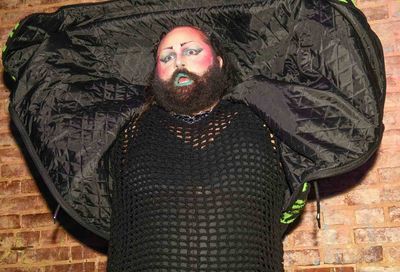
Image by Todd Franson; Ruby Corado – Photo: Divalizeth Murillo
A federal judge has sentenced Ruby Corado, the founder and former executive director of the now-shuttered D.C. nonprofit Casa Ruby, to 33 months in federal prison for wire fraud — a punishment that could ultimately lead to her deportation from the United States, despite her status as a legal permanent resident.
On January 13, U.S. District Judge Trevor McFadden granted federal prosecutors’ request for a more severe sentence, exceeding the 15-21 months recommended under federal sentencing guidelines.
The U.S. Attorney’s Office for the District of Columbia argued that Corado betrayed the trust of Casa Ruby’s clients by transferring $200,000 to personal offshore bank accounts in her native El Salvador, held under her birth name, for what prosecutors said was the purpose of enriching herself.
The funds Corado wired to El Salvador came from a larger pool of $956,215 that Casa Ruby received in 2020 through the COVID-era Paycheck Protection Program (PPP) and the Economic Injury Disaster Loan (EIDL) programs.
As executive director, Corado accepted the funds, which were intended to allow the nonprofit to continue providing temporary and transitional housing, clothing, food, HIV testing, and support services such as legal assistance and counseling to its clients, including LGBTQ homeless youth, transgender and nonbinary individuals, LGBTQ victims of violence, and immigrants.
The 54-year-old has repeatedly claimed that she wired the $200,000 to her account in El Salvador to launch a Casa Ruby branch focused on helping LGBTQ Salvadorans — who face state-sponsored discrimination and violence — safely leave the country for the United States, where many would seek asylum. The venture ultimately failed.
Corado was arrested in March 2024 on multiple charges related to fraud and money laundering. In July, she pleaded guilty to one count of wire fraud in exchange for the government dropping the remaining charges.
McFadden addressed Corado directly during sentencing, telling her, “You came to this country hiding under the floorboards of the vegetable truck and this country gave you refuge. You betrayed this country.”
In addition to the 33-month prison sentence, McFadden ordered Corado to pay $956,215 — the full amount Casa Ruby received in 2020 — and imposed two years of supervised release, provided she is not deported after serving her sentence.
Despite holding legal permanent resident status, Corado’s conviction is likely to trigger deportation proceedings, according to the Washington Post.
Corado’s attorney, Pleasant Brodnax, argued for a lesser sentence, noting that Corado’s status as an immigrant — regardless of legal status — would likely place her at risk of deportation amid the Trump administration’s aggressive enforcement efforts targeting immigrants convicted of crimes.
In a pre-sentencing memo, Brodnax asked the court to sentence Corado to time served — including 18 months of house arrest at her niece’s home in Rockville — along with GPS monitoring.
Brodnax argued that Corado had “fully intended to use the funds for Casa Ruby’s purposes,” not for personal enrichment. He also contended that Corado should only be required to pay restitution for the $200,000 wired to El Salvador, noting that the remaining funds stayed in Casa Ruby’s bank account and that prosecutors had not proven they were improperly spent.
He further argued that incarcerating Corado would place her at heightened risk of harm due to her transgender status and what he described as changes to “the federal protections designed to keep LGBTQ+ inmates safe” under the Trump administration.
Those changes include directives requiring transgender inmates to be housed according to their sex assigned at birth rather than their gender identity, increasing the likelihood that Corado would be placed in a men’s prison, where she could face physical or sexual violence.
It remains unclear whether Corado will serve her sentence in a men’s or women’s facility.
Federal lawmakers have passed the annual National Defense Authorization Act, a sweeping defense policy bill that includes a new federal ban on transgender women competing on female-designated sports teams at U.S. military service academies.
The ban on transgender athletes was folded into the 3,086-page bill, which authorizes approximately $900 billion in military and national security spending for 2026, according to Mother Jones. The House of Representatives passed the measure by a 312-112 vote, with 94 Democrats and 18 Republicans opposed. The Senate followed with a 75-22 vote, and the bill now heads to President Donald Trump for his signature.
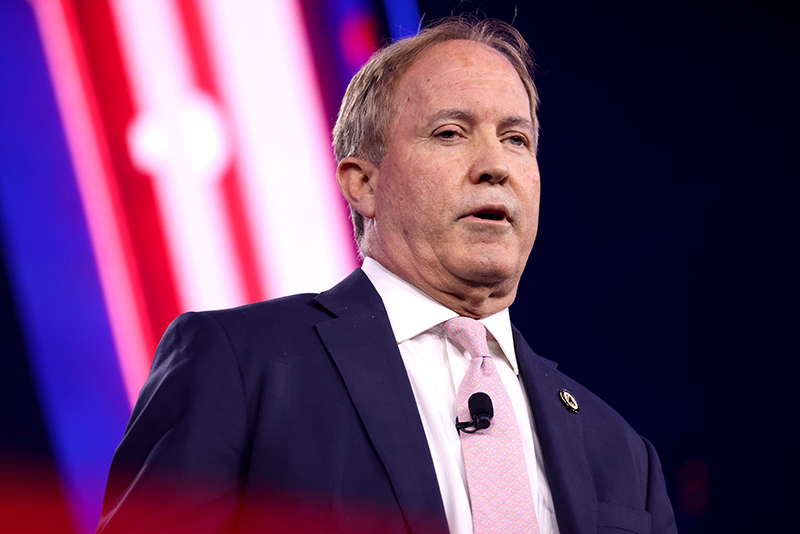
Texas Republican Attorney General Ken Paxton has launched a "tip line" urging residents to report to state authorities people they believe are transgender for using restrooms that do not align with their sex assigned at birth -- a violation of Texas’ bathroom ban.
In a statement announcing the tip line on his office’s website, Paxton said the bathroom ban -- known as the "Texas Women's Privacy Act" -- is intended to protect women and girls from "mentally ill men wanting to violate their basic right to privacy" in restrooms, locker rooms, and other changing facilities.
When Martha Nell Smith was a child, she was given a book called The Golden Treasury of Poetry. "I was a nerdy kid, I liked to read," the 72-year-old academic says, adding, "I also liked to play. I was a very sporty kid too. I was a tomboy."
The book contained several poems by Emily Dickinson. "I thought these look so simple, but when you think about it, they are really weird," she says. "But you could say that about almost any Dickinson poem."
Smith recounts the long and winding path that led her to become one of the foremost experts on Emily Dickinson, with a particular focus on the poet's secretly romance-laden letters to her sister-in-law, Susan Dickinson.
These are challenging times for news organizations. And yet it’s crucial we stay active and provide vital resources and information to both our local readers and the world. So won’t you please take a moment and consider supporting Metro Weekly with a membership? For as little as $5 a month, you can help ensure Metro Weekly magazine and MetroWeekly.com remain free, viable resources as we provide the best, most diverse, culturally-resonant LGBTQ coverage in both the D.C. region and around the world. Memberships come with exclusive perks and discounts, your own personal digital delivery of each week’s magazine (and an archive), access to our Member's Lounge when it launches this fall, and exclusive members-only items like Metro Weekly Membership Mugs and Tote Bags! Check out all our membership levels here and please join us today!









You must be logged in to post a comment.