A divided three-judge panel of the 4th U.S. Circuit Court of Appeals ruled that Montgomery County Public Schools did not violate the First Amendment rights of a Christian substitute teacher by requiring her to use transgender students’ pronouns in the classroom.
The appeals court affirmed a lower court’s decision dismissing most of the teacher’s claims that the policy violated her free speech and religious rights, and denied her request for an injunction blocking the school district from enforcing it.
Under Montgomery County Public Schoolspolicy, staff are required to address students by the name and pronouns that align with the gender identity they consistently assert at school. Students are not required to change permanent records to receive gender-affirming names or pronouns, and teachers are instructed to “maintain the confidentiality of a student’s transgender status” whenever possible.
The case stems from a lawsuit filed by Kimberly Polk, who began working as a substitute teacher for Montgomery County Public Schools in 2021. Polk had planned to continue teaching in the district but objected to its pronouns policy, according to The Washington Post.
In November 2022, Polk requested a religious accommodation, claiming the district’s transgender policy conflicted with her “sincerely held religious beliefs,” which she said are “based on her understanding of her Christian religion and the Holy Bible.” Polk believes there are only two sexes and does not recognize the concept of gender identity, citing biblical teachings that God created human beings male and female from birth.
A compliance coordinator proposed accommodations that would have allowed Polk to teach only in preschool and elementary school — where students are less likely to identify as transgender, nonbinary, or gender-nonconforming — but not in middle or high school. A month later, the district denied her request, and Polk stopped substitute teaching.
In her 2024 lawsuit, Polk argued that the school system’s refusal to grant her a religious exemption from the pronouns policy violated her civil rights. She asked a federal judge to block enforcement of the policy while allowing her to teach only in elementary schools with no transgender students as the case proceeded.
U.S. District Judge Deborah Boardman denied the injunction and dismissed most of Polk’s claims, ruling that when she was hired, the school board paid her to speak on its behalf as its employee. Boardman did allow one civil rights claim to proceed to discovery. Polk later appealed the ruling to the 4th U.S. Circuit Court of Appeals, which heard arguments in October 2025.
Writing for the majority, 4th Circuit Judge Robert King said that Polk had not convinced the court that MCPS’s policy regarding transgender students’ pronouns was hostile toward her religious views. King found that Polk’s free speech rights were not violated because following the policy was part of her official duties as a public school teacher.
“How a teacher addresses a particular student in a particular classroom — and whether a teacher communicates with a student’s parent — is merely a part of that teacher’s job description,” King, who was appointed by former President Bill Clinton, wrote.
The majority wrote that “no one forced Polk to become a substitute teacher in Montgomery County” and said that by accepting a position with MCPS, she agreed to follow all of the district’s policies.
King also wrote that disagreements over school policy should be resolved through democratic means, implying that Montgomery County residents can elect new school board members if they want the policies changed.
Judge Stephanie Thacker, an appointee of former President Barack Obama, concurred with King’s opinion.
Writing in dissent, J. Harvie Wilkinson III, an appointee of former President Ronald Reagan, argued that MCPS’s policy infringes on teachers’ free speech rights and effectively prevents them from expressing views opposing transgender rights or objecting to accommodations provided to transgender students.
Montgomery County Public Schools spokeswoman Liliana López told The Washington Post that the district welcomes the court’s decision but declined to comment further due to the possibility of additional litigation.
Polk’s attorney, Rick Claybrook, told the newspaper that his client is considering appealing the decision to the U.S. Supreme Court or seeking a rehearing before the full 4th Circuit.
If the U.S. Supreme Court declines to hear Polk’s appeal or upholds the ruling, the decision could affect similar cases in Maryland, Virginia, West Virginia, North Carolina, and South Carolina, all of which fall under the 4th Circuit’s jurisdiction, where teachers argue that their religious beliefs prevent them from using transgender students’ pronouns.
Rod Joseph, one of four Republicans running in Florida's Democratic-leaning 20th Congressional District, recently told the Sun Sentinel's editorial board that he believes everyone is "born straight" and that sexual orientation is a "preference," not an inherent trait.
"You cannot be born gay. That's impossible biologically," Joseph said during the interview. "Sexual preference from the Roman Empire to date, it's always a preference."
An evangelical Christian, Joseph also claimed that people are indoctrinated or influenced into becoming gay or LGBTQ, asserting that most LGBTQ people were sexually abused as children.
A New Jersey school district has agreed to pay $950,000 to settle a wrongful death lawsuit filed by the mother of a transgender student who died by suicide after allegedly enduring years of bullying and harassment.
Danielle Warshefski will receive $603,664.78, while the law firm that represented her will receive the remainder to cover legal costs and attorneys' fees.
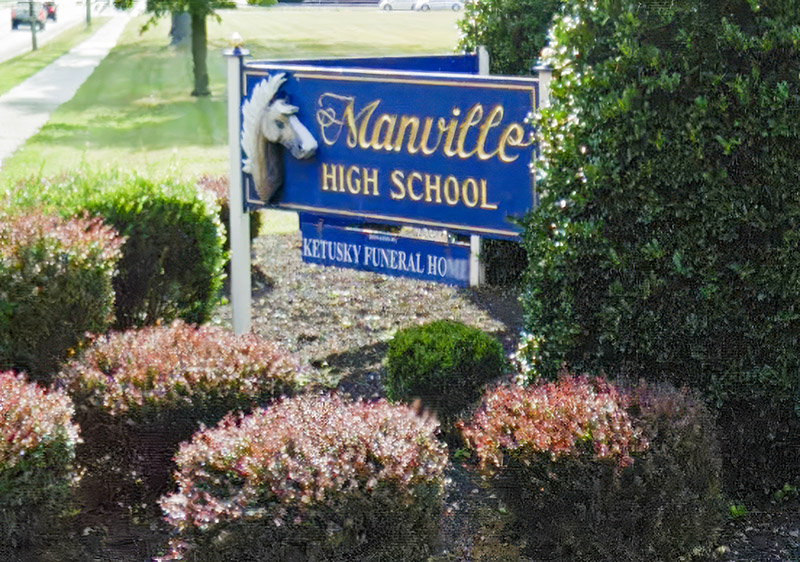
According to the lawsuit, Warshefski's son, Myles Fitzpatrick, came out as transgender in December 2020, while Manville High School was holding classes virtually due to the COVID-19 pandemic.
GxBar, an LGBTQ-friendly salon in Kyiv, was vandalized by unidentified individuals who poured blood and left severed pig heads and entrails around its main entrance.
The vandalism targeted the GxBar Special salon, which has faced other attacks in recent months that the business believes are linked to its support for the LGBTQ community.
According to a post on GxBar's Instagram account, the salon was defaced around 6:17 a.m. on July 21. Security footage from inside the salon shows at least one person -- and possibly others -- dousing the entrance in blood and placing the pig heads on the building's front stoop.
These are challenging times for news organizations. And yet it’s crucial we stay active and provide vital resources and information to both our local readers and the world. So won’t you please take a moment and consider supporting Metro Weekly with a membership? For as little as $5 a month, you can help ensure Metro Weekly magazine and MetroWeekly.com remain free, viable resources as we provide the best, most diverse, culturally-resonant LGBTQ coverage in both the D.C. region and around the world. Memberships come with exclusive perks and discounts, your own personal digital delivery of each week’s magazine (and an archive), access to our Member's Lounge when it launches this fall, and exclusive members-only items like Metro Weekly Membership Mugs and Tote Bags! Check out all our membership levels here and please join us today!









You must be logged in to post a comment.