Nathan Cavanaugh Deposition – American Historical Association YouTube Screenshot
Former Trump administration staffers testified under oath that federal grants referencing LGBTQ people were flagged for cancellation as part of the administration’s efforts to cut government spending.
In a recorded video of his testimony, Nathan Cavanaugh, a political appointee who worked with Elon Musk’s Department of Government Efficiency (DOGE) team through the General Services Administration, described how the Trump administration moved to purge diversity-related projects from the National Endowment for the Humanities, which distributes hundreds of millions of dollars each year to support historical research, museums, archives, and public humanities programs across the United States.
Video of Cavanaugh’s January deposition has since been posted to YouTube. The former DOGE staffer was deposed as part of a lawsuit brought by the American Council of Learned Societies, the American Historical Association, and the Modern Language Association. The groups argue that the Trump administration unlawfully terminated NEH grants connected to scholarship on race, gender, and LGBTQ identity.
According to Cavanaugh, he and another DOGE team member, Justin Fox, reviewed spreadsheets listing hundreds of grants issued during Joe Biden’s administration. They were tasked with identifying projects that might conflict with an executive order from President Donald Trump banning DEI programs in the federal government. Neither man had experience in the academic or humanities fields whose grants they were reviewing.
Fox admitted in his deposition that he used ChatGPT to sift through and flag grants that might violate Trump’s ban on DEI.
The DOGE staffers reportedly used a prompt asking the AI tool, “Does the following relate at all to DEI?” They then directed ChatGPT to “Respond factually in less than 120 characters,” beginning with “‘Yes.’ or ‘No.’, followed by a brief explanation.”
Grants referencing LGBTQ topics were often interpreted as conflicting with the anti-DEI order because, according to Fox, “LGBTQ is often associated with underrepresented minority groups.”
In one instance, Cavanaugh testified that a grant drawing scrutiny was a proposed public discussion series titled “Examining experiences of LGBTQ military service,” which sought to bring veterans and community members together to discuss the experiences of service members from historically marginalized groups.
Asked why the project had been flagged, he replied, “Because it explicitly says LGBTQ.”
During his deposition, Cavanaugh said he and Fox did not consult scholars or the NEH’s peer review system before identifying projects for potential cancellation, instead relying on their own judgment while scanning grant summaries.
“I think a person can have enough judgment from reading books and being well-informed outside of traditional experience to make judgment calls about obvious things like a grant that literally lists DEI in its description,” he said.
But when asked what books informed his judgments, Cavanaugh replied, “There were no books.”
According to a memorandum filed by the plaintiff organizations, Fox searched the federal grants database for projects containing terms such as “gay,” “BIPOC,” “indigenous,” “tribal,” “melting pot,” and “equality.” Those searches generated lists of grants referencing race, ethnicity, gender, or sexual orientation, which Fox and Cavanaugh then reviewed for possible termination.
The filing also claims that when Fox ran grant descriptions through ChatGPT to filter out projects that might be related to DEI, he did not define what “DEI” meant for the AI tool and did not know how the chatbot interpreted the term.
The memo says ChatGPT flagged numerous projects as “DEI” simply because their descriptions referenced marginalized communities or topics involving race, religion, gender, or sexuality. Among them were a project about the 1873 Colfax Massacre and its legacy for Black civil rights, a biography of Black jurist Oscar Adams Jr., and an anthology translating fiction by Jewish writers reflecting on the Holocaust in the Soviet Union.
The humanities groups’ filing claims this resulted in more than 1,400 active NEH grants — representing over $100 million, or roughly 97% of the agency’s active grants — being terminated.
The memo also alleges that Fox personally sent termination notices using an unofficial Microsoft email address rather than the agency’s normal grants system. The notices used identical language and did not include individualized explanations for why projects were canceled.
Internal communications cited in the filing show Acting NEH Chair Michael McDonald warning that many cancellations had “no justification,” though records indicate he acknowledged that the final decision rested with DOGE.
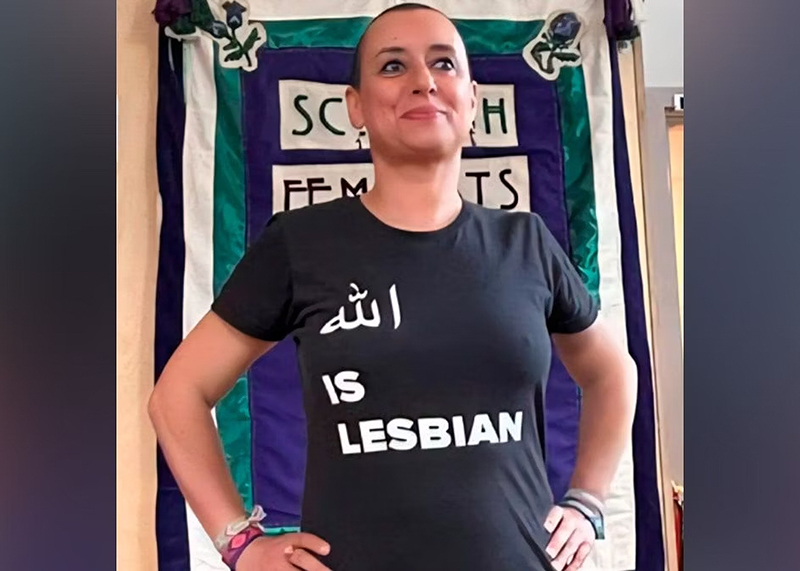
Ibtissame "Betty" Lachgar, a Moroccan lesbian activist jailed after posting a photo of herself wearing a T-shirt reading "Allah is a lesbian," may have to have her arm amputated may have to have her arm amputated as her health reportedly deteriorates in prison.
Lachgar, 50, was sentenced last September to two-and-a-half years in prison after authorities deemed the Facebook post "offensive to Islam."
"In Morocco, I walk around with T-shirts bearing messages against religions, Islam, etc.," Lachgar wrote in the post's caption. "You tire us with your sanctimoniousness, your accusations. Yes, Islam, like any religious ideology, is fascist, phallocratic and misogynistic."
USA Rugby recently announced that it will ban transgender women from female-designated teams while creating a third competitive "open" category intended to accommodate transgender athletes.
In a statement, the organization said the decision was driven by President Donald Trump's executive order opposing the inclusion of transgender women on female-designated sports teams.
USA Rugby said the United States Olympic and Paralympic Committee determined the order applies to all National Governing Bodies (NBG) of sport. The committee warned that failure to comply could jeopardize the organization's NGB status.
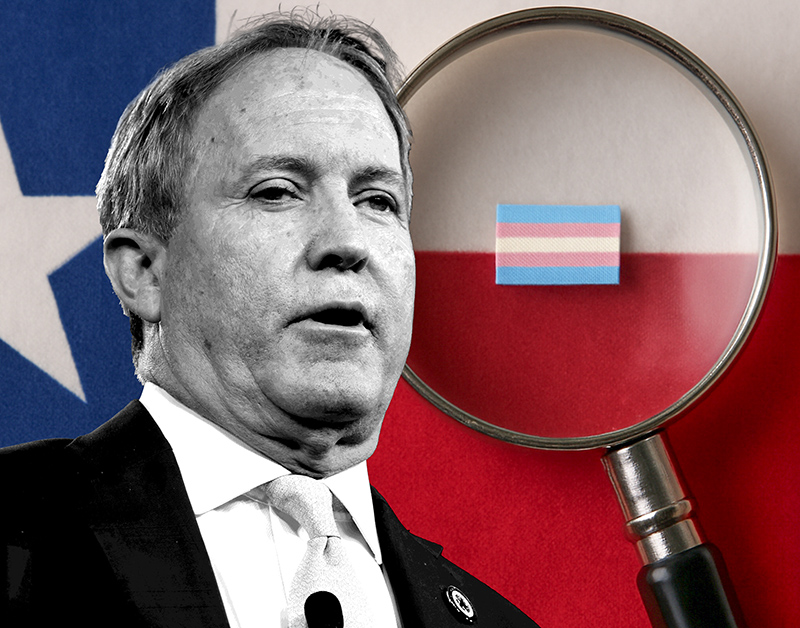
Mental health providers licensed in Texas are barred from offering therapy that could be interpreted as assisting minors in transitioning, according to a legal opinion from Texas Attorney General Ken Paxton.
In the February 27 opinion, Paxton responded to an inquiry from Darrel Spinks, executive director of the Texas Behavioral Health Executive Council, about whether a 2023 law applies to licensed therapists and counselors.
The law, Senate Bill 14, bans health care providers from providing or facilitating treatments for minors -- including puberty blockers, hormones, or surgical interventions -- intended to help them medically transition. It also prohibits public funds, including Medicaid, from covering the cost of transition-related care.
These are challenging times for news organizations. And yet it’s crucial we stay active and provide vital resources and information to both our local readers and the world. So won’t you please take a moment and consider supporting Metro Weekly with a membership? For as little as $5 a month, you can help ensure Metro Weekly magazine and MetroWeekly.com remain free, viable resources as we provide the best, most diverse, culturally-resonant LGBTQ coverage in both the D.C. region and around the world. Memberships come with exclusive perks and discounts, your own personal digital delivery of each week’s magazine (and an archive), access to our Member's Lounge when it launches this fall, and exclusive members-only items like Metro Weekly Membership Mugs and Tote Bags! Check out all our membership levels here and please join us today!







You must be logged in to post a comment.