Scouting America, formerly known as the Boy Scouts of America, sued an Arizona-based LGBTQ travel company called Queer Scout in late February, alleging the business is “diluting Boy Scouts’ famous trademarks and falsely associating with Boy Scouts.”
The lawsuit, filed in federal court, claims Queer Scout intentionally tried to confuse consumers by using the word “scout” and a pink fox logo in connection with social events, guided tours, and online marketing, according to The Arizona Republic.
An eagle set against a fleur-de-lis — not a fox — is the symbol most commonly associated with Scouting America. But in its complaint against Queer Scout, the organization argues that it offers “similar” services to the travel company and also “prominently uses names and images of animal figures.”
The lawsuit follows years of unsuccessful negotiations between Scouting America and Queer Scout to privately resolve the trademark dispute.
Sam Holdren, the founder of Queer Scout, has questioned whether the Trump administration’s crackdown on diversity initiatives and LGBTQ inclusion — particularly recognition of transgender scouts’ gender identity — influenced the organization’s decision to sue.
“When you combine that timing with the fact that hundreds of businesses have used the word ‘scout,’ it starts to look less like consumer confusion and more like something broader involving identity and visibility,” Holdren told the Republic, referring to Secretary of War Pete Hegseth’s threat to sever ties with Scouting America if the organization didn’t abandon its diversity initiatives.
“It raises legitimate questions about what’s really driving this escalation,” he said.
Holdren, who lives part-time in Arizona, created Queer Scout to help gay travelers plan and book their own experiences in Colombia, borrowing the name from a since-shuttered Colombia-based business that arranged similar outings.
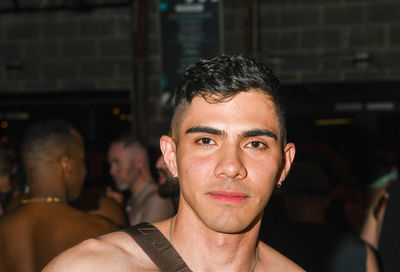
The company’s website offers tours and experiences for LGBTQ tourists in Medellin, Colombia, including bar crawls, a “gay Guatape boat tour,” and a “gay picnic and graffiti experience.” The site also prominently features pictures of topless men — something not typically associated with the Boy Scouts in any of its former or current iterations, given that the organization banned openly gay scouts and adult leaders for most of its history until 2013 and 2015, respectively.
“We’re a small LGBTQ-owned travel company serving adult travelers,” Holdren told the British newspaper The Independent. “It’s difficult to see how anyone could realistically confuse an LGBTQ tourism brand called ‘Queer Scout’ with a youth scouting organization.”
As reported by the Republic, the U.S. Patent and Trademark Office’s searchable database shows more than 700 registered and pending trademarks involving the word “scout,” including several with animal logos. Yet Boy Scouts of America, Scouting America’s predecessor, has sued only one other entity in the past three years: a woman they claimed was buying websites using Boy Scouts’ branding, according to federal court filings.
Scott Armstrong, the director of national media relations and government affairs for Scouting America, brushed aside questions about whether the Trump administration’s recent actions were connected to the timing of the lawsuit, telling the Republic that the dispute with Queer Scout began years ago over “trademark (and) intellectual property, nothing more.”
Boy Scouts of America initially protested Holdren’s company, Toro International LLC, attempting to register the Queer Scout trademark in January 2024.
Jeremy Kapteyn, an attorney for Toro, told the Republic he offered to clarify to the Boy Scouts’ attorney that Queer Scout’s services were aimed at LGBTQ adults. The attorney was “initially receptive,” but the Boy Scouts rejected the proposed changes about a year ago.
“They noted that the BSA [which has since rebranded as Scouting America] had a policy of inclusivity that would encompass Toro’s target market for its services,” Kapteyn said.
If a judge sides with Scouting America, Holdren could be barred from using the “Queer Scout” name and may have to pay damages and attorneys’ fees. But Holdren argues the case is about more than a trademark dispute.
“This is about…whether we can express ourselves freely in the marketplace. They’re trying to use the law to silence us and take away our visibility,” Holdren said.
Scouting America declined to comment on the dispute, noting that it does not comment on active litigation.
Kapteyn told The Advocate that, given the number of federal trademark registrations that include the term “scout,” Scouting America’s claim to exclusive rights to the term may be limited.
In 2018, Girl Scouts sued the Boy Scouts of America over the use of the word “scout” to market co-ed youth programs. In that case, the Boy Scouts argued that the term was gender-neutral and thus wouldn’t confuse consumers with the gender-specific Girl Scouts. A federal judge sided with the Boy Scouts.
Kapteyn pointed to that decision — and the organization’s earlier legal argument — as evidence that Queer Scout, like the Girl Scouts, could be considered “distinct” from Scouting America’s trademarks. But he also noted that in trademark disputes — which can be costly — an organization like Scouting America, with far greater financial resources, may hold an advantage over a small company like his client’s.
But Holdren says he doesn’t want to give up without a fight. “I’ve been bullied my whole life,” he told The Advocate. “I don’t want to back down if I don’t have to.”
Poland’s Supreme Administrative Court has ordered a local civil registry to record the marriage of a Polish same-sex couple who wed in Germany in 2018.
The case involved JC-T, who holds both Polish and German citizenship, and MT, a Polish national. The couple married in Germany while living there under EU free-movement rules. When they later returned to Poland, local authorities refused to register their marriage, citing the constitution’s definition of marriage as between a man and a woman.
The couple challenged the decision, and after exhausting their appeals in Polish courts, the case went to the Court of Justice of the European Union. The court was asked to clarify whether EU law -- including free-movement rights and the EU Charter’s ban on discrimination -- requires countries that do not allow same-sex marriage to recognize valid marriages from other member states.
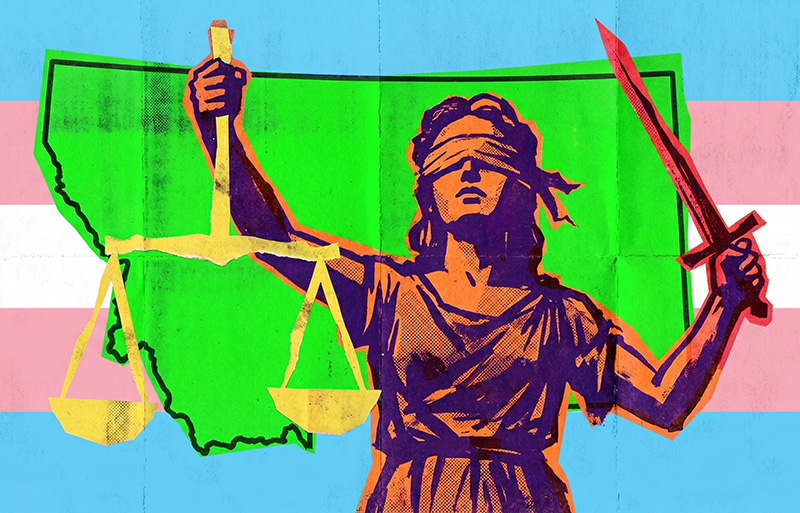
The Montana Supreme Court upheld a lower court order blocking the state from enforcing policies that prevent transgender people from obtaining identity documents that reflect their gender identity.
In 2021, Montana lawmakers passed a law restricting transgender people from obtaining birth certificates that reflect their gender identity unless they provide a court order showing they have undergone gender confirmation surgery. Two transgender people challenged the law, and a district judge issued a preliminary injunction blocking its enforcement.
Transgender activist Samantha Boucher deliberately violated a newly enacted Kansas law criminalizing the use of bathrooms or other facilities that do not align with a person’s sex assigned at birth.
The founder and executive director of the national nonprofit Trans Liberty, Boucher opposes the law, which took effect after Republican lawmakers overrode a veto by Democratic Gov. Laura Kelly.
Boucher told the Kansas Reflector she came to Kansas on March 31, Trans Day of Visibility, because "no single bill in American history has ever been as aggressive toward the trans community as SB 244," referring to the law by its legislative designation.
These are challenging times for news organizations. And yet it’s crucial we stay active and provide vital resources and information to both our local readers and the world. So won’t you please take a moment and consider supporting Metro Weekly with a membership? For as little as $5 a month, you can help ensure Metro Weekly magazine and MetroWeekly.com remain free, viable resources as we provide the best, most diverse, culturally-resonant LGBTQ coverage in both the D.C. region and around the world. Memberships come with exclusive perks and discounts, your own personal digital delivery of each week’s magazine (and an archive), access to our Member's Lounge when it launches this fall, and exclusive members-only items like Metro Weekly Membership Mugs and Tote Bags! Check out all our membership levels here and please join us today!






You must be logged in to post a comment.