The Texas Supreme Court ruled that the state attorney general’s office can require the LGBTQ advocacy group PFLAG to turn over documents as part of an investigation into whether doctors are prescribing gender-affirming treatments to minors in violation of state law.
The ruling overturns a lower court decision that had largely blocked Attorney General Ken Paxton’s office from seeking certain records.
Paxton had sought to obtain identifying information about PFLAG members in Texas and their communications with the LGBTQ advocacy group, particularly those who may have consulted the group about how to access gender-affirming care for their transgender children outside of Texas.
In 2023, Texas passed restrictions prohibiting doctors from prescribing puberty blockers or hormones to minors. Shortly afterward, PFLAG submitted an affidavit in a lawsuit challenging those restrictions, in which its executive director said families with transgender children were discussing “contingency plans” and “alternative avenues to maintain care in Texas.”
Paxton argued that his office needed access to correspondence between PFLAG and parents of transgender youth seeking care despite the ban. He said the information could help identify doctors to whom families were being referred and determine whether those providers violated state law or committed insurance fraud by prescribing treatments under other medical diagnoses.
Under Texas law, puberty blockers and hormone therapy may still be prescribed to minors for hormone imbalances or other conditions, but not for gender transition.
PFLAG sued to block the request, and a Travis County judge sided with the group, limiting what records had to be handed over. Paxton appealed to the state Supreme Court.
On March 13, the Texas Supreme Court said the lower court improperly interfered with the state’s investigation, noting that under state law the attorney general does not have to prove someone possesses relevant documents before requesting them.
The court said PFLAG must turn over several categories of documents, including communications about “contingency plans” or alternative care options, referrals or lists of health care providers treating transgender youth in Texas, communications involving providers referenced in the investigation, and records tied to the executive director’s affidavit. However, the group does not have to produce internal documents that fall outside those criteria.
The justices also noted that Paxton’s office had “agreed to allow redactions to preserve anonymity” for families or children named in the documents. State law also limits how such materials can be disclosed.
The case now returns to Travis County district court for further proceedings.
Paxton’s office has already taken action against doctors accused of violating the state’s ban on gender-affirming care for minors.
In 2024, Paxton sued Dr. May Lau, a pediatrician at the University of Texas Southwestern Medical Center in Dallas, alleging she prescribed hormones to at least 21 patients ages 14 to 17, implanted a puberty-blocking device in a 15-year-old, and falsely billed insurance for an endocrine disorder instead of gender dysphoria.
Lau voluntarily surrendered her medical license last year. In a statement to the Texas Tribune, she said she was moving her practice to Oregon and no longer needed a Texas license.
In November 2024, Paxton sued Dr. M. Brett Cooper, an employee at the University of Texas Southwestern Medical Center with hospital privileges at Children’s Medical Center Dallas, accusing him of prescribing testosterone to 15 transgender minors ages 15 to 17. That case is scheduled for trial in May.
Paxton also sued El Paso endocrinologist Hector Granados, alleging he had provided gender-affirming care to minors. The suit was later dropped after Granados said he had stopped providing such care before the 2023 ban took effect.
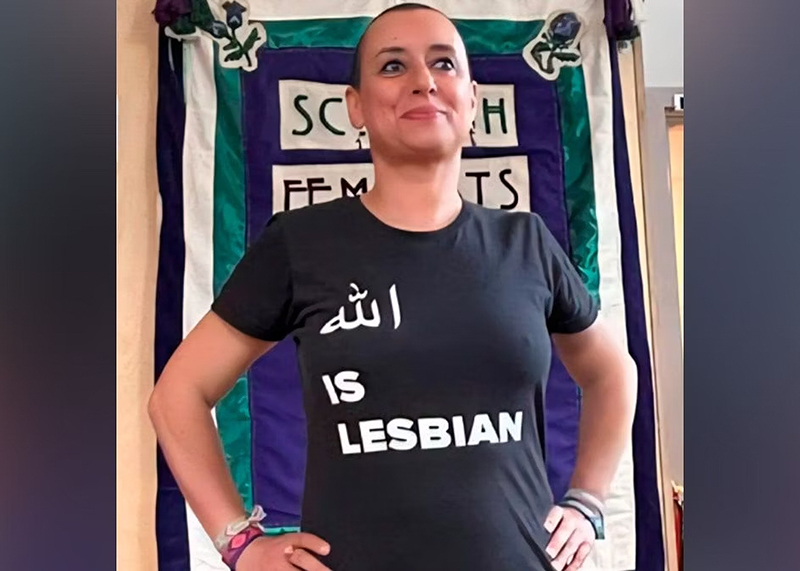
Ibtissame "Betty" Lachgar, a Moroccan lesbian activist jailed after posting a photo of herself wearing a T-shirt reading "Allah is a lesbian," may have to have her arm amputated may have to have her arm amputated as her health reportedly deteriorates in prison.
Lachgar, 50, was sentenced last September to two-and-a-half years in prison after authorities deemed the Facebook post "offensive to Islam."
"In Morocco, I walk around with T-shirts bearing messages against religions, Islam, etc.," Lachgar wrote in the post's caption. "You tire us with your sanctimoniousness, your accusations. Yes, Islam, like any religious ideology, is fascist, phallocratic and misogynistic."
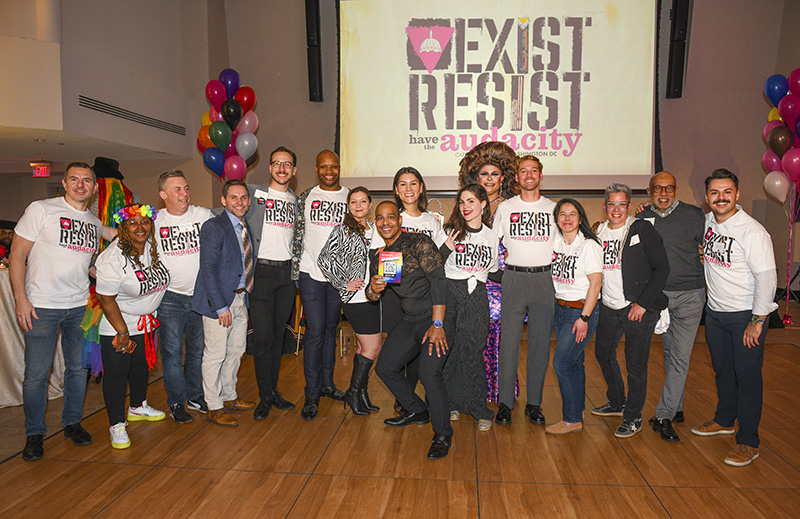
At its annual reveal party, the Capital Pride Alliance unveiled the theme for 2026 Capital Pride: "Exist. Resist. Have the Audacity!"
The theme is rooted in what the organization calls "the undeniable truth that our existence is not up for debate," and serves as a call for the community to "live loudly and proudly, stand firm against injustice and erasure, and embody the collective strength that has always defined the LGBTQ+ community."
"This year's theme is both a declaration and a demand," said Ryan Bos, CEO and president of the Capital Pride Alliance, in a statement. "'Exist. Resist. Have the Audacity!' reflects the resilience of our community and our responsibility to protect the progress we've made. As we look toward our nation's 250th anniversary, we affirm that LGBTQ+ people have always been and always will be a part of the United States' history, and we will continue shaping its future with strength and resolve."
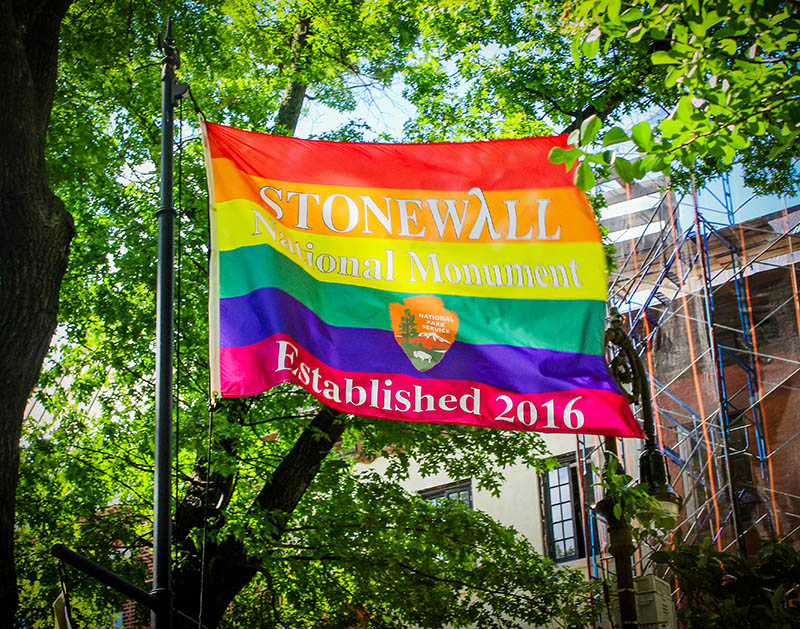
In what has become a familiar pattern, the Trump administration once again took aim at the LGBTQ community by removing a Pride flag from a flagpole at the Stonewall National Monument.
The historic site, designated a national monument by former President Barack Obama in 2016, spans 7.7 acres and encompasses the Stonewall Inn, Christopher Park, and several nearby streets and sidewalks. Portions of the site are also protected as both a New York City landmark and a New York state historical site.
The removal of the rainbow-colored Pride flag follows federal guidance issued by the U.S. Department of the Interior barring the display of so-called "non-agency" flags within the National Park System. The memo, issued last month, states that "only the U.S. flag and other congressionally or departmentally authorized flags are flown on NPS-managed flagpoles, with limited exceptions."
These are challenging times for news organizations. And yet it’s crucial we stay active and provide vital resources and information to both our local readers and the world. So won’t you please take a moment and consider supporting Metro Weekly with a membership? For as little as $5 a month, you can help ensure Metro Weekly magazine and MetroWeekly.com remain free, viable resources as we provide the best, most diverse, culturally-resonant LGBTQ coverage in both the D.C. region and around the world. Memberships come with exclusive perks and discounts, your own personal digital delivery of each week’s magazine (and an archive), access to our Member's Lounge when it launches this fall, and exclusive members-only items like Metro Weekly Membership Mugs and Tote Bags! Check out all our membership levels here and please join us today!






You must be logged in to post a comment.