FCC Floats Warning Labels for Transgender TV Content
FCC Chair Brendan Carr is seeking public comment on proposed changes to the parental ratings system that would flag content related to gender identity.
Federal Communications Commission Chair Brendan Carr is seeking public input on whether television programs that address transgender issues or feature trans or nonbinary characters should carry warning labels.
The FCC oversees broadcast and cable TV companies and helps shape the ratings system that guides parents on whether shows are appropriate for children.
In 1996, Congress gave TV companies the option to create their own voluntary ratings system or adopt one imposed by the FCC. The companies chose to create their own system, forming the TV Oversight Management Board, which developed the TV Parental Guidelines still used today for cable, satellite, and streaming services.
The law also required TV manufacturers to develop technology — commonly known as the V-chip — allowing parents to block violent, sexual, or otherwise age-inappropriate content.
Under the current system, programs are rated TV-Y for all children, TV-Y7 for those 7 and older, and TV-G for general audiences. Shows requiring parental guidance or intended for adults are rated TV-PG, TV-14, or TV-MA. Content descriptors may also be added to flag sexually suggestive dialogue (D), fantasy violence (FV), coarse language (L), sexual situations (S), or violence (V).
According to a public notice, the FCC is seeking input on potential changes to the ratings system that could add warnings for content or characters related to gender identity.
“Recently, parents have raised concerns that controversial gender identity issues are being included or promoted in children’s programs without providing any disclosure or transparency to parents,” the notice reads. “Specifically, the industry guidelines that parents rely on are rating shows with transgender and gender non-binary programming as appropriate for children and young children, and doing so without providing this information to parents, thereby undermining the ability of parents to make informed choices for their families.”
The notice asks whether the TV Oversight Management Board reflects a range of “family values” and whether to add representatives from faith-based organizations, a move critics say could shift the board toward social conservatives seeking to influence the ratings system.
The notice also seeks feedback on whether existing content descriptions are sufficient, the accuracy of current ratings, how complaints are handled, and whether streaming platforms apply age-appropriateness standards more loosely.
The public comment period closes May 22. Anyone can submit feedback through the FCC’s Comment Filing System under MB Docket No. 19-41, and the agency is required to review all submissions.
Brendan Carr – Photo: Internet Education Foundation, CC BY 4.0
In an April 22 post on X, Carr said parents have complained of “ratings creep” over the years.
“Specifically, they argue that New York & Hollywood programmers are promoting controversial issues in kids programming without providing any transparency or disclosures to parents,” Carr wrote. “This undermines the whole point of the law and the ratings system parents rely on.”
Anna Gomez, the FCC’s lone Democratic commissioner, told Politico that most Americans are more concerned about affordability than about gender identity warnings in TV ratings.
“The FCC’s own record shows the existing system is working fine,” Gomez said. “The most recent annual report found only 11 pieces of public correspondence relevant to the board’s work, and spot checks turned up just two instances where a rating actually needed to be changed. This is a solution in search of a problem, and another example of this Commission prioritizing culture war politics over the real issues that affect consumers every day.”
Critics say the move is another effort by the Trump administration to weaponize transgender issues, using the FCC to crack down on content it deems objectionable, with broader implications for future restrictions.
As reported by transgender journalist Erin Reed on her Erin in the Morning Substack, the FCC retains significant leverage over broadcast networks and their parent companies, many of which also operate streaming platforms.
Carr has seemingly enjoyed wielding that power, threatening last month to pull the licenses of TV networks that air so-called “fake news” about the Iran war — in other words, coverage that does not portray the Trump administration in a favorable light or align with the U.S. government’s official spin on the conflict.
Last year, Carr allegedly pressured ABC’s parent company, Disney, to remove comedian and late-night host Jimmy Kimmel from the airwaves over a monologue about the killing of right-wing activist Charlie Kirk, in which Kimmel joked that President Donald Trump did not seem overly saddened by the death of someone he had called a “friend.”
According to Reed, Carr’s actions appear to be “an attempt to extend ‘Don’t Say Gay’-style policies — which have restricted discussion of LGBTQ+ people in classrooms across red states — to national television ratings.”
“If networks bow to this pressure, the impact on LGBTQ+ programming could be enormous,” Reed wrote. “Transgender and nonbinary characters in children’s television are already vanishingly rare…. Youth shows could see what little representation remains stripped out entirely, as networks preemptively remove trans and nonbinary characters rather than risk a ratings penalty or government scrutiny.”
The U.S. Department of Education has terminated agreements with five school districts and a college that required schools to follow an interpretation embraced by the Biden and Obama administrations extending sex-discrimination protections to transgender students.
The move marks the first known instance of the Trump administration terminating civil rights settlements previously negotiated with schools or school districts.
The five school districts -- Cape Henlopen School District in Delaware, which serves Rehoboth Beach; Fife School District in Washington State; Delaware Valley School District in Pennsylvania; La Mesa-Spring Valley School District in California; and Sacramento City Unified School District -- along with Taft College in California's Central Valley, reached those agreements with past administrations following alleged incidents of discrimination involving transgender or nonbinary students.
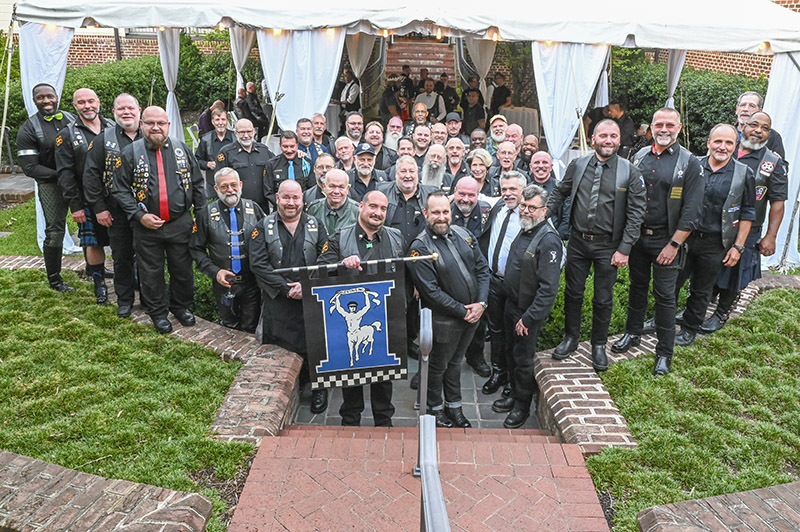
The Centaur Motorcycle Club is donating $160,000 to LGBTQ organizations from proceeds raised during January’s Mid-Atlantic Leather Weekend.
Gary Samuels, president of the D.C-based leather organization, said the fundraising success is a "testament to the generosity, dedication, and spirit of our members, volunteers, and the broader community who come together each year in support of a greater purpose."
Each year, Centaur MC donates hundreds of thousands of dollars to national and local charities, many serving the LGBTQ community, as part of its broader mission.
"We seek to celebrate and try to lift up as many students as we can," says Charles Roth, chair of the Team DC Scholarship Committee. Each year, Team DC, an umbrella organization for LGBTQ sports clubs across the region, awards $2,500 scholarships to several area high school student-athletes to support their college education.
The scholarships will be handed out at Team DC's annual Night of Champions Gala, taking place on Saturday, April 18, at the Georgetown Marriott. The evening, which features a reception, dinner, and both silent and live auctions, raises critical support for the organization and its year-round community efforts.
These are challenging times for news organizations. And yet it’s crucial we stay active and provide vital resources and information to both our local readers and the world. So won’t you please take a moment and consider supporting Metro Weekly with a membership? For as little as $5 a month, you can help ensure Metro Weekly magazine and MetroWeekly.com remain free, viable resources as we provide the best, most diverse, culturally-resonant LGBTQ coverage in both the D.C. region and around the world. Memberships come with exclusive perks and discounts, your own personal digital delivery of each week’s magazine (and an archive), access to our Member's Lounge when it launches this fall, and exclusive members-only items like Metro Weekly Membership Mugs and Tote Bags! Check out all our membership levels here and please join us today!







You must be logged in to post a comment.