Transgender activist Samantha Boucher deliberately violated a newly enacted Kansas law criminalizing the use of bathrooms or other facilities that do not align with a person’s sex assigned at birth.
The founder and executive director of the national nonprofit Trans Liberty, Boucher opposes the law, which took effect after Republican lawmakers overrode a veto by Democratic Gov. Laura Kelly.
Boucher told the Kansas Reflector she came to Kansas on March 31, Trans Day of Visibility, because “no single bill in American history has ever been as aggressive toward the trans community as SB 244,” referring to the law by its legislative designation.
The law not only restricts bathroom use for transgender people but also requires all state IDs to carry a gender marker reflecting a person’s sex assigned at birth. Since its passage, Kansas has retroactively invalidated the driver’s licenses of anyone whose gender marker does not comply. Individuals found with an invalid license or other identity document can be prosecuted and face penalties.
In response, Trans Liberty has advised transgender Kansans to leave the state and launched “Operation Lifeboat,” an initiative providing cash assistance to help residents relocate to states with more supportive policies.
Boucher has argued there is confusion over how the law will be enforced and has sought to test its limits, noting that it allows people who object to transgender individuals in opposite-sex bathrooms to sue those they believe are in violation.
Under the law, a first violation results in a warning, a second carries a $1,000 civil penalty, and subsequent offenses can be prosecuted as misdemeanors punishable by up to six months in jail. However, it remains unclear whether enforcement requires a formal complaint.
Boucher encountered Gov. Kelly in the Kansas State Capitol rotunda, thanked her for vetoing the legislation, and said she intended to violate the law to test how the so-called “bathroom ban” would be enforced.
“I am very sorry that you and others have been put in this situation,” said Kelly.
“And now, we will see if the attorney general chooses to enforce the law,” Boucher replied.
Upon entering the Capitol, Boucher told Capitol Police that she intended to use the bathroom in violation of the law. Police told her they are not responsible for enforcing the civil provisions and would notify the Kansas Department of Administration, which oversees the Capitol building.
At Boucher’s request, Kansas Highway Patrol Lt. Grady Walker followed her to the bathroom, filmed her entering and exiting three times — using it on the first occasion — and questioned her privately afterward.
Walker later told reporters he was treating the violation as a criminal investigation, saying, “We will not be able to discuss or disclose any information about this investigation until it’s concluded, but she is free to leave at this time.”
Samir Arif, a spokesman for the Kansas Department of Administration, told the Reflector that as of 4 p.m. on March 31 the agency had not received any complaints about Boucher’s use of the restroom. He declined to answer follow-up questions about how the law is enforced, who must file a complaint to trigger enforcement, or whether there is a deadline to do so.
Under the law, the attorney general’s office is responsible for prosecuting violations but must first give government entities notice and an opportunity to remedy any alleged violations before they can be fined for failing to enforce the bathroom restrictions.
The law is currently being challenged in court. A judge previously denied an emergency request from the American Civil Liberties Union to block enforcement, and the ACLU is continuing to seek an injunction. The court is not scheduled to hear arguments until September 29.
Boucher told Topeka-based NBC affiliate KSNT she hopes to shine a light on flaws in the law and prevent other states from adopting similar measures.
“This is unprecedented, and it cannot be allowed to stand because the domino effect that it’s going to have across the country is going to be profound,” she said.
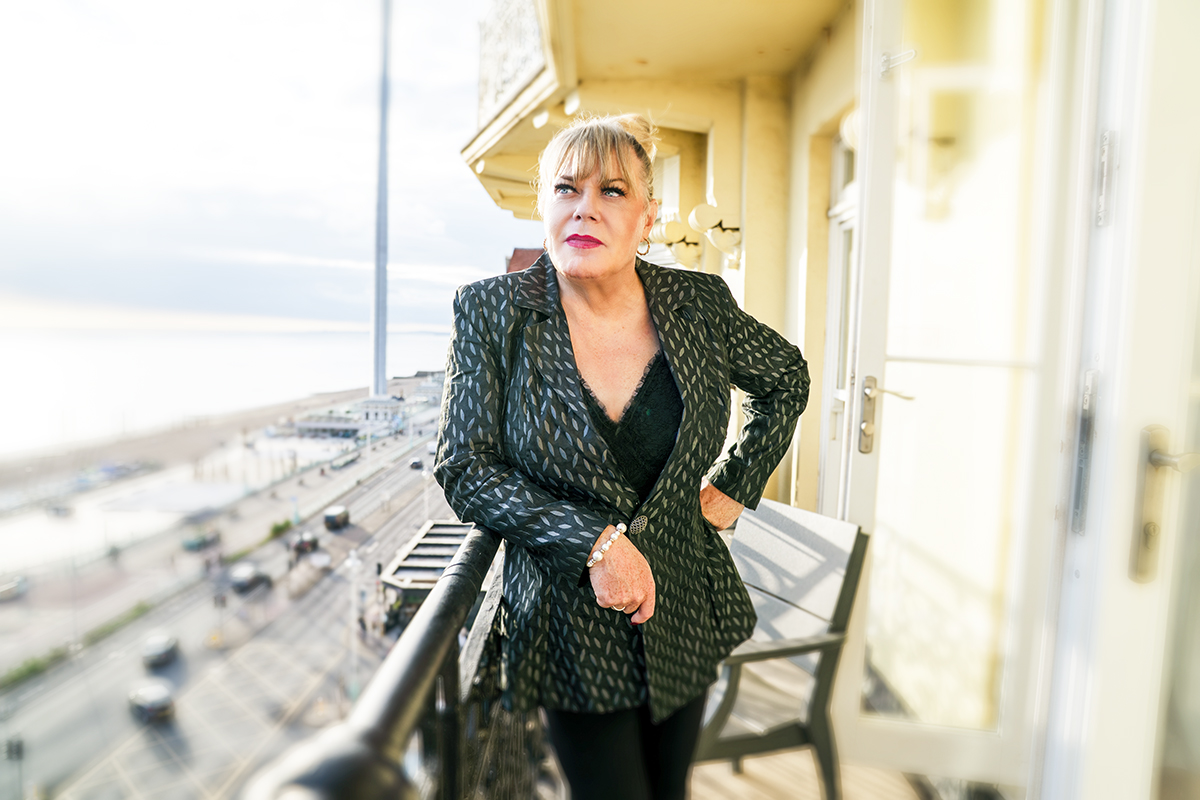
A conversation with Suzy Eddie Izzard is like trying to keep pace with a runaway train -- exhilarating, relentless, just barely containable. Ideas tumble out at speed, veering from Shakespeare to history to personal reflection, all delivered with the charisma that has defined her decades-long career across stand-up, stage, film, and television. It's a thrill ride.
Barreling from topic to topic with a kind of manic precision, the glamorous Izzard brings a joie de vivre to her delivery that doesn't fully translate on the page -- the sense that each answer is its own performance, unfolding in real time.
Ohio doesn't have a standalone hate crime statute. Instead, the state relies on an "ethnic intimidation" law that allows prosecutors to elevate a crime from a misdemeanor to a felony if a suspect targeted someone based on their "race, color, religion, or national origin."
But a new bipartisan bill to create a formal hate crimes law could ultimately exclude LGBTQ victims.
The bill -- HB 306 -- would create a new offense of "hate crime" in cases where a victim was allegedly targeted for violence because of personal characteristics -- including race, religion, sex, disability, political affiliation, age, military status, familial status, ancestry, national origin, or involvement in a labor dispute.
Former Trump administration staffers testified under oath that federal grants referencing LGBTQ people were flagged for cancellation as part of the administration's efforts to cut government spending.
In a recorded video of his testimony, Nathan Cavanaugh, a political appointee who worked with Elon Musk's Department of Government Efficiency (DOGE) team through the General Services Administration, described how the Trump administration moved to purge diversity-related projects from the National Endowment for the Humanities, which distributes hundreds of millions of dollars each year to support historical research, museums, archives, and public humanities programs across the United States.
These are challenging times for news organizations. And yet it’s crucial we stay active and provide vital resources and information to both our local readers and the world. So won’t you please take a moment and consider supporting Metro Weekly with a membership? For as little as $5 a month, you can help ensure Metro Weekly magazine and MetroWeekly.com remain free, viable resources as we provide the best, most diverse, culturally-resonant LGBTQ coverage in both the D.C. region and around the world. Memberships come with exclusive perks and discounts, your own personal digital delivery of each week’s magazine (and an archive), access to our Member's Lounge when it launches this fall, and exclusive members-only items like Metro Weekly Membership Mugs and Tote Bags! Check out all our membership levels here and please join us today!










You must be logged in to post a comment.