
Brooklyn Lesbian Bar Cancels Pride Events After Complaints
Noise complaints prompted Ginger's, one of the nation's few remaining lesbian bars, to cancel most of its Pride Month DJ events.

Ginger’s is canceling most of its DJ events for Pride Month after receiving dozens of noise complaints from neighbors.
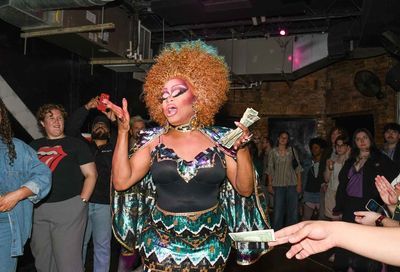
The popular lesbian bar, located in Brooklyn’s Park Slope neighborhood, opened in 2000 and is best known as an Irish dive bar with billiards tables and an outdoor patio that hosts a range of events, from drag king shows and LGBTQ storytelling to DJ nights. Each year, it typically hosts a schedule of various DJs spinning and mixing during Pride Month.
But in a May 18 Instagram post, Ginger’s wrote, “Due to ongoing noise concerns in the neighborhood, we’ve made the difficult decision to cancel the majority of our DJ events during Pride this year…. As much as we love turning up the music and creating space for queer joy, we also want to remain respectful of the neighborhood we have called home for the past 26 years, and of our space, which has been a neighborhood bar for more than 100 years.”

The post noted that Ginger’s would continue to host its annual Brooklyn Pride celebration on June 13 and told patrons to check back for upcoming Pride Month events — minus DJs — in the coming weeks. It also asked patrons to “be considerate of our neighbors while out on the street or in the backyard.”
Ginger’s received 20 noise complaints between January 1 and May 21 of this year, according to police data. New York City’s 311 system logged 49 noise complaints tied to the bar’s address during the same period last year, according to public data.
The announcement was met with an outpouring of support for the bar and a wave of social media posts criticizing the neighbors — though not by name — who complained.
Brooklyn Borough President Antonio Reynoso, a Democrat running for the 7th Congressional District, told Gothamist that the cancellations at Ginger’s are “representative of a bigger problem we’re seeing across Brooklyn.” He noted that similar noise complaints have targeted the West Indian Day Parade and Puerto Rican Day celebrations.
“Ginger’s isn’t the bad neighbor — it’s the people demanding that communities and cultures take up less space who are not being neighborly,” Reynoso said.
Former New York City Comptroller Brad Lander, a former mayoral candidate now seeking the Democratic nomination for the 10th Congressional District, also pushed back against the idea that longstanding institutions must alter their behavior to suit newcomers.

“Pride Month is supposed to be a time of joy in all of its purest, most vibrant (and yes, loudest!) forms of expression,” Lander wrote in an Instagram post. “It was such a bummer to learn that Ginger’s, a storied lesbian bar, had to shut down many of its Pride events over noise complaints. This sure doesn’t sound like the Brooklyn I know. Here we believe in protecting & treasuring LGBTQ+ spaces.”
As reported by them, Park Slope was heavily gentrified in the late 20th century but is now undergoing what experts call “super-gentrification” — described by SUNY New Paltz sociologist Judith Halasz as “the further upscaling of already gentrified neighborhoods with the in-migration of upper-income residents and displacement of middle class residents, many of whom were among the initial gentrifiers.”
One side effect of the “super-gentrification” of Park Slope and similar neighborhoods is that some newer residents may have little attachment to longstanding cultural institutions or traditions, leading to tensions over noise, nightlife, and neighborhood character. Many of those defending Ginger’s on social media blamed newer arrivals to the neighborhood for the complaints.
Several commenters also noted that Ginger’s — which Rachel Karp, author of The Lesbian Bar Chronicles, recently told Metro Weekly is one of her favorite hangouts — is one of only about three dozen lesbian bars remaining in the United States.
“Such a bummer for people to move into a lively neighborhood and then complain about the liveliness,” wrote one Instagram user.
The New York Hospitality Alliance, which represents more than 24,000 restaurants and nightlife establishments, also backed the bar.
“When the oldest lesbian bar in Brooklyn cancels Pride events because of neighbor complaints, it harms that community and underscores a larger problem, which can erode the cultural spaces that have long made New York City so special,” the group’s executive director, Andrew Rigie, told Gothamist.
More from Metro Weekly:




Support Metro Weekly’s Journalism
These are challenging times for news organizations. And yet it’s crucial we stay active and provide vital resources and information to both our local readers and the world. So won’t you please take a moment and consider supporting Metro Weekly with a membership? For as little as $5 a month, you can help ensure Metro Weekly magazine and MetroWeekly.com remain free, viable resources as we provide the best, most diverse, culturally-resonant LGBTQ coverage in both the D.C. region and around the world. Memberships come with exclusive perks and discounts, your own personal digital delivery of each week’s magazine (and an archive), access to our Member's Lounge when it launches this fall, and exclusive members-only items like Metro Weekly Membership Mugs and Tote Bags! Check out all our membership levels here and please join us today!


You must be logged in to post a comment.