Spain is the No. 1 country for LGBTQ rights in Europe
Spain has overtaken Malta as the European country with the strongest LGBTQ rights protections, ending the island nation’s decade-long run at the top of ILGA Europe’s annual rankings.
Each year, ILGA Europe publishes its “Rainbow Map” and LGBTQ rights index, ranking 49 European countries based on their laws and policies affecting LGBTQ people. Countries receive scores from zero to 100 percent and are assigned colors along the rainbow spectrum on ILGA’s interactive map.
The rankings are supported by ILGA’s “Annual Review of the Human Rights Situation of LGBTI People in Europe and Central Asia,” which examines how a country’s laws and policies affect the daily lives of LGBTQ people. The findings are verified by more than 250 activists, legal professionals, and policy specialists across the region.
Each country’s score reflects policies across seven areas, including nondiscrimination protections, family rights, hate crime and hate speech laws, legal gender recognition, intersex bodily autonomy, freedom of assembly and expression, and pro-LGBTQ asylum policies.
In this year’s index, Spain earned an overall score of 88.70%, receiving perfect marks for family rights, civil society protections, and pro-LGBTQ asylum policies. The country also scored highly on nondiscrimination laws and legal gender recognition, although it received lower marks for hate crime protections and intersex bodily autonomy.
ILGA said Spain’s rise to the top of the rankings was driven by the depathologization of transgender identities in health care, expanded legal protections, the creation of an independent equal treatment authority, and efforts to block anti-transgender legislation.
Malta, which earned an overall score of 87.33%, fell to second place largely because of Spain’s sharp rise in the rankings from fifth place in 2025. ILGA noted that Malta still lacks some explicit LGBTQ protections, particularly involving goods and services, health care settings, and intersex bodily autonomy.
Rounding out the top five were Iceland in third place with a score of 85.56%, followed by Belgium at 85.31% and Denmark at 85.10% — a five-point increase from the previous year. Finland ranked sixth with a score of 69.85%.
At the other end of the spectrum are countries with few LGBTQ protections, many of which actively persecute LGBTQ people or crack down on LGBTQ groups as part of broader efforts to consolidate political power and target minorities. In several of those countries, political leaders have invoked conservative religious beliefs to justify anti-LGBTQ laws and policies.
Russia — where the government has declared the “international LGBT movement” an “extremist organization” — received the lowest score at 2%, followed by Azerbaijan at 2.25%, Turkey at 4.75%, Belarus at 7.01%, Armenia at 9.13%, and Georgia at 11.88%.
In general, Eastern European countries scored lower on many of the metrics used to determine ILGA’s rankings compared to their Western European counterparts.
The United Kingdom remained in the middle of the rankings at 22nd place, with a score of 43.90% — slightly above the continental average of 42.82%. But the country lost two points from last year following policy decisions made after a 2025 Supreme Court ruling limiting the legal definition of “women” to people assigned female at birth.
Katrin Hugendubel, ILGA-Europe’s deputy director, said in a press release that strong political leadership is often necessary to advance pro-LGBTQ laws. Even then, she noted, legal protections do not always translate into lived equality.
For example, LGBTQ people in Spain can still experience harassment, discrimination, and violence despite the country’s top ranking, particularly when laws are not fully enforced. A report from the LGTBI+ Spanish Federation found that assaults against LGBTQ people increased 15% from 2024, driven in part by anti-LGBTQ hate speech that critics say has emboldened violence against sexual and gender minorities.
“Spain’s number one ranking is a strong example of what becomes possible when a government makes a deliberate choice to advance equality rather than retreat from it,” Hugendubel said. “We see this same spirit in leaders like Zohran Mamdani in New York, who are refusing to bow to the authoritarian pressure of this moment and choosing instead to stand with their communities. Of course, more needs to be done in Spain, but this is a reminder that political courage is a choice, and that governments who make it can effectively push back.”
A federal judge in Oregon issued a blistering ruling against the U.S. Department of Health and Human Services and Secretary Robert F. Kennedy Jr., blocking their efforts to yank federal funding from providers of gender-affirming care for minors.
At the center of the case is the so-called "Kennedy Declaration," in which the HHS secretary claimed that gender-affirming care does not meet accepted medical guidelines, lacks evidence of benefit for treating gender dysphoria, and may cause long-term harm.
At the time, critics said Kennedy based the declaration on an HHS review of gender-affirming care that was anonymously produced and rushed through in 90 days without peer review, in order to comply with President Trump's executive order limiting minors’ access to such treatments.
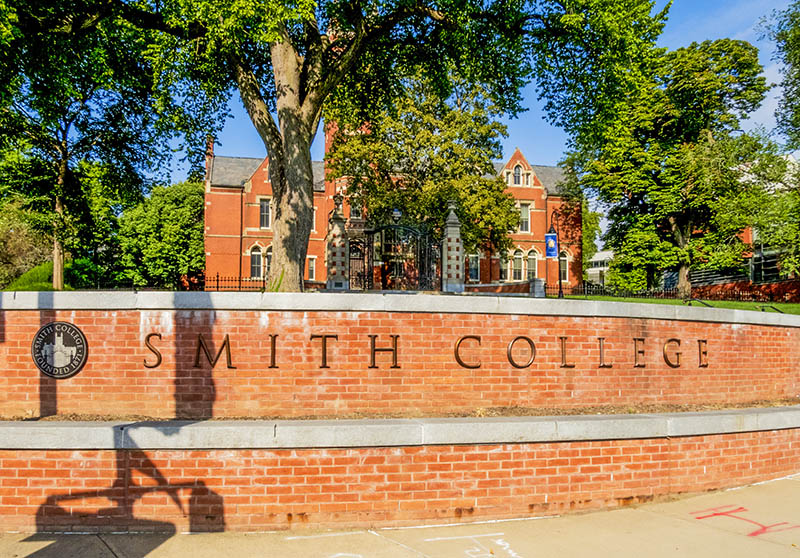
The U.S. Department of Education has opened a civil rights investigation into Smith College, accusing the all-women's school in Northampton, Massachusetts, of violating federal laws against sex-based discrimination by allowing transgender women to enroll.
The investigation marks the first time the Trump administration has targeted school admissions policies as part of its broader crackdown on transgender rights. Previously, the Education Department's Office for Civil Rights had focused primarily on transgender athletes competing on female sports teams and transgender restroom access.
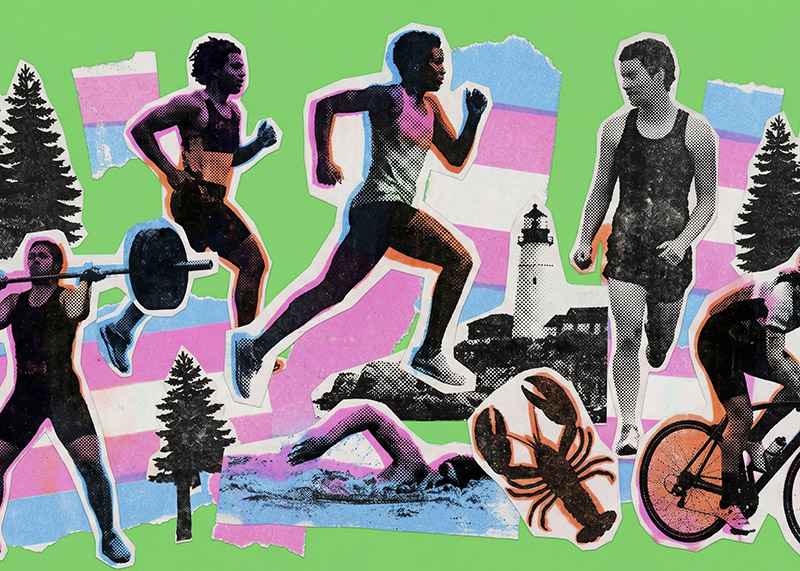
A lawsuit has been filed challenging a proposed referendum that would bar transgender athletes from competing on public school teams based on the sex listed on their original birth certificate.
The measure, slated to appear on the ballot this fall, would also require public schools to maintain sex-segregated bathrooms, locker rooms, and changing spaces based on students' birth sex, and allow students who believe they were denied athletic opportunities by a transgender competitor to sue for damages.
But three Maine residents filed suit, claiming supporters of the referendum failed to gather enough valid signatures from registered voters to qualify the measure for the ballot. In their complaint, they say they identified hundreds of duplicate signatures and hundreds more lacking required date information. They also allege that some signatures came from unregistered voters or omitted required residence information.
These are challenging times for news organizations. And yet it’s crucial we stay active and provide vital resources and information to both our local readers and the world. So won’t you please take a moment and consider supporting Metro Weekly with a membership? For as little as $5 a month, you can help ensure Metro Weekly magazine and MetroWeekly.com remain free, viable resources as we provide the best, most diverse, culturally-resonant LGBTQ coverage in both the D.C. region and around the world. Memberships come with exclusive perks and discounts, your own personal digital delivery of each week’s magazine (and an archive), access to our Member's Lounge when it launches this fall, and exclusive members-only items like Metro Weekly Membership Mugs and Tote Bags! Check out all our membership levels here and please join us today!








You must be logged in to post a comment.