The U.S. Supreme Court has declined to hear a case brought by parents who say their child’s school district failed to notify them of the student’s social transition, including the use of a new name and different pronouns during school hours.
The high court offered no explanation for declining the appeal, leaving in place a 2-1 ruling from a three-judge panel of the 11th U.S. Circuit Court of Appeals that sided with the school district.
The case stems from a dispute involving January and Jeffrey Littlejohn, whose middle-school-aged child, assigned female at birth, told her parents in 2020 that she was questioning her gender and asked to go by “J” and use they/them pronouns. The parents did not agree but told their child, referred to as “A.G.” in court documents, that she could use “J” as a nickname at school.
Soon after, A.G. told a school counselor they wanted to use a different name and they/them pronouns. The counselor, a school social worker, and the principal then met with the student to develop a support plan, asking A.G. about their preferred name and pronouns. The Littlejohns later claimed in court filings that they were neither informed of nor invited to the meeting because their child did not specifically request their presence.
A few days later, the Littlejohns say they learned of the support plan meeting and demanded that school officials stop meeting privately with their child or treating her as nonbinary. They were later given a copy of the plan.
However, an email obtained by CNN in 2022 shows that January Littlejohn asked the school to use they/them pronouns for her child and said she would not stop her child from using her preferred name at school. When a teacher asked if the email could be shared with others, Littlejohn replied: “Whatever you think is best or [A.G.] can handle it herself.”
“This gender situation has thrown us for a loop. I sincerely appreciate your support,” Littlejohn wrote in another email sent the same day. “I’m going to let [A.G.] take the lead on this.”
The Littlejohns eventually sued the Leon County School Board, based in Tallahassee, along with district administrators, alleging violations of their parental due process and familial privacy rights. The lawsuit centers on Leon County’s procedures for handling transgender and gender-nonconforming students.
Under the procedures in place when A.G. disclosed they wanted to be treated as nonbinary, students asserting a new gender identity would be treated consistent with that identity, with staff developing support plans and accommodations as needed. The policy did not require teachers to “out” transgender or nonbinary students to their parents, noting that doing so could be dangerous, and required a student’s permission before notifying parents.
In 2021, Florida enacted a “Parent’s Bill of Rights” — dubbed by LGBTQ advocates the “Don’t Say Gay” law — prohibiting schools from infringing on parents’ rights to direct the “upbringing, education, health care and mental health” of their children. To comply, Leon County revised its procedures in June 2022 to ensure school personnel informed parents when students identified as a gender that did not match their assigned sex at birth.
In their lawsuit, the Littlejohns argued that Leon County’s now-defunct procedures for handling transgender and nonbinary students violated their parental rights.
A federal judge dismissed the Littlejohns’ lawsuit in December 2022. They appealed to the 11th Circuit, which upheld the dismissal in a March 2025 ruling. The Littlejohns then sought an en banc hearing — in which all active judges on the conservative-leaning court would reconsider the case — but that request was denied, prompting their appeal to the U.S. Supreme Court.
Since filing their lawsuit and the passage of Florida’s parental rights law, the Littlejohns have become a cause célèbre among conservatives opposed to gender-affirming school policies. President Donald Trump gave January Littlejohn — seated beside First Lady Melania Trump during his 2025 address to Congress — a shout-out, calling the district’s trans-affirming policies a form of “child abuse.”
By declining to hear the Littlejohns’ challenge, the Supreme Court sidesteps, for now, a broader policy debate over parental rights and whether school officials should be required to “out” LGBTQ students to their parents. The court recently declined a similar case, though at least three justices — Samuel Alito, Clarence Thomas, and Neil Gorsuch — have signaled interest in taking up the issue.
South Carolina Republican Gov. Henry McMaster has signed a bill into law requiring multi-user restrooms, locker rooms, and changing facilities in K-12 schools and public colleges to be designated for use according to a person's sex assigned at birth.
The new law -- the "South Carolina Student Physical Privacy Act" -- defines "sex" as a person's biological sex as observed or verified at birth.
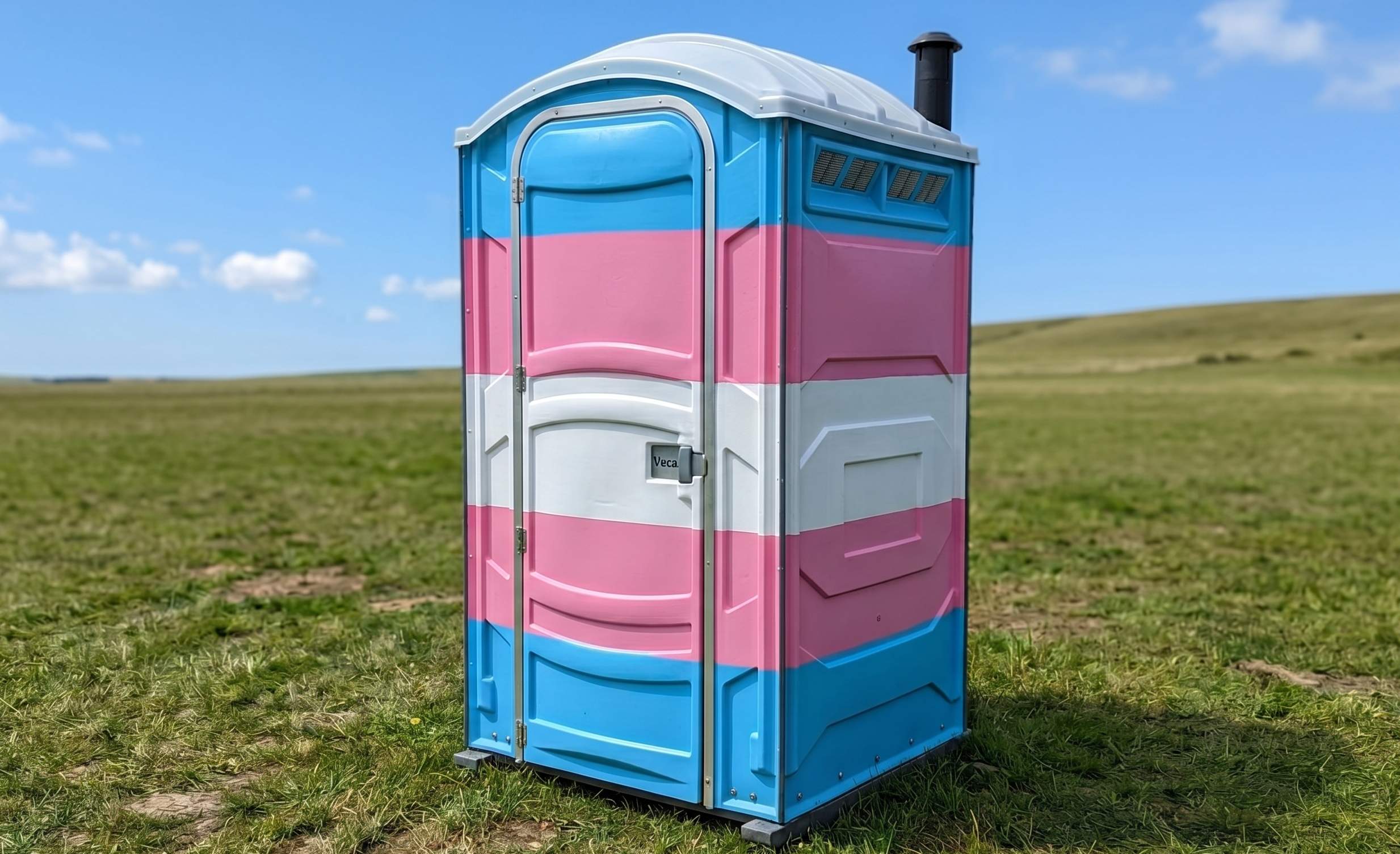
It allows transgender students to use single-occupancy restrooms. But if a school lacks one, it can designate outdoor porta-potties as single-occupancy restrooms. The measure could effectively force transgender students to use the porta-potties.
A federal judge has granted a preliminary injunction blocking Idaho from enforcing a law that could penalize transgender people with up to five years in prison for using public bathrooms that do not align with their assigned sex at birth.
The law, known as HB 752, was set to take effect on July 1 after being signed by Republican Gov. Brad Little earlier this year. However, the injunction bars police from enforcing the law's bathroom restrictions. It does not apply to similar restrictions on access to changing rooms, which the lead plaintiffs -- six transgender Idahoans -- have not challenged.
A Kansas judge has temporarily blocked the state from enforcing its law banning minors from accessing non-surgical transition-related treatments such as hormones or puberty blockers.
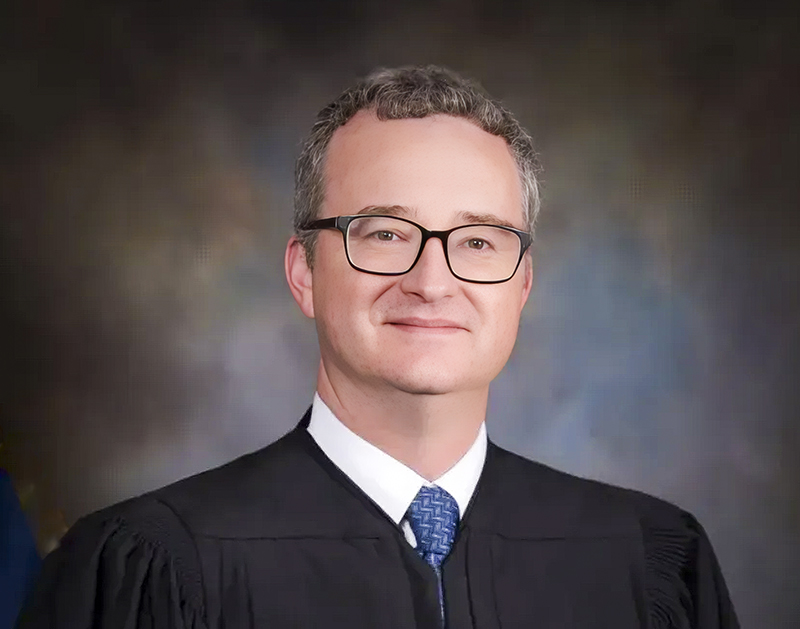
On May 15, Judge Carl Folsom III of the State District Court in Douglas County granted a temporary injunction blocking the state from enforcing the law, finding that it likely violated parents' rights to make decisions about their children's health and wellbeing.
In his 117-page ruling, Folsom -- who was appointed by Democratic Gov. Laura Kelly -- wrote that transgender children were likely to suffer "irreparable harm" if the ban on transition-related hormonal treatments remained in effect. He also cited testimony asserting that gender-affirming, non-surgical treatments for minors are safe, effective, and medically credible.
These are challenging times for news organizations. And yet it’s crucial we stay active and provide vital resources and information to both our local readers and the world. So won’t you please take a moment and consider supporting Metro Weekly with a membership? For as little as $5 a month, you can help ensure Metro Weekly magazine and MetroWeekly.com remain free, viable resources as we provide the best, most diverse, culturally-resonant LGBTQ coverage in both the D.C. region and around the world. Memberships come with exclusive perks and discounts, your own personal digital delivery of each week’s magazine (and an archive), access to our Member's Lounge when it launches this fall, and exclusive members-only items like Metro Weekly Membership Mugs and Tote Bags! Check out all our membership levels here and please join us today!








You must be logged in to post a comment.