A new report from the Wanda Alston Foundation and the LGBTQ+ Politics Research Initiative at Loyola Marymount University finds that many LGBTQ young adults in D.C. are struggling with housing costs, financial instability, mental health challenges, and feelings of isolation.
The “Out & Counted Research Report,” based on a survey of 304 LGBTQ young adults, aged 18 to 30, living in Washington, D.C., highlights several challenges facing the community and identifies areas where government agencies and local nonprofits may need to provide additional support.
More than half of respondents, or 55%, reported a household income below $50,000, including 11% who make less than $25,000 per year. Another 28% reported incomes between $50,000 and $99,999 — meaning the vast majority of LGBTQ young adults surveyed earn less than the median income in the District.
Eighty-one percent of respondents reported being employed full-time, while 4% were employed part-time. Six percent were students, another 6% were unemployed and looking for work, and 1% were unemployed and not currently seeking employment.
Among those employed, nearly half said they were underpaid relative to their professional experience and background. Among those unemployed and seeking work, 70% said their job search had been difficult.
Nearly half of respondents, or 48%, said they struggled to afford basic necessities such as housing, food, or utilities. About 1 in 4 said they had worried about having enough food for themselves or their household over the previous 12 months.
The report also found that more than one-quarter of LGBTQ young adults, or 26%, had experienced housing instability in their lifetime, with two-thirds of that group reporting instability within the previous 12 months. Additionally, 79% of respondents reported difficulty paying rent or a mortgage during that same period.
Amid those housing challenges, nearly one-third of LGBTQ young adults said they have considered leaving the District. While 40% of respondents said they want to purchase a home in D.C., 39% said they are not confident they will be able to do so within the next five years.
Yet 75% of LGBTQ young adults said they were unfamiliar with any housing programs offered by the D.C. government — suggesting a need for greater outreach and education about available resources.
Affordable housing emerged as the top factor that would make LGBTQ young adults more likely to remain in D.C., cited by 84% of respondents, followed by better job opportunities (68%), higher pay (60%), and feeling more welcomed and valued (59%). Forty-seven percent said more LGBTQ spaces would make them more likely to stay in the District, while 42% cited safer communities and 34% cited better access to health care.
Although 80% of LGBTQ young adults said they felt safe being out in public spaces over the past 12 months, nearly 4 in 10, or 37%, said they had personally experienced discrimination in D.C. during that same period.
The report also contains troubling data about the mental and emotional well-being of LGBTQ young adults. More than half of respondents, or 54%, rated their mental health as less than good, including 2% who described it as very poor, 10% as poor, and 42% as fair.
Thirteen percent of respondents reported being unable to access mental health services, despite wanting them, in the previous 12 months. Among that group, 62% cited a lack of insurance coverage, 49% reported difficulty finding available providers, 33% cited scheduling or time constraints, and 28% cited concerns about privacy or stigma.
The report also found that 80% of LGBTQ young adults said they lacked companionship, felt left out, or felt isolated from others at least some of the time.
A sizable number of LGBTQ young adults also reported using substances like alcohol, tobacco, or drugs. Approximately 40% reported using tobacco or nicotine products, 32% reported using e-cigarettes or vaping products, and half reported using marijuana products, including 8% who use marijuana daily and 10% who use it multiple times a week.
Ninety percent of LGBTQ young adults reported drinking alcohol, including 4% who drink four or more days a week, 37% who drink between one and three days per week, and 50% who drink occasionally. Among those who drink, 95% reported drinking with friends, 71% at bars, 55% at clubs, and 15% alone.
In response to the findings, the report recommends that the District develop policies to address the affordability crisis impacting LGBTQ young adults, including expanding support for residents facing financial and housing instability.
“These findings suggest the District’s LGBTQ+ young people are being pushed to the brink,” Cesar Toledo, the executive director of the Wanda Alston Foundation, said in a statement. “They are working hard, yet hitting an affordability cliff, deepened by a loneliness paradox and alarming health-risk behaviors. To ignore these findings is to accept a ‘Queer Flight’ that will displace our LGBTQ+ community and drain the very lavender economic engine that Wells Fargo once famously noted as a secret sauce to economic growth.”
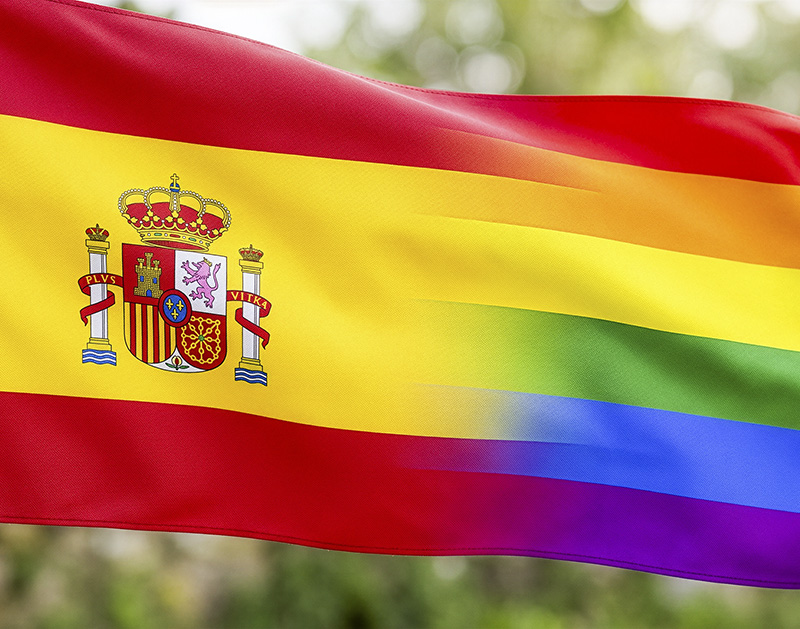
Spain has overtaken Malta as the European country with the strongest LGBTQ rights protections, ending the island nation's decade-long run at the top of ILGA Europe's annual rankings.
Each year, ILGA Europe publishes its "Rainbow Map" and LGBTQ rights index, ranking 49 European countries based on their laws and policies affecting LGBTQ people. Countries receive scores from zero to 100 percent and are assigned colors along the rainbow spectrum on ILGA's interactive map.
The rankings are supported by ILGA's "Annual Review of the Human Rights Situation of LGBTI People in Europe and Central Asia," which examines how a country's laws and policies affect the daily lives of LGBTQ people. The findings are verified by more than 250 activists, legal professionals, and policy specialists across the region.
A Washington ballot initiative would require student athletes in girls' sports to verify their sex through genital exams, genetic testing, or hormone analysis.
Student athletes in Washington State who wish to compete in girls' sports could face genital exams under an anti-transgender ballot initiative headed to voters in November.
The initiative would require students to compete on teams corresponding to their sex assigned at birth and verify their "biological sex" before being cleared to play. The measure would bring Washington in line with laws or regulations in 27 states that bar transgender girls from competing on female-designated middle and high school teams.
Under the initiative, students could verify their biological sex through a visual genital exam, a genetic test, or a blood test measuring testosterone levels. The genital exam, which could be conducted by a medical professional without physical contact, would likely be the simplest option to administer, according to Seattle NPR affiliate KUOW.
Niger's military junta has enacted a new penal code criminalizing homosexuality.
The West African nation is the latest African country to criminalize homosexuality, just months after Senegal doubled the penalty for consensual same-sex relations.
The new penal code, which took effect on June 11, punishes anyone who "commits or attempts to commit an immodest or unnatural act or practices lesbian, gay, bisexual, trans-gender, Queer, intersex, Asexual (LGBTQIA+) acts" with five to 10 years in prison and a fine. How authorities would determine what constitutes an "asexual act" remains unclear.
These are challenging times for news organizations. And yet it’s crucial we stay active and provide vital resources and information to both our local readers and the world. So won’t you please take a moment and consider supporting Metro Weekly with a membership? For as little as $5 a month, you can help ensure Metro Weekly magazine and MetroWeekly.com remain free, viable resources as we provide the best, most diverse, culturally-resonant LGBTQ coverage in both the D.C. region and around the world. Memberships come with exclusive perks and discounts, your own personal digital delivery of each week’s magazine (and an archive), access to our Member's Lounge when it launches this fall, and exclusive members-only items like Metro Weekly Membership Mugs and Tote Bags! Check out all our membership levels here and please join us today!






You must be logged in to post a comment.