
Dolly Parton Called — And I Blocked Her
My mistake nearly cost me the interview of a lifetime, but Dolly’s response taught me an unforgettable lesson in kindness.

Whenever a major star dies, social media quickly becomes oversaturated with people sharing their connection to that person. If it’s a musician, they may share their special love for one song that changed their life, the album that got them through a difficult period, a concert they’ll never forget or, for the lucky ones, the time they actually got to meet the superstar.
When I heard about Dolly Parton’s death, I did the same thing. I, of course, found a way to make it about myself. Or, put another way, I thought back to one very exciting moment in my life that connected me to the singer — one that almost didn’t happen.
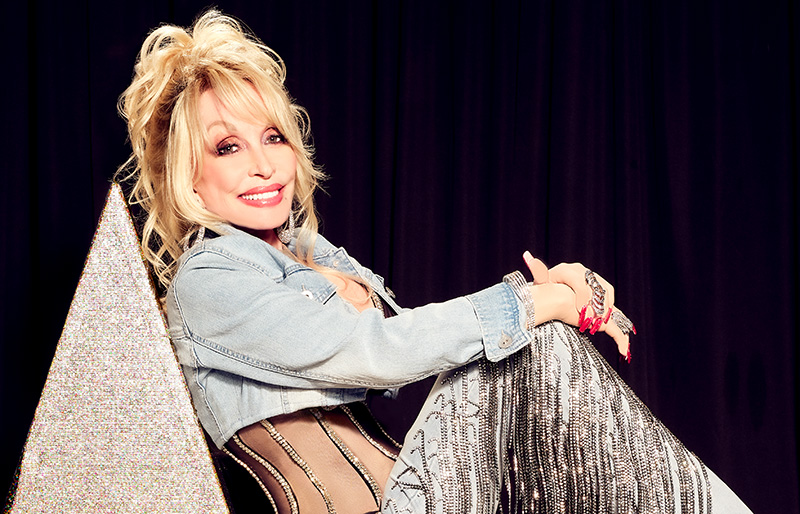
Dolly meant so much to so many people, including generations of gay fans, and I was fortunate enough to speak with her once. What I remember most about the experience has very little to do with her music or her clothes. My Dolly story is about how she lived and who she was as a person.
A few years ago, I wrote several cover stories for Metro Weekly. Each was exciting to me for different reasons. I interviewed drag queens and musicians I loved, but nobody surprised me more than Dolly, because neither my editor nor I could quite believe she’d agreed to do it.
Scheduling a cover story interview with a superstar can be difficult. As writers and editors, we want as much time as possible with a subject. The musician and their team understandably want to give as little as they can get away with, because every minute of the day is often spoken for — especially when it comes to someone like Dolly. Throughout the weeks of emails and negotiations it took to place a lengthy phone call on Dolly’s calendar, I was pinching myself. Was this really going to happen, or would some last-minute change in her schedule ruin the whole thing?
Around the same time I was piecing together the cover story, something much less exciting was happening in another area of my professional life.
As someone who writes about pop culture — specifically music — I have learned the hard way that fans can be incredibly passionate. Every once in a while, one group or another decides that something I’ve written is unacceptable. This is almost always tied to my coverage of the Billboard charts at Forbes. I rarely insert personal opinions into those stories, but that doesn’t stop people from becoming furious because I pointed out that a single failed to reach No. 1 or an album underperformed.
At that particular moment, Nicki Minaj’s Barbz were upset with me. I genuinely don’t remember why, in part because this kind of thing has happened more than once throughout my career — and several times with the rapper’s following. Usually, the vitriol amounts to dozens or hundreds of angry tweets, comments, or emails, and then vanishes. That time, things went much further.
For the first time, I was doxed: My cell phone number was shared widely online by the Barbz. I remember sitting in my living room with a friend, trying to watch a movie, but we paused every time my phone rang. Sometimes an actual number appeared. Sometimes it was blocked. I would answer and hear silence, perhaps breathing, or someone telling me they knew where I lived and were coming to kill me.
It was all deeply unpleasant, though I doubted anyone was going to harm me. That by no means excuses strangers threatening my life over an article. By then, I had received enough death threats — an absurdly common occupational hazard for people who write about entertainment on the internet — to understand that most of these people were looking for somewhere to dump their anger. The Barbz had simply taken things further with me than anyone else ever had.
Eventually, the calls became so frequent that I changed the settings on my phone, and private and blocked numbers could no longer reach me. It worked, and the calls stopped. After a short time, I didn’t give that technological fix another thought. In fact, I completely forgot that I’d made the change at all.
Then came the day I was supposed to interview Dolly Parton. I sat staring at my phone at the time we chose, waiting for her to call. Nothing happened. I went back and forth with her manager, who insisted that Dolly herself had called me.
I couldn’t understand what was wrong, and I racked my brain trying to figure out what had happened. Suddenly it clicked: Dolly Parton, quite reasonably, was calling from a blocked number. And I had stopped her call from coming through.
I was mortified, to put things mildly. I was certain that I had let this once-in-a-lifetime opportunity slip through my fingers and was incredibly disappointed. This was a career highlight for me! A chance to interview a genuine legend and one of the most beloved entertainers on the planet, and I had made it impossible for her to reach me.
Plenty of musicians and their teams would have simply moved on. Schedules are packed and there is always another interview waiting. Nobody would have blamed Dolly for deciding to forget about the whole thing — myself included — but that’s not what happened.
The people around her immediately began looking for another opening in her schedule, which, if you know anything about Dolly’s work ethic, must have been a Herculean task. Somehow, they found one and offered it to me right away. When I finally got to speak with Dolly, I did not relay the whole ridiculous story. It would have eaten up too much of our precious time, and telling her about death threats from angry Nicki Minaj fans felt like a lot to throw at a stranger.
Instead, I simply apologized for missing her call. She’d have been well within her rights to chastise me for wasting her time. Of course, Dolly would never do that, but I was expecting perhaps a joke of some kind. But no. She could not have been kinder.
Here was arguably the busiest woman in music, someone with more projects, businesses, recordings, appearances, and obligations than I will ever comprehend, and she had already made time for me once. Then she made time for me again. Somehow, after I had inconvenienced her, she was still gracious enough to thank me for my time.
During the interview, Dolly did not hold back and answered every question with thought and care. I wrote the cover story, and to this day I consider it one of the highlights of my career.

In the days since her passing, much has been written about Dolly’s extraordinary work ethic, as well as her seemingly endless release schedule and the business empire she built throughout her lifetime — one which will continue to expand in the coming months and years, by the way. There are also countless stories about her charitable giving and the way she consistently preached love over division.
But I don’t think there can ever be too many stories about someone choosing kindness when it would have been much easier not to bother. Dolly had every reason in the world to be too busy for me. She wasn’t. That small kindness has stayed with me for years, and whenever I remember the snafu, I try to take it as a lesson about grace, forgiveness, and giving more of yourself to others, even when you think you’ve already done your share.
Hugh McIntyre is a music journalist and senior contributor at Forbes whose work has appeared in Billboard, The Hollywood Reporter, and Metro Weekly.
More from Metro Weekly:


Support Metro Weekly’s Journalism
These are challenging times for news organizations. And yet it’s crucial we stay active and provide vital resources and information to both our local readers and the world. So won’t you please take a moment and consider supporting Metro Weekly with a membership? For as little as $5 a month, you can help ensure Metro Weekly magazine and MetroWeekly.com remain free, viable resources as we provide the best, most diverse, culturally-resonant LGBTQ coverage in both the D.C. region and around the world. Memberships come with exclusive perks and discounts, your own personal digital delivery of each week’s magazine (and an archive), access to our Member's Lounge when it launches this fall, and exclusive members-only items like Metro Weekly Membership Mugs and Tote Bags! Check out all our membership levels here and please join us today!



You must be logged in to post a comment.