A Delaware man is suing the state’s attorney general and the University of Delaware for allegedly failing to take sufficient action against his former partner for domestic assault.
He claims their handling of the case may have been motivated by racism and homophobia, as both he and his ex are gay and Black.
Tymothy “Ty” Moyer claims that his former partner, Michael Uzu, attacked him in February 2024, leaving him with permanent brain damage, which forced him to resign from his position as a financial compliance associate with the BlackRock asset management company.
Uzu, a Nigerian national, was pursuing a Ph.D. in chemistry at the University of Delaware and was in the United States on a student visa at the time.
Moyer claims he was ending the relationship after “months of escalating mistreatment,” and that Uzu refused to leave his apartment and started a confrontation.
In a statement to The Washington Blade, Moyer claimed that Uzu struck him repeatedly with his fists, a cell phone, and a titanium lacrosse stick that was in Moyer’s apartment during the assault. He said he suffered severe facial trauma, swelling and bruising on his face and body, and had to receive surgical staples to close lacerations on his head.
But Uzu told the Blade that he disputes Moyer’s characterization of the alleged assault, claiming that his ex was the instigator and that he was defending himself.
“He would get drunk and use drugs and pick up fights with me and apologize when he became normal,” Uzu said. “So, I packed up my things and decided to depart from him.”
Uzu was arrested by Wilmington police and charged in the incident, but was never prosecuted. Despite evidence, including cell phone video shot by Moyer showing Uzu wielding the lacrosse stick, the conflicting accounts led the Delaware Attorney General’s Office to drop the case on the grounds that it couldn’t prove Uzu’s guilt beyond a reasonable doubt.
“While I can’t characterize specific evidence or statements made to police, the State’s analysis included, but was not limited to, the investigation’s finding that the Defendant had a credible claim of self-defense,” Matt Marshall, a spokesperson for Delaware Attorney General Kathy Jennings, said in a statement.
“This kind of dynamic is fairly common in domestic violence cases, no less so in same-sex cases,” Marshall added. “A case being unviable at trial does not mean a victim has not been harmed, that we don’t believe them, or even necessarily that a Defendant is innocent. It only means that criminal guilt could not be proven at trial.”
The decision not to prosecute Uzu led Moyer to launch a two-year campaign aimed at holding the AG’s office and the University of Delaware accountable for not moving forward with criminal charges and for failing to expel Uzu from the university.
According to the lawsuit, filed in April 2026, the university conducted an investigation of Uzu and found he violated its student conduct policy by engaging in domestic violence, but issued a deferred suspension until December 2025, which allowed him to continue his studies at the university.
Moyer claims that the university acted improperly by not expelling Uzu from its Ph.D. program, which it should have, given the seriousness of the assault — as it did in another case involving an alleged domestic violence incident between a male student and his girlfriend. The student in that case was ultimately expelled after allegedly choking his girlfriend until she lost consciousness and holding her captive for four hours before throwing her down a flight of stairs.
“This egregious situation stands in stark contrast to the University’s public outcry and swift institutional action in prior cases…where similar violent conduct by a student prompted a far different, and arguably more responsible, response,” Moyer wrote in a Change.org petition published last year. “This disturbing disparity in treatment, particularly given that both Mr. Uzu and I are members of the Black and LGBTQ+ communities, raises serious and uncomfortable questions about discriminatory practices, bias, and who the University truly prioritizes when faced with difficult truths.”
Moyer, who is currently representing himself, is asking for compensatory and punitive damages against the attorney general’s office, the University of Delaware, and specific defendants affiliated with each institution, “in an amount to be determined at trial, including damages for lost wages, medical expenses, legal fees, emotional distress, and pain and suffering.”
Last month, U.S. Magistrate Judge Laura Hatcher of the District of Delaware recommended dismissing the case without prejudice — meaning the lawsuit could be refiled at a later time — because the complaint “fails to state a claim upon which relief can be granted” under existing federal law. Hatcher also recommended that Moyer be given 30 days to amend his lawsuit.
The American Civil Liberties Union of Virginia and Potomac Law Group have filed a federal lawsuit on behalf of two students who say they were denied permission to form a Gay-Straight Alliance at King George Middle School in King George, Virginia.
According to the lawsuit, the lead plaintiff, a seventh-grade student identified by the initials Z.J.W., learned about GSA clubs while researching them at home.
With their parents' support, Z.J.W. contacted a teacher in August 2025, before the start of the school year, and asked her to sponsor a GSA at the middle school.
A restaurant and bar in Rehoboth Beach, Delaware, has been fined in two separate anti-transgender discrimination cases after a state commission found that it barred a trans woman from using the women's restroom and selectively scanned patrons' IDs in a way that targeted transgender people.
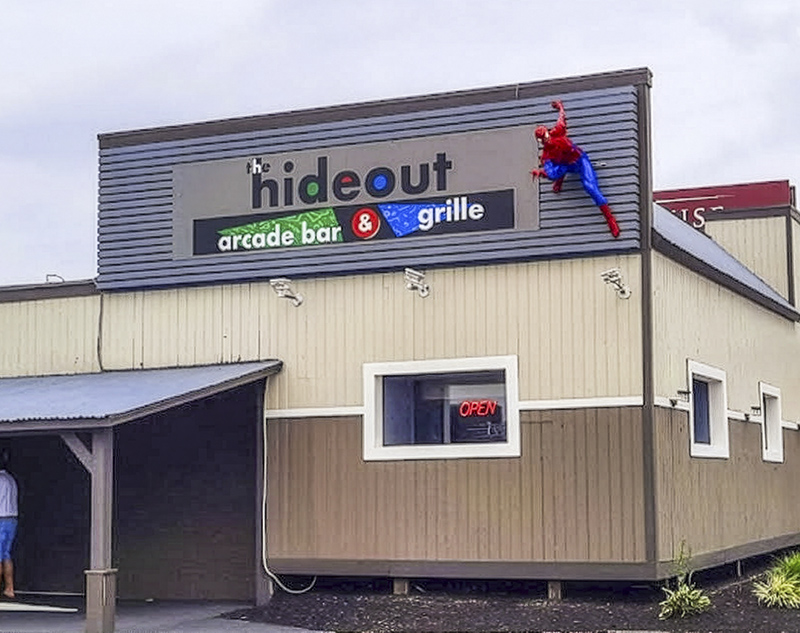
Last September, the Delaware Human and Civil Rights Commission levied a $2,000 fine against Hideout Arcade Bar & Grille over an April 2023 incident in which a transgender woman was denied entry.
Two Democratic congressional candidates in Florida have been targeted by fraudulent texts invoking their sexual orientation and falsely claiming ties to the state’s largest LGBTQ organization ahead of the August 18 primary.
“I don’t know if we’ve seen something like this before,” Brandon Wolf, Equality Florida’s senior director of communications strategy, told Metro Weekly. “We certainly have never had a smear campaign falsely attributed to us as an organization.”









You must be logged in to post a comment.