British Court Overturns Trinidad and Tobago’s Gay Sex Ban
The Privy Council sided with LGBTQ activist Jason Jones, reversing a 2025 ruling that had reinstated criminal penalties for consensual sex between men.
Jason Jones outside the Privy Council building, London, England – Photo Courtesy Jason Jones
A British court has overturned a law prohibiting same-sex relations in Trinidad and Tobago, marking a significant milestone for the twin-island Caribbean nation.
On November 10, the London-based Judicial Committee of the Privy Council — the highest appeals court for several former British colonies — unanimously reversed a 2025 ruling that had reinstated the ban. The judges held that the country’s Sexual Offences Act cannot criminalize private, consensual sex between adults of the same sex.
Under the provisions reinstated in 2025, men faced up to five years in prison for “buggery” and up to two years for “gross indecency.”
The ban had its roots in England’s “Buggery Act,” which criminalized sodomy under Henry VIII in the 1500s. British colonial authorities enacted a similar law in Trinidad and Tobago in 1925, CNN reported.
Trinidad and Tobago gained independence in 1962, and the ban remained in force. A savings law clause in the country’s 1976 Constitution protects laws already in effect at the time from challenges based on fundamental rights.
Savings law clauses were intended to keep existing laws in place during the transition to independence. Some former colonies, including Trinidad and Tobago, still retain them.
In 1986, Trinidad and Tobago replaced the colonial-era provisions with a law that imposed longer prison sentences and extended the indecency offense to women.
Jason Jones, an LGBTQ rights activist born in Trinidad who lives in the United Kingdom, challenged the law in Trinidad and Tobago’s High Court, where a judge struck down the ban in 2018. The country’s Court of Appeal overturned that ruling in 2025, effectively reinstating the ban on gay sex, finding that the savings law clause protected the older provisions.
Jones appealed that ruling to the Privy Council. He argued that the 1986 law differed enough from the 1925 law that the savings law clause did not protect it.
“This is no longer blaming Henry VIII and the British,” Jones told CNN ahead of the ruling. “This is our own homegrown homophobia.”
In announcing the Privy Council’s ruling that the ban on private, consensual same-sex activity was unconstitutional, Judge Philip Sales said, “Laws which seek to criminalize such activities cannot be justified.”
The ruling applies only to Trinidad and Tobago. But activists say it could help others challenge anti-sodomy laws in former British colonies that still use the Privy Council as their highest appeals court.
Following the ruling, Jones vowed to push for civil partnerships for LGBTQ couples and urge Trinidad and Tobago’s Parliament to amend the Constitution to remove the savings law clause.
“This is about the rights of the citizen, of every citizen, and body autonomy … and I really hope people see this more as a democratic movement rather than just LGBT,” Jones told CNN.
Jones said the ruling would bring relief to people who felt forced to hide their sexuality for fear of breaking the law.
“You felt that you were living in a bird cage,” he said. “I’m really proud that I was able to give us a sense of freedom.”
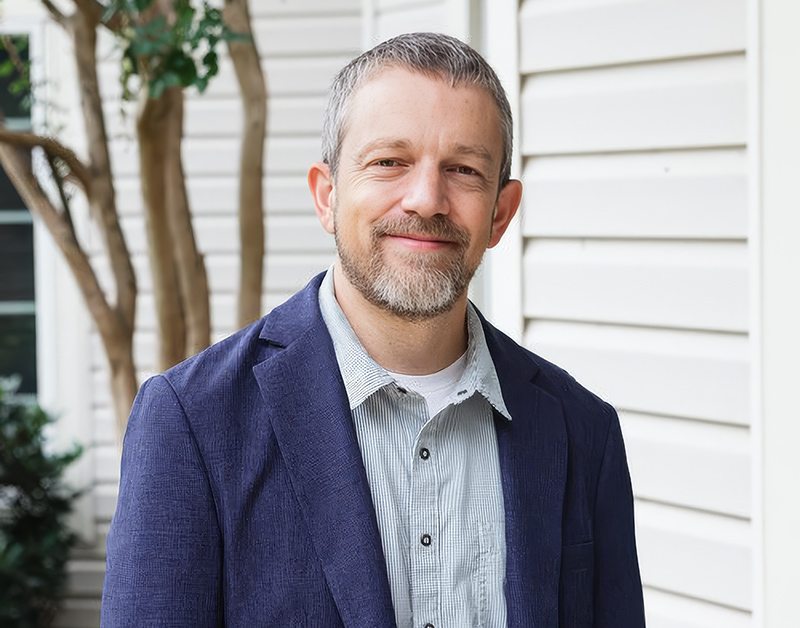
A Northern Virginia pastor filed a lawsuit seeking to block a ballot measure that would repeal the Marshall-Newman Amendment, a 2006 voter-approved amendment banning state recognition of same-sex marriages or similar relationships.
The Founding Freedoms Law Center filed the lawsuit on behalf of Pastor Ben Purves.
The complaint alleges that state and local clerks failed to distribute and publicly post copies of the proposed amendment at Virginia courthouses at least three months before the November 4, 2025, House of Delegates election, as required by state law. It asks the court to invalidate the amendment, even if voters approve it.
The Farmville Public Library logo does not resemble a traditional rainbow. It depicts an open book with multicolored pages and a spine in shades of teal, blue, magenta, lime green, orange, purple, and yellow, arranged in no particular order.
But three residents reportedly objected to the logo over concerns that its colors could be interpreted as a show of support for the LGBTQ community. After receiving their complaints, a town commissioner asked the town manager to remove the 14-year-old logo.
The logo was subsequently removed without public debate or discussion, surprising other local officials, including Farmville Mayor Alex Joyner.
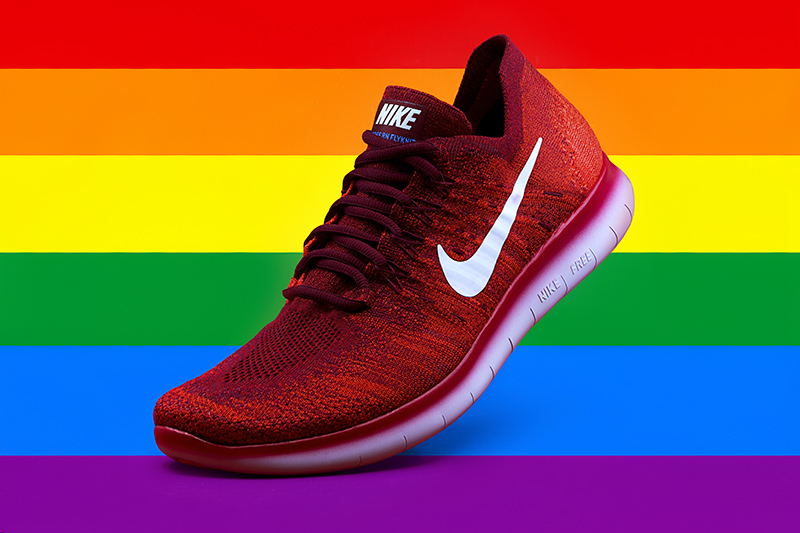
Nike shareholders overwhelmingly rejected a proposal at the company's September annual meeting seeking greater scrutiny of its charitable partnerships, with a supporting statement targeting its LGBTQ outreach and transgender-inclusive employee benefits.
The resolution asked Nike to report on the "benefits, costs, and legal, reputational, competitive, and other relevant risks" associated with its charitable support for advocacy organizations.
The proposal's supporting statement cited Nike's perfect score of 100 on the Human Rights Campaign's Corporate Equality Index (CEI), which evaluates companies' LGBTQ workplace policies and practices. Companies must offer transgender-inclusive health benefits to receive full credit.






You must be logged in to post a comment.