A majority of bias-related crimes in D.C. target members of the LGBTQ community, according to city officials.
Crimes targeting victims because of their gender identity or expression have increased 90 percent from 2015, and crimes targeting victims because of their sexual orientation are up 48 percent during that same time period.
The statistics, released at a press conference Friday morning, also show a significant increase in crimes targeting victims because of their ethnicity or national origin and religion.
There was a 300 percent increase in crimes targeting victims because of their national origin or ethnicity, and a 260 percent increase in crimes targeting victims because of their religion.
Based on statistics collected by MPD, the total number of reported bias-related crimes increased 62 percent, up from 66 incidents in 2015 to 107 in 2016.
At that meeting, held at Sixth & I Synagogue in downtown Washington, Mayor Muriel Bowser and Acting Metropolitan Police Department Chief Peter Newsham appeared with other government officials, religious leaders, and community members to encourage residents who witness such crimes to report them, and outline how the District is responding to such incidents.
Newsham noted that of the 18 such events where religion was the motivating factor, 12 had targeted members of the Jewish community.
“Although the number of reported hate crimes is only a small fraction of the overall crime in our city, we think it’s important to know about this increase so we can collectively work on addressing it,” Newsham said. “We will not accept this increase as the new norm.”
The total number of crimes committed against victims because of their gender identity in 2016 increased to 19, and those committed because of sexual orientation increased to 40. That means that anti-LGBTQ crimes constituted the majority of bias-related incidents committed in D.C. last year.
However, those statistics come with caveats, namely that the reported number of crimes could be increasing not because more are happening, but due to increased trust and better relationships between police and community members, resulting in more residents being comfortable reporting such incidents to police.
The increase could also be attributed to better detection of hate crimes, due to recent moves by MPD to train and retrain officers on how to respond when they suspect a crime has been motivated by bias.
“We, of course, want to see the number of hate crimes brought down to zero,” Bowser said in prepared remarks. “However, the increases that we’re seeing show that our residents are more comfortable and more knowledgeable about reporting unlawful behavior and harmful treatment.”
Responding to follow-up questions from reporters, Newsham noted that while members of the public have expressed greater anxiety since last November’s election, there has been no spike in bias-related crimes that can be directly tied to any particular event. Rather, the increase was more gradual and occurred throughout the year.
In order to make residents more comfortable with the idea of reporting bias-related crimes, MPD has reached out to Jewish and Islamic institutions, as well as to immigrant communities and others who have historically been the targets of bias-related incidents. The D.C. government, through its offices of community affairs and particularly the Office of Human Rights, has also undertaken efforts to educate the public about the protections ensconced for various communities within D.C.’s robust Human Rights Act, including the ability of transgender individuals to be treated equally and in accordance with their gender identity.
“In Washington, D.C., we value diversity and inclusivity and want all of our residents and visitors to feel safe,” Bowser added. “No matter your race, your faith, your sexual orientation, your gender identity, your background — you should be able to live, work and play in Washington, D.C. without fear of violence or discrimination. … We all have a duty, not just in government, but in our neighborhoods, churches, and in our lives to make sure we’re promoting a culture of inclusivity.”
The U.S. Department of Education has unveiled a final rule that rescinds protections for LGBTQ college students against sexual assault and discrimination that were made possible due to an expanded interpretation of Title IX, the federal law prohibiting discrimination on the basis of sex in educational settings.
The rule, published on September 29, stops short of explicitly defining "sex," as it appears in the text of Title IX, as biological sex, as reported by Politico. However, the Trump administration claimed, in a fact sheet, that the rule does not reflect any new policy decisions.
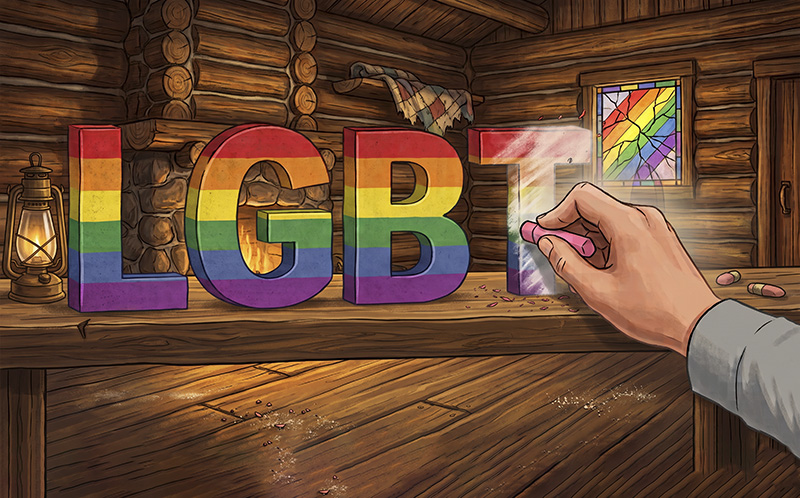
The board of directors of Log Cabin Republicans, a gay conservative political advocacy group that touts itself as dedicated to "building a more inclusive GOP," announced that it was dropping support for transgender rights from its mission.
Since its founding in the late 1970s, the group has promoted conservative values and policies -- grounded in the constitutional principles of equal protection under the law, limited government, and individual freedom -- while advocating for equal rights and fairness regardless of sexual orientation.
Mid-Atlantic Leather Weekend (MAL), the annual gathering of LGBTQ leather, kink, and fetish enthusiasts, will bid farewell to its longtime host hotel after one final bash next January.
For nearly two decades, the convention-like gathering has been held at the Hyatt Regency Washington on Capitol Hill, where it will return from January 15 to 18, 2027.
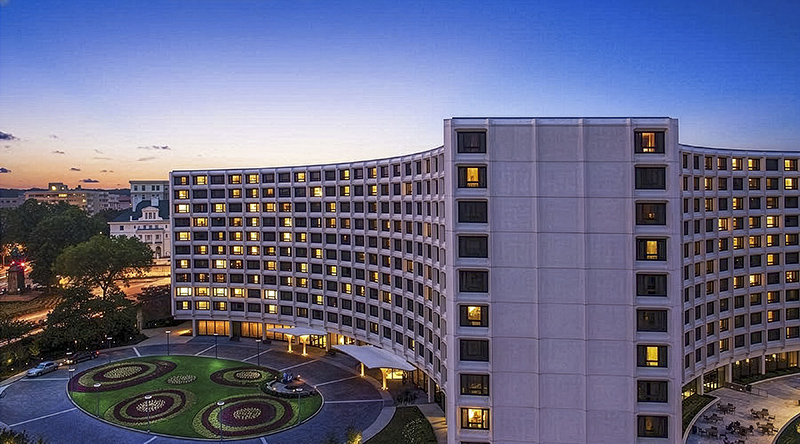
Beginning in 2028, however, MAL -- which traditionally coincides with Martin Luther King Jr. Day weekend -- will relocate to the Washington Hilton.






You must be logged in to post a comment.