Virginia State House – Photo: Farragutful, via Wikimedia.
The Virginia General Assembly has defeated a bevy of bills that deal with bias-motivated crimes, particularly those that target LGBTQ victims, even as the number of anti-LGBTQ homicides hit a record high last year.
Last Friday, the House Courts of Justice’s Subcommittee #1 defeated two bills dealing with so-called “hate crimes.” Del. Ken Plum (D-Reston) introduced a bill that would have added gender, sexual orientation, gender identity, and disability to the categories of victims whose attacks can be recognized as hate crimes. That means that offenders can be charged with bias enhancements, or subject to harsher penalties, if prosecutors choose to pursue additional prison time on top of the underlying murder or assault charges.
Del. Rip Sullivan (D-McLean) introduced a separate bill that would have required the reporting of hate crimes based on sexual orientation or gender identity to the Virginia State Police. Law enforcement authorities are already reporting such statistics to the FBI, and law enforcement authorities have consistently supported similar bills patroned by Sullivan during past legislative sessions.
Both Plum’s bill and Sullivan’s bill were defeated on party-line votes, 4-3, with Republicans voting to table them, in that subcommittee. Del. Les Adams (R-Chatham) was absent.
The Courts of Justice Subcommittee has not yet voted on HB 10 or HB 266, identical measures that combine Plum and Sullivan’s bills into one, but both are expected to be defeated on party-line votes.
Earlier in the session, the Republican-controlled Senate behaved similarly, defeating a bill patroned by Sen. Barbara Favola (D-Arlington) that sought to expand the classes of victims that are covered by Virginia’s current hate crime laws. The bill, which sought to add gender, sexual orientation, and gender identity to the hate crimes law, was defeated in the Courts of Justice Committee on a party-line 9-6 vote.
The General Assembly’s actions come at a time when anti-LGBTQ hate crimes are on the rise, constituting the third most common type of hate crime in the nation. A recent report by the National Coalition of Anti-Violence Projects found that there were 52 reported anti-LGBTQ homicides in 2017, the highest number ever recorded, and an 86% increase from the number of LGBTQ murders in 2016.
Recently, a jury convicted a man from Chester, Va., on federal hate crime charges after he assaulted a co-worker he thought was gay at the Amazon Fulfillment Center in May 2015. James William Hill III admitted to an Amazon manager and to police that he dislikes gay people, and that gay people should expect to be assaulted because of their sexual orientation, reports WRIC.
Hill could face up to 10 years in prison when he’s sentenced later this year. Ironically, though, Hill’s punishment would likely be less severe had he been charged with assault and prosecuted under the commonwealth’s criminal laws, due to the General Assembly’s refusal — and therefore, the commonwealth’s — to admit the existence of crimes motivated by anti-LGBTQ animus.
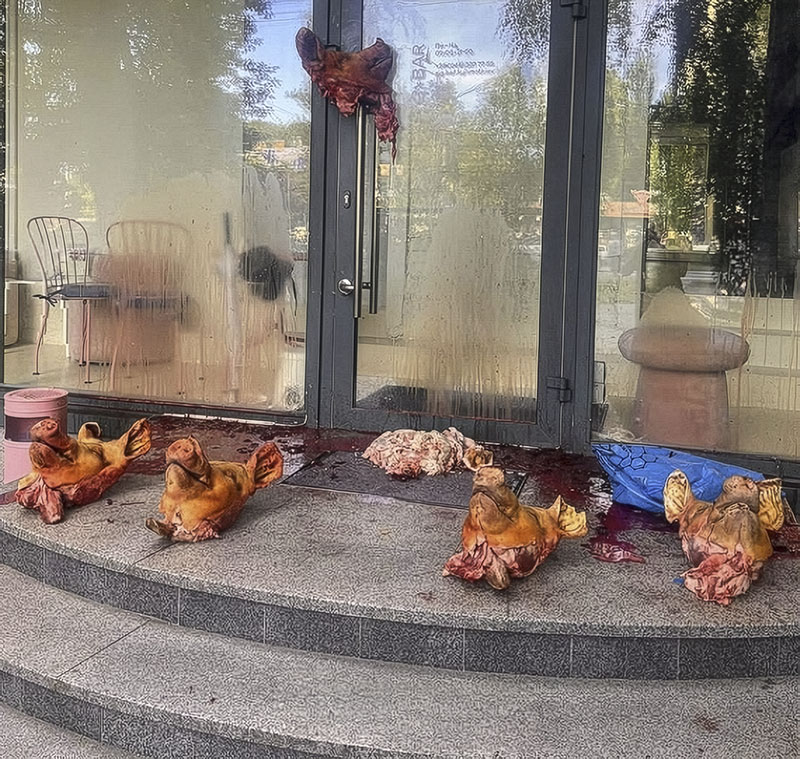
GxBar, an LGBTQ-friendly salon in Kyiv, was vandalized by unidentified individuals who poured blood and left severed pig heads and entrails around its main entrance.
The vandalism targeted the GxBar Special salon, which has faced other attacks in recent months that the business believes are linked to its support for the LGBTQ community.
According to a post on GxBar's Instagram account, the salon was defaced around 6:17 a.m. on July 21. Security footage from inside the salon shows at least one person -- and possibly others -- dousing the entrance in blood and placing the pig heads on the building's front stoop.
Two men were beaten and subjected to anti-gay slurs in what police believe was a bias-motivated attack in downtown Manhattan last month.
The victims, ages 31 and 37, were walking on Broadway near West 29th Street around 7:30 p.m. on July 31 when two men approached them and made anti-LGBTQ remarks, according to the New York Daily News.
The assailants then repeatedly punched and kicked the victims while shouting homophobic slurs, according to police. The suspects fled south on Broadway.
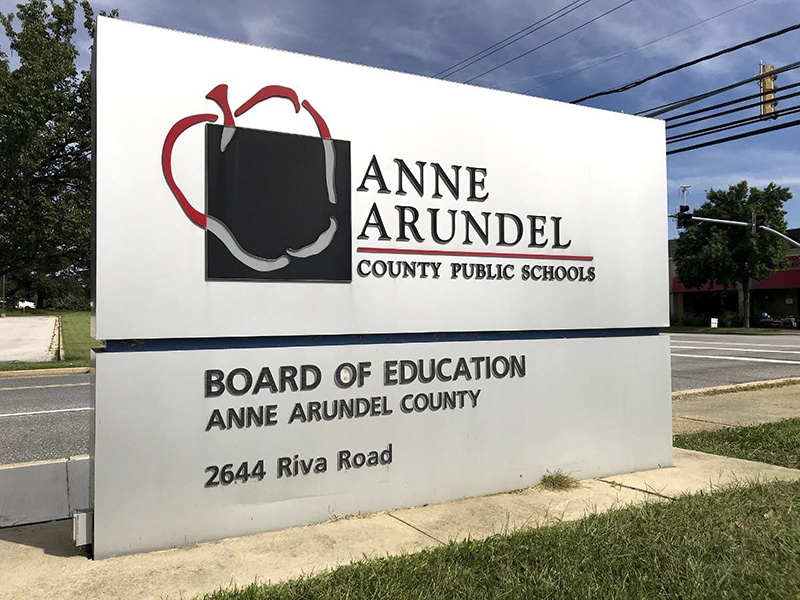
Two parents in Maryland are suing Anne Arundel County Public Schools over the school system's policies affirming the gender identity of transgender students.
The lawsuit, filed in U.S. District Court for the District of Maryland, was brought by the conservative, anti-LGBTQ legal organization America First Legal on behalf of John and Jane Doe. It accuses staff members at an unidentified county high school of lying to the Does about their child, Mary Doe, and her gender identity.
The Does allege that the school "socially transitioned" Mary by using a masculine name and male pronouns without informing them or obtaining their consent. They are asking school officials to use Mary's given name and female pronouns and a federal judge to declare the district's transgender-affirming policies illegal.
These are challenging times for news organizations. And yet it’s crucial we stay active and provide vital resources and information to both our local readers and the world. So won’t you please take a moment and consider supporting Metro Weekly with a membership? For as little as $5 a month, you can help ensure Metro Weekly magazine and MetroWeekly.com remain free, viable resources as we provide the best, most diverse, culturally-resonant LGBTQ coverage in both the D.C. region and around the world. Memberships come with exclusive perks and discounts, your own personal digital delivery of each week’s magazine (and an archive), access to our Member's Lounge when it launches this fall, and exclusive members-only items like Metro Weekly Membership Mugs and Tote Bags! Check out all our membership levels here and please join us today!









You must be logged in to post a comment.