A federal court has struck down a Missouri Department of Corrections policy that bars transgender inmates from receiving transition-related health care treatments.
U.S. Magistrate Judge Noelle C. Collins declared the Department of Corrections’ “freeze-frame” policy unconstitutional, finding that it violates the Eighth Amendment’s prohibition on “cruel and unusual punishment” because it denies health care to transgender inmates unless they had previously been receiving treatment prior to their incarceration.
Jessica Hicklin, a transgender woman incarcerated at the Potosi Correctional Center in Mineral Point, Mo., sued over the policy, saying she was denied the right to receive hormones, body hair removal treatments, and access to “gender-affirming” canteen items.
In February, Collins issued a preliminary injunction to stop the prison from enforcing its “freeze-frame” policy and allow Hicklin to access those treatments, which are recommended as medically necessary to help treat Hicklin’s gender dysphoria.
Collins also issued an order permanently barring the Missouri Department of Corrections, and Corizon LLC, its contracted health care provider, from refusing medically necessary treatment like hormones to transgender inmates across the state.
Lambda Legal, which is representing Hicklin in the case, celebrated the court’s decision, noting that it would spare her significant “pain and anguish,” and would also protect other inmates from discrimination.
“To keep life-saving treatment from transgender people suffering needlessly in prison simply because they were not receiving that treatment before they entered the facility is cruel and unlawful,” Demoya Gordon, an attorney with Lambda Legal’s Transgender Rights Project, said in a statement. “This is the first court in the country that we know of to rule specifically that ‘freeze-frame policies’ are unconstitutional, but we are hopeful that other courts will see these discriminatory policies as deliberate indifference to incarcerated transgender people’s serious medical needs and follow suit.”
Hicklin also celebrated the victory, which ensures she’ll be treated according to her gender identity going forward.
“For years, I felt like I had been drowning,” she said in a statement. “But when the first decision came down in February, I could finally breathe knowing I would be able to start an important part of my transition that I had been waiting for desperately. This final decision makes it unquestionably clear that prisons cannot deny transgender people like me life-saving medical care and that MDOC and Corizon must continue to provide the gender dysphoria treatment I need.”
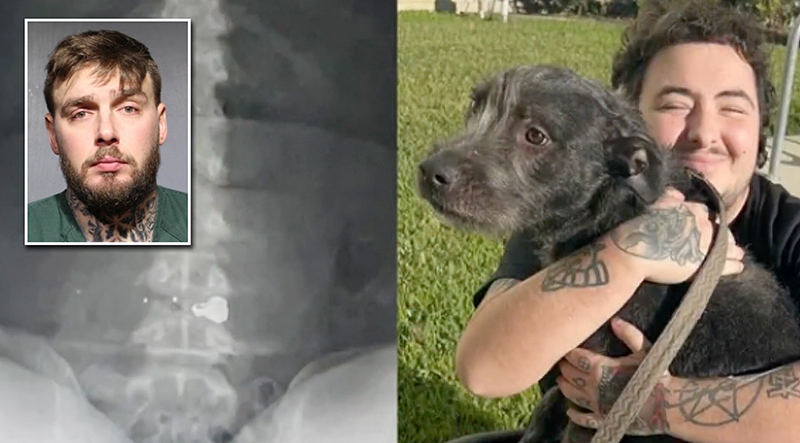
Tyler Getchell of Jacksonville, Florida, has been charged with attempted murder after allegedly shooting and partially paralyzing his neighbor, Kyle McFarlane, during an argument over what Getchell believed was trespassing.
McFarlane told police he was gathering discarded furniture for a bonfire on November 22 when Getchell and his girlfriend came outside and yelled at him to get off their property, First Coast News reported.
According to the police report, video footage shows McFarlane standing on a property easement -- not on his neighbors' land -- just before the shooting.
Federal Judge Victoria Calvert has permanently blocked a portion of Georgia’s law banning prisoners from receiving gender-affirming care, ruling on Dec. 3 that the state’s blanket ban on hormone therapy violates the Eighth Amendment’s prohibition on cruel and unusual punishment.
Signed by Gov. Brian Kemp in May and implemented in July, the law bars prisoners from receiving hormone therapy or other treatment for gender dysphoria -- even when a doctor deems it medically necessary. It prohibits the state from funding such care and blocks transgender inmates from paying for it themselves. Non-transgender prisoners, however, may still receive hormone therapy and other gender-affirming treatments so long as the care is not related to gender transition.
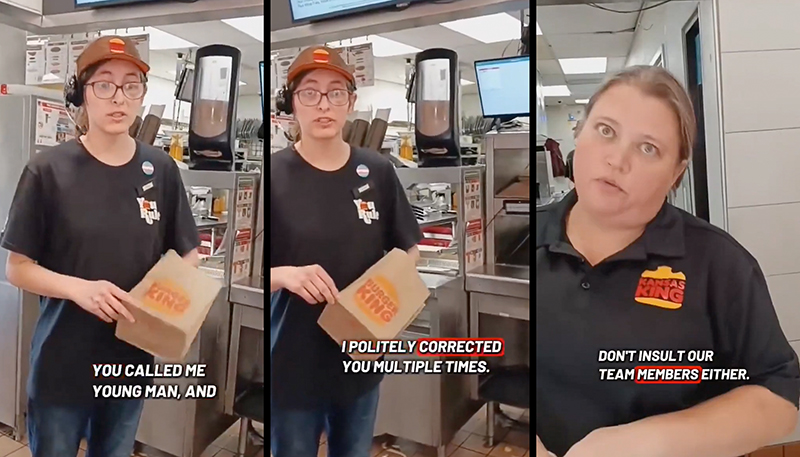
A video shows a Burger King manager -- who also owns the franchise -- ordering an irate female customer to leave after she tried to get an employee disciplined for allegedly misgendering her, despite the fact that she had repeatedly misgendered the worker first.
It’s unclear when the video was recorded, but it has been circulating widely in recent days.
The video, filmed from the customer’s point of view, opens with her at a Kansas Burger King demanding to speak with the manager. A male employee goes to get the manager, prompting the customer to demand the manager’s full name. The employee tells her he doesn’t know the manager’s last name.
These are challenging times for news organizations. And yet it’s crucial we stay active and provide vital resources and information to both our local readers and the world. So won’t you please take a moment and consider supporting Metro Weekly with a membership? For as little as $5 a month, you can help ensure Metro Weekly magazine and MetroWeekly.com remain free, viable resources as we provide the best, most diverse, culturally-resonant LGBTQ coverage in both the D.C. region and around the world. Memberships come with exclusive perks and discounts, your own personal digital delivery of each week’s magazine (and an archive), access to our Member's Lounge when it launches this fall, and exclusive members-only items like Metro Weekly Membership Mugs and Tote Bags! Check out all our membership levels here and please join us today!








You must be logged in to post a comment.