A Florida school district is proposing requiring transgender students to submit a parental consent form if they wish to have their gender identity acknowledged in school.
Last Tuesday, the Lee County School Board adopted an “Equity Guide” outlining how LGBTQ-identifying students can request special accommodations from the school, especially transgender students.
Part of that process of requesting accommodations requires parents to be notified and consent by signing an authorization form if their child wishes to be addressed by their preferred name and pronouns, have their gender identity recognized by school officials and listed on their transcripts, or use facilities matching their gender identity.
Filling out the form, known as the “Gender Support Plan,” remains voluntary. The form asks various personal questions on topics ranging from extracurricular activities to dress code expectations, as well as whether a student has a supportive parent, which individuals are aware of a students’ identity, and creates a plan for if or when a student is outed.
Once a parents’ consent has been obtained, school administrators can begin implementing agreed-upon provisions within a student’s individualized gender support plan — which remains a confidential document that can only be shared with school staff, parents and students.
But some parents are concerned that filling out the form and providing personal information will only make transgender or nonbinary children greater targets. LGBTQ advocates also worry that requiring parental consent will cause transgender, nonbinary, or questioning students to further closet themselves out of fear of being “outed” to their parents.
“If a child wants to be addressed a certain way, I think they should be allowed to be addressed that certain way, but I don’t think we should go to the parents,” Arlene Goldberg, the co-founder of Visuality, an LGBTQ community center, told Fort Myers-based NBC affiliate WBBH. “It’s going to keep some of them in the closet when they really should be coming out.”
Sharon McGill, a member of the district’s equity committee, said the forms were put in place to protect children and teachers from running afoul of Florida’s “Don’t Say Gay” law, which prohibits discussions of LGBTQ content in primary grades and requires that such topics be “age-appropriate or developmentally appropriate” in older grades.
“There are laws now in the state that teachers can’t call a student a name if it’s not their correct name,” McGill said, referring to the law.
The ACLU of Florida expressed concerns about the proposed parental notification form.
“With HB 1557 in effect, the ‘Don’t Say Gay’ law has already begun to stigmatize LGBTQ+ people, isolate LGBTQ+ kids, and make teachers fearful of providing a welcoming and inclusive classroom,” the ACLU of Florida said in a statement. “Without adequate guidelines from the school board on how this personal information will be used in schools, it is uncertain whether these forms could potentially serve as another way to isolate and harm transgender youth.”
District officials say that no student is forced to fill out the form against their will and that it is not intended to single out transgender students.
“If they choose not to have accommodations they can certainly use their pronouns with friends at school but now if they want to [have accommodations] we have to involve parents,” Jessica Duncan, the executive director of student services at Lee County Schools.
The school board said that every situation that could arise from a transitioning child would be dealt with on a case-by-case basis. For instance, if people object to the presence of a transgender child in a restroom not matching their assigned sex at birth, the district would encourage the student to use gender-neutral facilities.
School board members also discussed potentially erecting dividers in locker rooms to provide privacy for students who feel uncomfortable sharing spaces with transgender students, reports WINK News.
The school board has yet to make a final decision on the plan.
Kansas lawmakers have passed a sweeping anti-trans bill that restricts which public restrooms and locker rooms transgender people may use.
The bill requires driver’s licenses and birth certificates to reflect a person’s assigned sex at birth and defines “gender” under Kansas law as biological sex determined at birth, including chromosomes, hormones, gonads, and internal and external genitalia.
Under the bill, Kansans would be barred from amending the gender marker on their original birth certificate, and driver’s licenses could only display a gender marker that aligns with a person’s assigned sex at birth, reports Topeka-based CBS affiliate WIBW.
After more than a decade of fan pressure, Nintendo is finally allowing players of Tomodachi Life to choose the sexual orientation and gender identity of the characters they control -- a long-requested change for the popular social simulation game.
First introduced in 2009, Tomodachi Life lets players create customizable human characters, known as "Miis," who explore virtual worlds, play mini-games, and form social relationships. Until now, however, the social simulation game only allowed Miis to be heterosexual and cisgender.
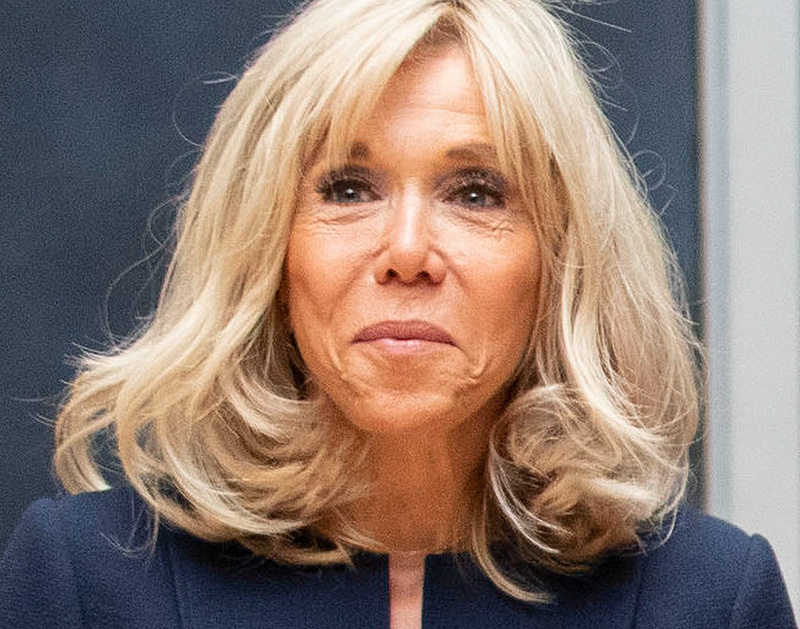
Ten people have been found guilty of cyberbullying France’s first lady, Brigitte Macron, by using social media to spread false rumors that she was transgender and equating the nature of her relationship with her husband, who is 24 years her junior, to pedophilia.
The eight men and two women, ranging in age from 41 to 65 -- three of whom were tried in absentia -- were convicted of online harassment and handed sentences ranging from mandatory cyberbullying awareness training to an eight-month suspended prison term.
The court also fined each defendant 600 euros and ordered them to pay a combined 10,000 euros -- about $11,726 -- in compensation to the 72-year-old Macron, reports The New York Times.
These are challenging times for news organizations. And yet it’s crucial we stay active and provide vital resources and information to both our local readers and the world. So won’t you please take a moment and consider supporting Metro Weekly with a membership? For as little as $5 a month, you can help ensure Metro Weekly magazine and MetroWeekly.com remain free, viable resources as we provide the best, most diverse, culturally-resonant LGBTQ coverage in both the D.C. region and around the world. Memberships come with exclusive perks and discounts, your own personal digital delivery of each week’s magazine (and an archive), access to our Member's Lounge when it launches this fall, and exclusive members-only items like Metro Weekly Membership Mugs and Tote Bags! Check out all our membership levels here and please join us today!










You must be logged in to post a comment.