Russian police raided several LGBTQ venues in Moscow following a recent ruling by the country’s Supreme Court deeming the “global LGBTQ+ movement” as an extremist organization.
On the evening of December 1, police entered the venues — including a nightclub, a male sauna, and a bar that hosted LGBTQ parties — and demanded documents of those inside.
They then photographed the documents as evidence.
According to the Associated Press, police entered the venues under the guise of cracking down on illicit drugs.
In response, other LGBTQ venues in the country announced their closure over fears of continued raids.
The St. Petersburg-based gay club Central Station wrote on its social media that its owner would no longer allow the bar to operate since the ruling, which now gives law enforcement license to persecute — and potentially prosecute — any organizations that support LGBTQ rights.
Under Russian law, participating in or financing any organization deemed “extremist” by the government is punishable by up to 12 years in prison.
Any person found displaying an extremist group’s symbols or banner can face up to 15 days in prison for the first offense, and up to four years in prison for repeat offenses. The government may also place individuals suspected of involvement with such organizations on a list and freeze their bank accounts.
The Supreme Court’s ruling came in response to a lawsuit filed by the country’s Justice Ministry, which asked the court to outlaw the LGBTQ “international public movement” as extremist, alleging LGBTQ-related organizations have been engaged in “incitement of social and religious discord.”
Activists have noted that the lawsuit was lodged against a movement that is not an official entity, thereby allowing police to arbitrarily take action against any LGBTQ-related individuals or groups under the guise of national security.
Max Olenichev, a human rights lawyer who works with the LGBTQ community, told the AP that the ruling effectively bans any organizing on behalf of LGBTQ rights or causes.
“In practice, it could happen that the Russian authorities, with this court ruling in hand, will enforce [the ruling] against LGBTQ+ initiatives that work in Russia, considering them a part of this civic movement,” he said.
Tanya Lokshina, the associate Europe and Central Asia director at Human Rights Watch, warned in a recent statement that the push to declare the LGBTQ movement as “extremist” has two purposes — to scapegoat the LGBTQ community in an effort to appeal to conservative voters ahead of the March 2024 presidential election, and to make it nearly impossible for groups advocating for LGBTQ rights to make progress in countering discrimination.
The Supreme Court’s decision, and the resulting police crackdown, continue a history of hostility toward LGBTQ people that has been embraced by the Russian government, especially under President Vladimir Putin, who frequently demonizes the LGBTQ community to appeal to religious conservatives and curry favor with the Orthodox Church.
In 2013, Putin’s government adopted a law prohibiting the spread of “propaganda” related to “nontraditional sexual relations” among minors.
In 2022, the law was expanded to apply to all citizens, including adults. That update effectively outlawed public expression of LGBTQ identity, even targeting depictions of homosexuality or gender identity on television, online, and in various forms of media.
The Russian government also passed a law earlier this year prohibiting the spread of information about gender transitions or gender-affirming care for transgender people, which resulted in at least one transgender blogger being prosecuted for sharing personal information about her transition.
Additionally, Russia has been accused of failing to take action while local authorities in Chechnya carried out a years-long campaign of kidnappings, detentions, torture, and murder of gay men and other LGBTQ people.
The journalist who first broke the story of that anti-LGBTQ purge has since been attacked multiple times, with Russian authorities even claiming the incidents are an attempt by outsiders to “discredit” Russia as it is engaged in a war with Ukraine.
Olga Baranova, the director of the Moscow Community Center for LGBTQ+ Initiatives, said that the Supreme Court ruling will likely convince LGBTQ people to consider fleeing the country for fear of persecution.
“It is clear for us that they’re once again making us out as a domestic enemy to shift the focus from all the other problems that are in abundance in Russia,” Baranova told the AP.
Moscow's Tagansky District Court has fined the international hotel reservation service Booking.com a total of 6 million rubles, or approximately $71,365, for allegedly promoting "LGBT propaganda" and failing to remove banned content.
The charges stemmed from a newsletter sent to foreign partner hotels that referenced "accommodating LGBT guests during Pride Month" and included a photo that Russian censors deemed objectionable, according to Ostorozhno, Novosti, an independent Russian news outlet on Telegram.
Police in Commerce City, Colorado, have arrested an e-bike rider who allegedly hurled homophobic slurs at a gay couple before shooting and critically wounding one of the men.
The apparent road-rage shooting occurred around 9:30 p.m. on August 1 near the victims' apartment complex on East 62nd Avenue. One of the men told police he was driving with his husband in the passenger seat when two e-bike riders cut them off.
The driver told detectives that he honked and flashed his lights at the riders, who began following the car while shouting anti-gay slurs and other derogatory remarks at the couple, according to a police affidavit.
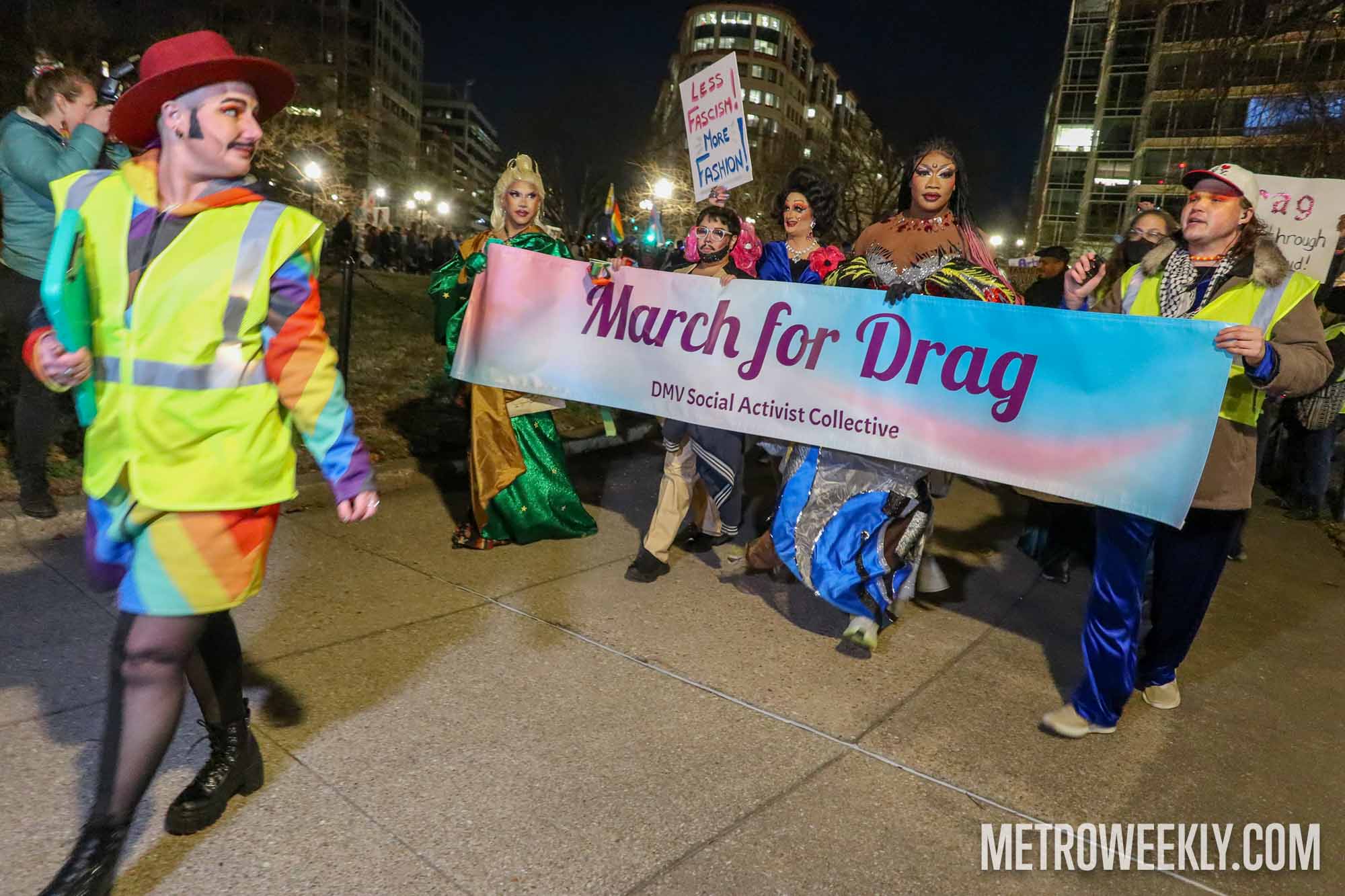
Drag artists and advocates fighting back in the culture war against drag and LGBTQ rights have seen triumphs and setbacks this summer. Two recent federal court decisions -- one in Florida, the other in Texas -- illustrate opposite shifts in the war being waged over anti-drag laws in states around the nation.
In August, a federal appeals court upheld Florida's law that bans performers or venues from conducting any "adult live performance" in the presence of a minor. The law defines "adult live performance" in terms loose enough to apply to practically any performer who appears in drag in a public space -- from a drag brunch to a Pride parade -- where a minor could be present, even with their parent or guardian's consent.







You must be logged in to post a comment.