New Hampshire Gov. Chris Sununu – Photo: Gage Skidmore
New Hampshire Republican Gov. Chris Sununu signed a bill preventing transgender girls in grades 5-12 from participating on female-designated sports teams.
He declared that the measure “ensures fairness and safety in women’s sports” by prohibiting transgender females from competing against cisgender females, against whom they may have a physiological and competitive advantage.
New Hampshire is the 25th state to impose a restriction on transgender athlete participation.
The American Civil Liberties Union of New Hampshire, along with the national organization GLBTQ Legal Advocates & Defenders (GLAD), criticized the law, which requires student-athletes to show a birth certificate or “other evidence” to prove their gender identity aligns with their assigned sex at birth.
Both organizations also warned that, under some broad interpretations of the law, students — including cisgender girls who don’t conform to stereotypical “female” behaviors and manners of dress — might be forced to submit to “sex verification” measures, such as genital inspections, reports The Portsmouth Herald.
Megan Tuttle, the president of NEA-New Hampshire, the state’s largest teachers union, slammed Sununu’s decision.
“Public schools should be safe, welcoming environments for all students, regardless of sexual orientation or gender identity,” Tuttle said in a statement. “Shame on Governor Sununu for signing into law this legislation that excludes students from athletics.”
Sununu also signed a second bill banning surgical interventions for transgender minors, casting it as a safety issue and a “commonsense” solution that “reflects the values of parents across our state.”
The governor said the law would ensure that “life-altering, irreversible surgeries will not be performed on children.”
He sought to defend his decision by citing the Biden administration’s stated belief that surgical interventions should not be performed on minors.
The Democratic presidential administration previously rankled LGBTQ advocates when it appeared to back age limits on surgical care.
Neera Tanden, a domestic policy adviser to President Joe Biden, has since clarified that while the Biden administration believes it best to delay surgical interventions until adulthood, it opposes categorical bans on such practices, which fail to take into account patients’ individual circumstances.
The third bill Sununu signed into law allows parents to opt their children out of any educational curriculum touching on sexual orientation, gender, or gender identity.
Critics have argued that the “opt out” stigmatizes LGBTQ students by equating any acknowledgement of their identities to “objectionable material,” and may even pave the way for bullying or harassment of students whose behavior doesn’t conform to stereotypical norms of gender expression.
Sununu vetoed a fourth bill, which would have eliminated nondiscrimination protections for transgender individuals, and could have opened the door to bathroom bans.
“In 2018, Republicans and Democrats passed legislation to prevent discrimination because as I said at the time, it is unacceptable and runs contrary to New Hampshire’s ‘Live Free or Die ‘spirit,” Sununu said, referencing the state motto, in a statement. “That still rings true today. The challenge with HB 396 is that in some cases it seeks to solve problems that have not presented themselves in New Hampshire, and in doing so invites unnecessary discord.”
The conservative group Cornerstone slammed Sununu for vetoing the bill, which it claims “would have maintained the rights of New Hampshire institutions to consider biological sex in separating prisons, athletic competitions, bathrooms, and locker rooms.”
While happy about the veto of the bill seeking to erode legal protections for the transgender community, LGBTQ advocates criticized Sununu for caving to the demands of social conservatives by signing the other three bills.
“These unconstitutional bills — now signed into law — are cynical attacks on some of the most vulnerable youth in our state and will have devastating impacts on transgender and LGBTQ+ students who already face discrimination and isolation just for being their authentic selves,” Devon Chaffee, the executive director of the ACLU of New Hampshire, said in a statement.
“Our politicians are continuing to fail trans youth: these laws are not actually about fair sports, healthy classrooms, or overall wellbeing, but rather imposing discriminatory views and pushing transgender people out of public life.”
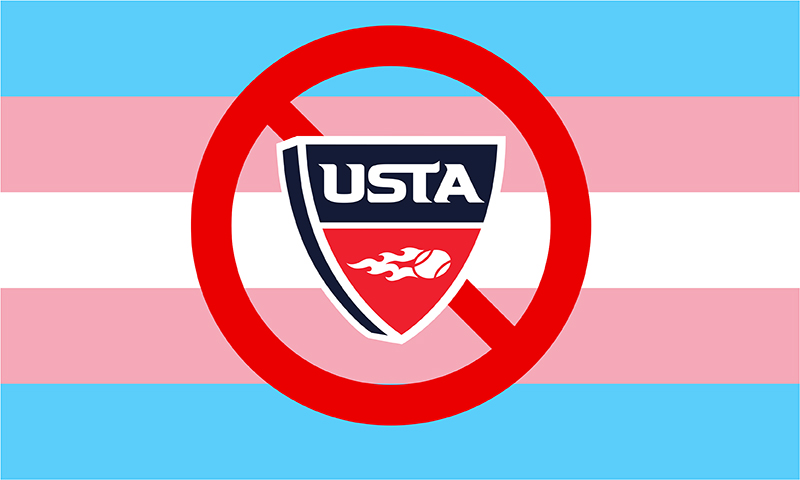
The United States Tennis Association, the national governing body for tennis in the United States, has quietly banned transgender athletes from competing in women's events.
As first reported by independent journalist Marisa Kabas in her newsletter The Handbasket, the USTA revised its "Player Eligibility Policy" page on October 25 with no prior warning or public announcement.
Under the revised policy -- which applies to all sex-specific junior and adult leagues, tournaments, and competitions, whether Olympic, professional, or recreational -- only athletes who meet the USTA's definition of a woman or girl may compete in events designated for women or girls.
The International Olympic Committee is reportedly preparing to ban transgender women from competing in all female-designated sports, according to a report by the U.K. newspaper The Times.
At present, each sport’s international federation sets its own rules on transgender eligibility, with some requiring athletes to undergo hormone therapy for a specific period before competing in the female category.
But IOC President Kirsty Coventry, elected earlier this year, has called for consistent standards across all sports. After taking office in June, she created four working groups to address key issues facing the IOC, including one focused on protecting women’s sports.
Texas A&M University System regents unanimously approved a policy requiring each campus president to sign off on any course that could be viewed as advocating "race and gender ideology" or addressing sexual orientation or gender identity.
The policy defines race ideology as "attempts to shame a particular race or ethnicity" or anything that "promotes activism on issues related to race or ethnicity rather than academic instruction." Gender ideology is defined as "a concept of self-assessed gender identity replacing, and disconnected from, the biological category of sex."
These are challenging times for news organizations. And yet it’s crucial we stay active and provide vital resources and information to both our local readers and the world. So won’t you please take a moment and consider supporting Metro Weekly with a membership? For as little as $5 a month, you can help ensure Metro Weekly magazine and MetroWeekly.com remain free, viable resources as we provide the best, most diverse, culturally-resonant LGBTQ coverage in both the D.C. region and around the world. Memberships come with exclusive perks and discounts, your own personal digital delivery of each week’s magazine (and an archive), access to our Member's Lounge when it launches this fall, and exclusive members-only items like Metro Weekly Membership Mugs and Tote Bags! Check out all our membership levels here and please join us today!








You must be logged in to post a comment.