Support for same-sex marriage has decreased over the past three years, driven by a drastic drop in support from Republicans, according to a recent Gallup poll.
Overall support for same-sex marriage among American adults stands at 68%, down from a high of 71% in 2022.
While 88% of Democrats and 76% of independents support same-sex nuptials, Republican support has tumbled from a high of 55% in 2021 and 2022 to just 41% in 2025.
It’s unclear what’s driving the trend. It could be that Republicans are changing their minds on the issue or that more socially liberal individuals are refusing to identify as Republicans.
The 47% gap between Democratic and Republican support for same-sex marriage is the largest it has been since Gallup first started asking the question in 1996.
Support for same-sex marriage significantly increased in Gallup’s survey in 2016, the year after the U.S. Supreme Court decided, in the case of Obergefell v. Hodges, that state-level bans on same-sex marriage were unconstitutional and should be struck down.
However, in recent years, social conservatives have sought to reassert their opposition to same-sex nuptials, with prominent and influential religious groups calling for an overturn of Obergefell.
This year’s survey included a separate question on whether “gay and lesbian relations” are “morally acceptable or morally wrong,” revealing a similar trend. Across nearly all ideological and identity groups, more people supported the legality of same-sex marriage than said they believed such relationships are morally acceptable — indicating a measurable group who, despite moral objections, oppose government interference and take a more libertarian stance on the issue.
Overall, 64% of American adults believe gay and lesbian relations are morally acceptable, bolstered by 86% of Democrats saying so and 69% of independents. However, only 38% of Republicans believe same-sex relationships are morally acceptable.
Among demographic subgroups, more women than men find same-sex relations morally acceptable and support same-sex marriage. Among various age groups, support for same-sex marriage and relations dwindles with age, with 76% of 18-to-34-year-olds finding same-sex relations morally acceptable, and 79% supporting same-sex nuptials, compared to 57% and 60%, respectively, of people over age 55.
“Despite the stable national backing for same-sex marriage and relations, the widening political divide suggests potential vulnerabilities in the durability of LGBTQ+ rights,” Gallup wrote in its report on the poll. “In 2022, Supreme Court Justice Clarence Thomas wrote in his concurring opinion in the Dobbs v. Jackson Women’s Health Organization decision that the high court ‘should reconsider’ its past rulings, including those on same-sex relationships and marriage. Since then, Republican lawmakers in some states have introduced resolutions asking the Supreme Court to overturn Obergefell. .. These occurrences suggest that same-sex marriage in the U.S. could face renewed legal and political challenges.”
LGBTQ advocates argue that because views on the “moral acceptability” of same-sex relations closely align with support for same-sex marriage, questions about marriage equality often serve as a proxy for broader societal acceptance of LGBTQ people.
Brad Polumbo, a conservative influencer and pundit, appeared to embrace that belief in a recent column penned for the Washington Examiner, in which he lamented the decrease in Republican support for same-sex marriage (and LGBTQ rights more broadly) but blamed what he called the “politicization” of the LGBTQ rights movement.
Citing a prediction he made in a 2018 column for a conservative news outlet, Polumbo noted he had accused the gay rights movement of becoming “hopelessly politicized, extreme, and oversexualized,” and warned that if it continued on that path, public support would decline. He specifically blames LGBTQ organizations — naming the Human Rights Campaign — for politicizing LGBTQ rights by tying them to niche Democratic causes.
Polumbo also criticizes activists’ embrace of what he calls “radical gender ideology,” arguing the movement has shifted away from core issues like nondiscrimination and healthcare access.
Instead, he says it now promotes ideas that alienate women and parents — including rejecting biological sex, eliminating single-sex spaces, and supporting gender-affirming care for trans youth — with some activists trying to “cancel” those who disagree.
“The decline in Pride Month celebrations is really just a symptom of this broader collapse in support for this community and its activism,” he writes. “Yet that collapse wasn’t inevitable. It didn’t have to happen. And it can be reversed. But that would require an activist community that was willing to admit its mistakes.”
Even while acknowledging that some right-wing activists have fueled backlash with “misleading, exaggerated narratives” and by labeling all LGBTQ people as “groomers,” Polumbo still blames LGBTQ activists for giving their opponents “so much ammunition to use against them.”
Perhaps underscoring his point, a separate Gallup poll found that the number of Americans who support the idea that homosexuality is a characteristic that a person is born with has decreased from a high of 51% a decade ago to 45% in 2025.
Meanwhile, more Americans now attribute being gay or lesbian to “nurture” — factors like upbringing and environment — as anti-LGBTQ rhetoric intensifies and Republicans push laws rolling back LGBTQ rights.
As with same-sex marriage, Republicans are driving the rise in those who reject the idea that homosexuality is innate.
In response to an inquiry about the decline of support for marriage equality and Polumbo’s assertions about HRC specifically, Brandon Wolf, press secretary of the Human Rights Campaign, responded to Metro Weekly with a statement.
“Everyone deserves full freedom and equality,” he wrote in an email. “But right-wing extremists want the country to believe that freedom and equality are scarce, targeting LGBTQ+ people, especially transgender youth, to score political points and attempt to divide us.
“Our fight has always been about more than one moment in time or one policy win; it has always been about a tireless demand for full lived equality for all…. Anyone who thinks that our rights and freedoms are not interconnected — not just within the LGBTQ+ community, but to all communities targeted for discrimination — has not paid attention to history.”
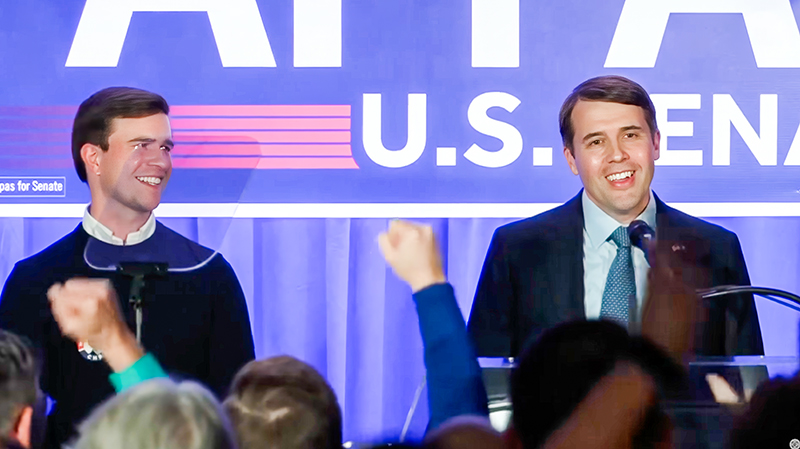
On Tuesday, America elected its first openly gay male U.S. senator, Chris Pappas, as voters from coast to coast sent Democrats to Congress in what some pundits have labeled a "blue tsunami."
Pappas, who currently represents New Hampshire's 1st Congressional District in the southeastern part of the state, beat back a strong challenge from former U.S. Sen. John Sununu (R-N.H.), who briefly surged into the lead in some polls this summer. Ultimately, however, the state reverted to its Democratic lean, with Pappas romping to a 14.3-percentage-point margin of victory over his Republican opponent, with over 90% of the vote counted.
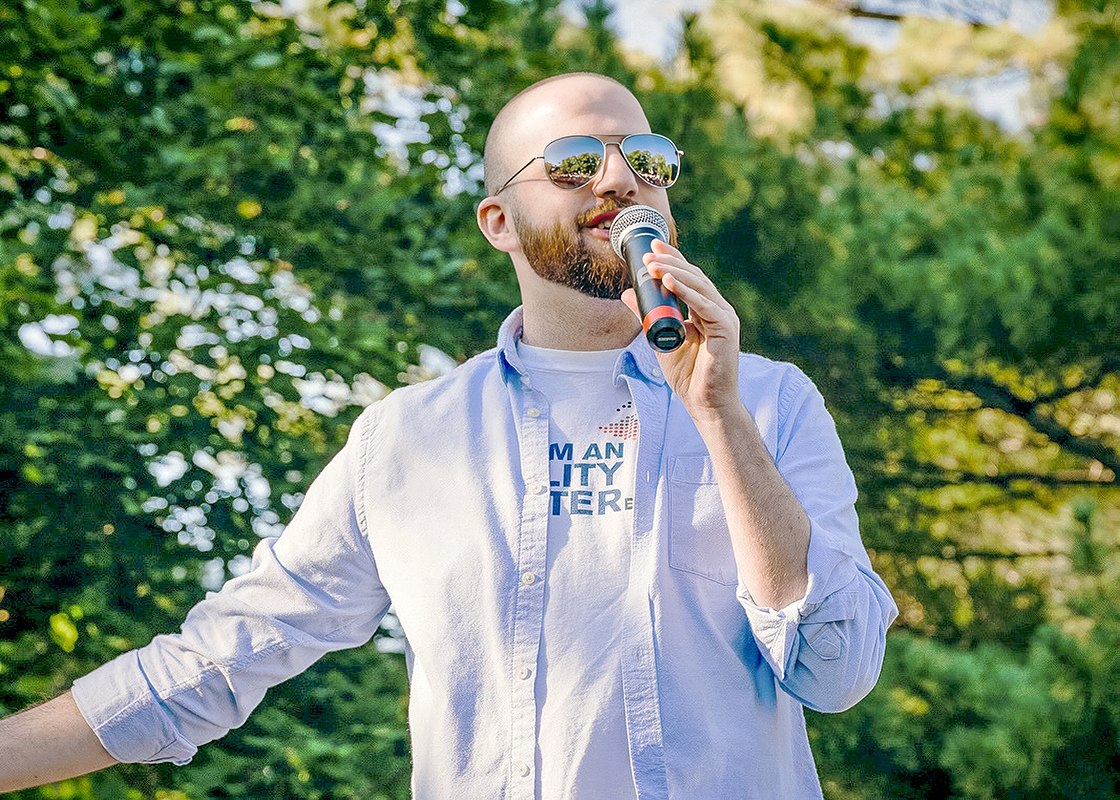
“One of my first loves was the political arena,” says Jeremy Moss, the openly gay president pro tempore of the Michigan Senate and Democratic nominee for Congress in Michigan’s 11th District.
“I remember in my household growing up, we had the news on and watched Peter Jennings every single night,” he says. “I was in a household that was very on top of current and newsworthy events in our state and in our country. I literally -- and this is no joke -- was the first grader that could name every president in the order they served.”
Moss recalls being six years old and captivated by the 1992 presidential debate at Michigan State University, which gave it a local connection for him. He watched Bush, Clinton, and Perot “making a pitch to America,” each hoping voters would choose his vision for the country.
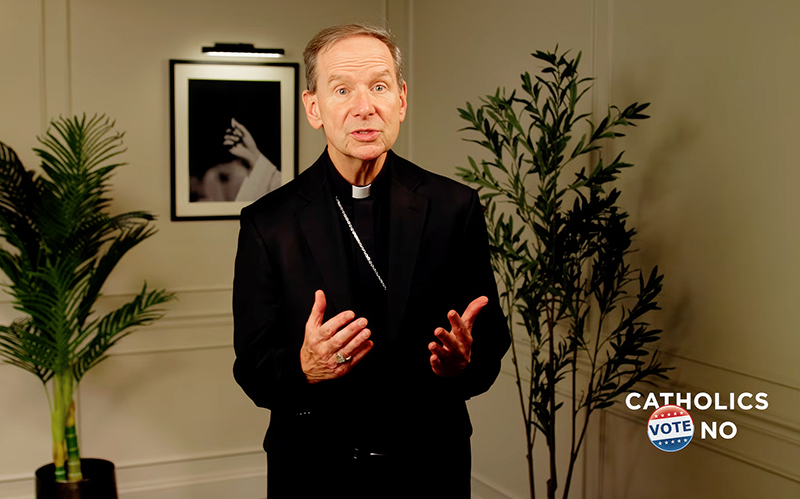
Bishop Michael F. Burbidge of Arlington, Virginia, is urging Catholics to pray, fast, and vote "no" on two ballot measures that would protect abortion rights and repeal the state's two-decade-old constitutional ban on same-sex marriage.
Burbidge addressed the measures in a September 30 video posted to the Diocese of Arlington's YouTube channel, shortly after early voting began for the Nov. 3 midterm elections.
The first ballot measure, if approved, would guarantee access to abortion while allowing restrictions during the third trimester, "except when the patient's health is at risk or the pregnancy cannot survive."





You must be logged in to post a comment.