Two men in Kenya have been sentenced to 15 years in prison for attacking and robbing two gay men — a rare instance of accountability in a country where homosexuality remains criminalized.
The defendants — referred to in court proceedings as “Abel Meli & Another” — were sentenced on a charge of robbery with violence on March 3 at the Milimani Law Courts in Kenya’s capital, Nairobi.
The attack occurred in April 2023, when the victims — identified by the British newspaper The Guardian using the pseudonyms Eric Anyango and Joe Ochieng, both in their mid-20s — arranged to meet a man with whom Ochieng had been communicating on Facebook. Shortly after arriving at the man’s home, three other men appeared and began attacking them.
Over the next four hours, Anyango and Ochieng were slapped, kicked, and beaten. Their phones, wallets, and clothes were taken, and they were forced to call friends and family to transfer as much money as possible to the attackers’ online accounts. Their assailants also threatened to out them to their families, who did not know they were gay, and to kill them if they refused to comply with their demands.
“I tried to resist and I wanted to fight back,” Anyango told the newspaper. “That’s when one of them took a knife, held it at me and said: ‘If you don’t cooperate now, I will stab you and throw you out the window.'”
After calling several relatives and friends and transferring 100,000 Kenyan shillings — about $774 U.S. dollars — into their attackers’ accounts, the men were finally released. When they arrived home, Anyango told a friend about the incident, who referred him to a paralegal from Ishtar — a community-based organization that advocates for men who have sex with men — identified by the pseudonym “Lucas Wafula.”
Wafula accompanied the victims to report the attack to police, who eventually arrested two of the attackers. While police followed through in this instance and pursued the case, Wafula told The Guardian that such action can be uncommon.
“Often, when you go to a police station, you are harassed and discriminated against,” he said. “They tell you that you are not a normal citizen and they throw away your case.”
Njeri Gateru, executive director of the National Gay and Lesbian Human Rights Commission, an LGBTQ advocacy group in Kenya, said holding two of the perpetrators accountable was an encouraging development in a country where anti-LGBTQ attitudes and discrimination remain widespread.
Gateru said the two men arrested were part of a larger criminal gang — which she alleged includes some police officers — that regularly terrorizes queer men. She added that several such cartels operate throughout the country.
“We’ve had cases where these two men were arrested for other cases and later released,” she said. “This [sentence] can now serve as a deterrent to other gang members who have seen that the law has finally caught up.”
Michael Nyaga, a spokesman for Kenya’s National Police Service, said he had not heard accusations that police were involved with such gangs, but added that “with the correct leads or hints, we would be duty-bound to act on any complaint raised.”
Gateru told The Guardian that gay or queer men in Kenya are frequently targeted for blackmail or extortion, often accompanied by violence. The group Ishtar reports that there were at least 226 cases in which gay individuals were blackmailed in 2025, and 61 similar cases in the first two months of 2026. But many such incidents go unreported.
“There’s always that fear of self-incrimination. If I say that I met with a man on Grindr and I was hoping to engage in a romantic or an intimate relationship with this man, then obviously I’m evidence against myself,” Gateru said, referring to Kenya’s anti-sodomy laws, which punish homosexual conduct with up to 14 years in prison.
“So the blackmailers rely on that. They also rely on the pervasive homophobia and homophobic attitudes within public institutions and also within the general public,” she added. “And so this creates a situation that makes it possible for them to operate with quite a bit of impunity.”
Anyango and Ochieng said they are glad that at least two of their attackers faced justice, but that they have been left physically and emotionally scarred by their ordeal and now find it difficult to trust people.
“I lost everything I was building for a better life in the future on a random date,” Ochieng told The Guardian.
Anyango said it is important that other Kenyans report similar crimes when they are committed against them.
“If you have been blackmailed, don’t be afraid,” he said. “There is justice, go to the police station. No one has the right to abuse you or do anything.”
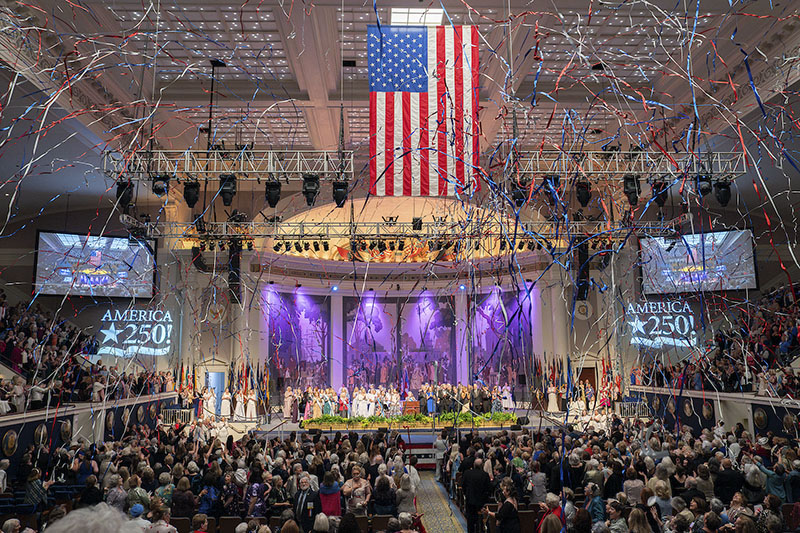
The Daughters of the American Revolution voted against a proposal to ban transgender members during the organization's 135th Continental Congress, held June 26 at DAR Constitution Hall in Washington, D.C. The proposal would have required applicants to be "born female" to qualify for membership.
The organization limits membership to women aged 18 and older who descend from people who aided the American Revolution. An estimated five transgender women have joined DAR chapters in recent years, sparking debate over whether "daughters" should include people assigned male at birth who identify as women.
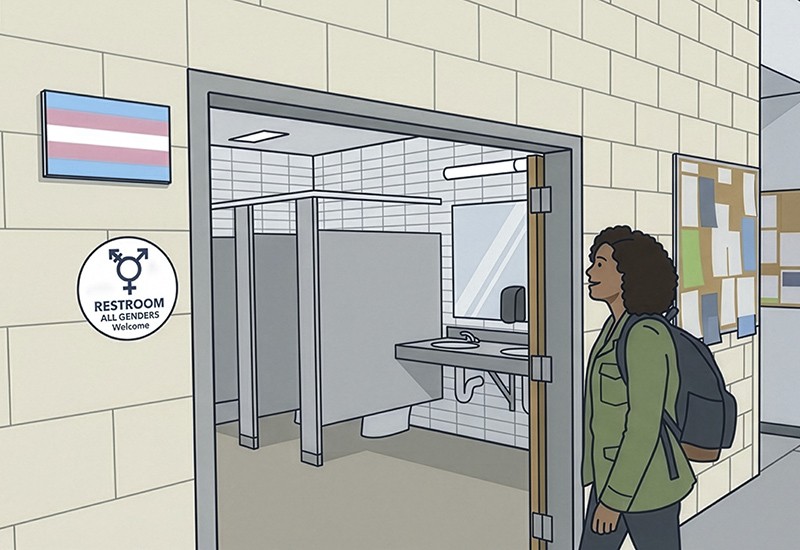
A transgender advocacy group has created a crowdsourced map of trans-friendly bathrooms in Idaho to help residents find facilities they can use safely.
State lawmakers recently passed a law prohibiting people from entering bathrooms that don't align with their assigned sex at birth. The law, which took effect earlier this month, applies to government-owned buildings and private businesses open to the public, including gas stations, restaurants, entertainment venues, and hospitals.
A first violation of the law -- which opponents have dubbed a "bathroom ban" -- is punishable by up to one year in prison. A second or third violation could carry up to five years, or potentially life in prison if prosecutors invoke the state's "persistent violator" statute.
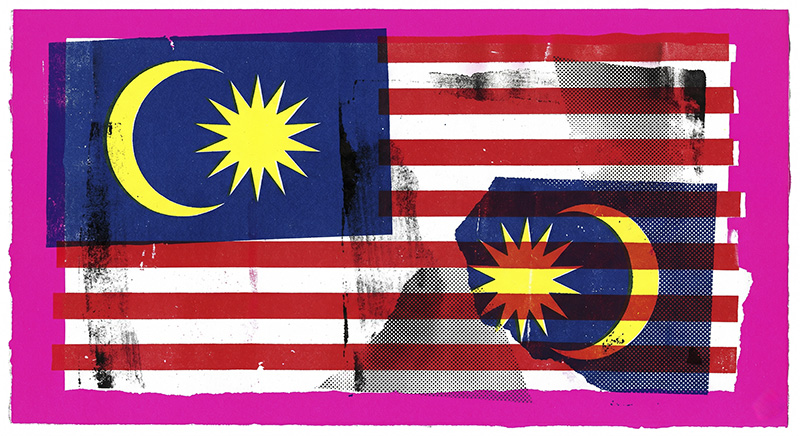
The Malaysian government is following through on a pledge to replace references to LGBTQ identity with the term "budaya songsang," which translates as "deviant culture."
In February, Marhamah Rosli, the deputy minister in the Prime Minister's Department (Religious Affairs), argued that replacing "LGBT" with "budaya songsang" in public discourse and on social media would prevent online algorithms from surfacing LGBTQ content and, in turn, prevent the "normalization" of queer culture.
"The more we utter, write, or state , the more 'pop-out' content related to it will appear," she said. "Without realizing it, we are promoting the culture unknowingly."
These are challenging times for news organizations. And yet it’s crucial we stay active and provide vital resources and information to both our local readers and the world. So won’t you please take a moment and consider supporting Metro Weekly with a membership? For as little as $5 a month, you can help ensure Metro Weekly magazine and MetroWeekly.com remain free, viable resources as we provide the best, most diverse, culturally-resonant LGBTQ coverage in both the D.C. region and around the world. Memberships come with exclusive perks and discounts, your own personal digital delivery of each week’s magazine (and an archive), access to our Member's Lounge when it launches this fall, and exclusive members-only items like Metro Weekly Membership Mugs and Tote Bags! Check out all our membership levels here and please join us today!






You must be logged in to post a comment.