
Chris Pappas on Senate Run, Trump, and the Future of Democrats
The gay New Hampshire congressman discusses affordability, LGBTQ representation, and why Democrats must remain a "big tent" party.

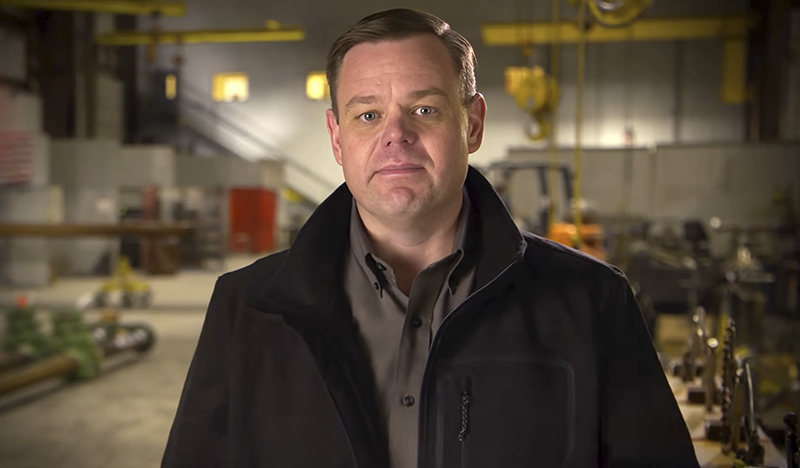
“For me, politics is about how you can make people’s lives better, how you can move us forward, how you can ensure that everyone can participate in our economy and that everyone in our society is treated fairly,” says Democratic Congressman Chris Pappas, who is seeking his party’s nomination to be New Hampshire’s next U.S. senator.
“There have been a number of things I’ve been proud of during my time in Congress, but this is a time where we have to stand up, and reestablish checks and balances, and fix a broken system in a way where we can make good on the promise of America for everyone,” he adds. “I feel really driven to win this tough race, and hopefully put our state and our country on a much better path for the future.”
Pappas, who turns 46 on June 4, has represented New Hampshire’s 1st Congressional District since 2019, when he became the state’s first openly gay elected congressman. He faces the daunting task of running in one of the country’s swingier states, where elections are always closely contested and where most voters don’t align with a particular political party.
Much like his first bid for Congress, when he was elected as part of a “blue wave” that took back the House, Pappas is hopeful that this year’s anti-Republican climate, driven by dissatisfaction with President Donald Trump, will boost his chances of retaining the seat currently held by retiring Democratic U.S. Sen. Jeanne Shaheen.
Should he win his September primary, as expected, Pappas will face off against either former Massachusetts U.S. Sen. Scott Brown or former New Hampshire U.S. Sen. John Sununu, who was ousted by Shaheen in the 2008 Democratic wave that accompanied former President Barack Obama’s first election. Both are consummate Washington insiders with strong ties to Republican Senate leadership, either of whom would be a loyal foot soldier in helping carry out President Trump’s legislative agenda. Sununu, the presumed frontrunner, is the scion of a powerful New Hampshire political family that includes two former governors of the state, one of whom — his father, John — also served as former President George H.W. Bush’s White House Chief of Staff.
By comparison, Pappas’s background, as the son of restaurant owners, seems practically humble. A lifelong New Hampshire resident, Pappas attended public schools and played various sports, including Little League baseball, basketball, cross-country, and tennis, for school and church teams throughout his youth.

He also spent time working at Puritan Backroom, the Manchester-based restaurant best known for its mudslides and chicken tenders, which his family has owned and operated since 1974. At age 14, Pappas started working as a busboy and dishwasher at the restaurant before graduating to scooping ice cream and working the takeout window as a teenager.
“I was always working on weekends, on nights when I didn’t have school activities, and certainly throughout the summer,” he says. “That was really a big part of my upbringing.”
Pappas attended Harvard, where he earned a bachelor’s degree in government in 2002, before returning to Manchester to help run the restaurant for 15 years. While there, he built upon his past political experience — volunteering for various local candidates for public office — and sought a seat in the state’s House of Representatives at age 22.
“It really came about because there were others in the community whom I had gotten to know through my volunteerism on campaigns, who looked at me and said, ‘You should really think about running yourself,'” he says. “I didn’t have any grand plans to do that when I moved back home, but it felt like an interesting opportunity, and a way to continue my political education and also to give back.
“I worked really hard, knocked on a lot of doors, and won a race in a Republican-leaning district in a cycle that was pretty bad for Democrats,” he continues. “I served a couple of terms in the state legislature, which is a part-time position. It was at that point in time that I began working full-time at the family business and managing it. But I was always intent on keeping a space in my life for public service and trying to figure out how I could give back, using whatever free time I had.”
In 2006, he was elected Treasurer of Hillsborough County, a position for which he served two two-year terms, before serving three terms as a member of New Hampshire’s Executive Council, which acts like a board of directors for state government. In 2017, after Trump’s first election win, Pappas was inspired to run for office to serve as a check on the president’s unbridled power, especially in light of national Republicans’ fealty to Trump, no matter how outlandish his rhetoric or disruptive his actions were. He won the 2018 election for the state’s 1st Congressional District by a nine-point margin, and has been reelected three times since.
After holding a “listening tour” last year to gauge whether there would be support should he choose to run for the U.S. Senate seat being vacated by Shaheen, Pappas announced his candidacy in April 2025. During his announcement, he took aim at Trump and Elon Musk, the owner of the social media platform X and the former unofficial head of the U.S. Department of Government Efficiency, promising to lead the charge against “self-dealing billionaires” and “extreme politicians” looking out for their own interests.
But Pappas, a political moderate, is much less a liberal firebrand or political bomb-thrower than a pragmatist concerned about getting things accomplished and passing legislation that will benefit the types of people he meets on the campaign trail who worry that their lives are being made harder and that no one is watching out for them.
“I’m running for Senate because our economy, our democracy, and our way of life are on the line,” he said when announcing his candidacy, “and New Hampshire deserves a senator who is grounded in the people, places, and values of this state.”

METRO WEEKLY: Let’s talk about your coming out story and when you first became aware of your identity.
CHRIS PAPPAS: I first really began to talk to other people about it when I was in college, and that’s when I came out — first to friends, and then to family members. But growing up, I always felt a little different from other kids, and it was always hard to put a finger on what exactly it was.
I really benefited from having a family that always provided unconditional love and support. I felt like once I decided to tell people, there were going to be people behind me who were sort of just providing the support that I needed.
Once I got to college, I found friends who were just like me. I didn’t really have that experience when I was in high school. I went to the largest high school, at the time, in the state of New Hampshire, and I can’t remember there being one out person at a school of over 2,000 students. This was in the 1990s, and you very much heard derogatory language being used about gay people back during that era. I feel like there were some people that I grew up with who would use those terms toward me before I really even reckoned with who I was. So it was a time where you just didn’t see a lot of signs of LGBTQ life. There was no organization in the school to support LGBTQ kids, and it wasn’t until I got to college that I really began to connect with that world and felt comfortable just being myself. So it was an evolution, but I really feel lucky to have grown up in a pretty open environment and with a family that I knew was going to be there to support me.
MW: How have attitudes changed in New Hampshire regarding the LGBTQ community?
PAPPAS: New Hampshire has always been a pretty accepting place. Our state motto is “Live Free or Die.” I think people take freedom incredibly seriously and don’t want the government intervening in their private personal lives. Most people ascribe to a “live and let live” philosophy, where they want their neighbors to be able to do what they want to do and not be bothered.
New Hampshire was at the leading edge of the push toward nondiscrimination protections for the LGBTQ community, was one of the first states to pass marriage equality, legislatively, in 2009, which was signed into law by our governor, who had run for office not necessarily being a champion of marriage equality, but understood the moment. It’s long been a place where we’re better than average, compared to the rest of the country, at including everyone and having protections spelled out in law that will make sure LGBTQ people can be themselves.
Now, we’re seeing the same sort of right-wing push in New Hampshire that is happening nationally, where there are efforts by our legislature to roll back that progress, to target members of the LGBTQ community, including transgender individuals. So we’re at a moment where we feel like we’re playing a lot of defense.
But what I know about my state, having lived there my entire life, is that people are compassionate, they want everyone to have the same rights and responsibilities. I do think that people support diversity as a value. We do see efforts to weaponize the terminology “DEI,” which might be productive for Republicans in certain political circles. But once you talk to the broad swath of voters out there, they value diversity and want everyone to be included. And I hope we can get back to that broader conversation and get past these really cynical attacks that are, I think, doing a lot of damage to LGBTQ individuals.
MW: What are you hearing on the campaign trail in terms of what’s concerning New Hampshire residents right now?
PAPPAS: People are angry. They’re incredibly frustrated. They feel like the president and the leadership in Congress isn’t paying attention to what they’re experiencing in their own lives. And this isn’t something that’s just developed over the course of a few months — I mean, we’re talking about growing inequality, families that are doing everything right but just finding it harder and harder to get ahead and to provide for their families.
So whether that’s having health care, or finding housing, or putting their kids through college, it’s all become almost impossible. And now you’ve got a president that is openly thumbing his nose at the American people, saying affordability is a “hoax,” that he doesn’t think about Americans’ financial situation. He’s taken us to war in a way that’s raising prices. So folks are talking about the price of gas, how hard it is to just afford the basics.
We have a housing crisis in New Hampshire. We haven’t been building the way we’ve needed to for about 20 years in our state, and it’s driven [up] prices to record home price values. We have a real crunch in terms of rental availability. So people are talking about the cost of living and they’re looking for leadership to be able to stand up to a reckless president and political extremists, and focus on their lives and how we can get things done in a meaningful way.
And that’s really what our campaign’s going to continue to be about, how we restore checks and balances and are able to put our country on a better path for the future so that we can lower costs, create more economic opportunity and ultimately respond to the affordability crisis.

MW: What sorts of solutions are you proposing to solve the affordability crisis?
PAPPAS: Well, there are a number of things that we could have done over the last year that we haven’t been able to find the support for in Congress, because they’re not willing to show the courage to stand up to the president. Families in my district paid $1,700 more last year for everything they need as a result of these tariffs, so rolling back policies that are actively raising costs would be a good place to start.
We need to make sure that we’re giving everyone access to health care. We’re going to see tens of thousands of families in my small state lose Medicaid, lose their Affordable Care Act plan, either because it’s become too expensive or because of the Republican bill to kick people off their health insurance. And that’s bad for everyone, because everyone’s [ultimately] going to end up paying more for their policies as a result of that.
In terms of housing, we got a chance to do a housing bill even before the end of this Congress, but it’s all wrapped up in the politics of what Donald Trump is trying to do with the rest of his agenda. We’ve got to put more tools on the table so that our communities can build for the future and truly create not just more luxury housing, but workforce housing that’s going to be affordable to young people who are just starting out and people who want to live in the community in which they work.
Another big issue that I’m hearing about is childcare. There’s no access to it in many parts of our state. It’s far too expensive. There are people on the sidelines of the workforce that aren’t out there working because it’s just cost-prohibitive to put their kids into daycare.
So all those issues are things where we could be digging in and putting some wins on the board for working families and for the middle class. But right now, the focus in Washington has been on carrying the water for Donald Trump, on supporting his war, on supporting his tariffs, on gutting health care and food assistance so that the biggest corporations and the wealthiest people get tax breaks. That’s incredibly backward when it comes to the priorities that I’m hearing from voters in New Hampshire. And I think there are things we can do to solve problems and get things done, but we need the leadership that’s willing to do it.

MW: You’ve proposed a suspension of the gas tax. How would that policy work?
PAPPAS: Well, look, it’s one lever that I think we have in Congress. I supported it back in 2022, when gas prices were about at this level in the wake of Russia’s invasion of Ukraine. And I think this is a moment where we’ve got to be doing everything possible to provide relief. My bill would suspend the gas tax through the end of the fiscal year, at the end of September. It would backstop the Highway Trust Fund so that infrastructure projects wouldn’t lose out on critical funding. And it would ensure that big oil companies are actually passing the savings on to customers and not just manipulating the price if the tax is suspended.
I think it’s sensible legislation. It’s one of the things we can actually do in Congress to provide some relief. There are states that have taken this step. As I talk to folks in New Hampshire, they’re just paying way too much right now. It’s having a ripple effect across our economy. You saw the inflation last month shoot back up to 3.8%. And even if this war ends this week, we’re going to see high gas prices, high home heating oil prices, which New Hampshire homes rely on over the course of many months. And so I think we’ve just got to be taking whatever steps we possibly can to provide some relief.
MW: Looking at recent elections, we’ve seen some positive trends for Democrats, but we’ve also seen support decline for Democrats in down-ballot races, and threadbare support in rural and exurban communities, which pundits say show that winning the House or the Senate won’t be as easy as people think it is this year. What do you personally think the issue is that is keeping people from wholeheartedly embracing the Democratic Party?
PAPPAS: Well, what I can say about New Hampshire is that most voters are independents. They are frustrated with both parties. And I think that the challenge for Democrats is going to be showing how we want to change things in Washington, that we don’t just want to go back to a time period before Donald Trump was president — which also wasn’t good enough for most people out there. We want to think about how we build something better for the future and how we fix a broken political system.
People are frustrated with the corruption that is out in the open right now in Washington. Members of Congress are trading stock, who are participating in prediction markets –- and there are government employees who have allegedly done that around national security events as well — and are enriching themselves. We need tougher ethics reforms for the Congress, the Supreme Court, and for the executive branch.
I think there’s just a lot of fatigue with politics-as-usual, and people are looking for something different. And that’s an opportunity for Democrats to show that we can bring some generational change, that we’re fighting for the future, rather than turning the clock back to a time before Trump was elected president, when things didn’t work for folks.
I think this is something that Democrats are going to have to navigate. We have to show that we are on the side of the American people. We understand what they’re going through right now, show that we’re willing to take every step possible to get things done, and make their lives better, and that we’re willing to use the leverage we have to try to fight back against the administration. The war is very unpopular. Donald Trump’s policies on health care and on the economy are not landing well with the American people. We have to both show the fight against the current status quo, but also what our ideas are to change it for the better.

MW: What specifically is making the Democratic Party more unpopular than it’s been in its history right now?
PAPPAS: Well, Democrats lost a big election in 2024. And in losing the most important election of our lifetime, I think there are a lot of people that are rightfully mad at the Democratic Party establishment.
In the beginning of Trump’s return to the White House, a lot of Democratic leaders were flatfooted in terms of how they were engaging on the issues and trying to hold the line on certain policies. And I think that the American electorate continues to be very unsettled. We’ve had a number of change elections in a row in this country, regardless of who seems to be in power, and people are feeling like things are just not working for them, for their families. I think if we want to be the party of talking about the threats to democracy and restoring institutions, then we have to be the party that wants our government to be able to get things done for people and show the difference that it can make in people’s day-to-day lives.
MW: What specifically would you advise Democratic Senate leadership to do to fix the party’s reputation?
PAPPAS: I think that continuing to use every lever possible to stand up to a reckless administration that’s showing little regard for the rule of law and the Constitution. A good example is what happened in Minneapolis, with the ICE enforcement that many Americans know is so inconsistent with our values and who we are as a country. Democrats have stood up to demand accountability measures. While we haven’t seen Republicans willing to work with us –- in fact, now they’re going around us to pass funding for ICE through reconciliation –- I think that’s an important argument to be making.
I think people want to see leaders stand up and fight for what’s right. They want someone who is going to be in their corner, who’s going to stand up when their community needs it. And so whether that’s on the immigration issue, whether it’s on health care, whether it’s on tariffs, Democratic leadership needs to continue to get louder and continue to do everything possible to protect what’s important.

MW: There also seems to be –- and maybe this is solely an online phenomenon — a fight within the party between a more “progressive” wing and a more “moderate” wing over everything from policy to strategy to the way they present themselves. And those factions seem more interested in fighting for power within the party than fighting Republicans. How do you see that situation playing out?
PAPPAS: In order for Democrats to win elections, we have to be a big tent. We need moderates and progressives and independents and pro-democracy Republicans to be coming together to win races, whether that’s in a state like mine or whether that’s in some of the other battleground states for Senate, like Georgia, Alaska, and Ohio. We’ve got to make sure that we are meeting the moment, but also not creating these litmus tests that tell people, “If you’re not with us 100% of the time, you’re out of the tent.” That’s not a recipe for success.
The Republicans are able to just be a personality cult. They’re a party that’s arrayed around one person: Donald Trump. It’s not necessarily about issues, it’s about loyalty. And we’ve seen that over the last few weeks in these elections, whether it’s Thomas Massie or Bill Cassidy or John Cornyn, or the state senators in Indiana, the Republican Party is just about who’s the most loyal to Donald Trump. And in New Hampshire, that’s a phenomenon that exists with the Republican candidate who I’m likely to face in November. John Sununu is a former senator. He sought out and got Trump’s endorsement in this race. So he’s now going to be the Republican nominee and will be our opponent.
It’s just so disappointing that that’s what our politics has become, but Democrats need to be smart about how we ensure that we do have diversity of opinion within our party. That should be welcomed and encouraged. We don’t all have to agree all the time, but we should know where the real fight is right now. It’s really a fight for whether our democracy is going to stand the test of time at America’s 250th anniversary, whether we are going to be able to use government to make people’s lives better and create more economic fairness and deliver health care and protect our environment and stand up for personal freedoms. That’s all on the ballot this year, and we’ve got to get past this sort of circular firing squad that’s continued to rage after the 2024 election.
MW: Since you mentioned litmus tests — which we hear complaints about from “old-school liberals” like Bill Maher and John Fetterman — I also think there is a significant element within the more “conservative” or “moderate” spectrum of the party, in which people threaten to vote Republican if a progressive or someone left-of-center wins a primary. What about the ideological “purity tests” being imposed by more “centrist” party leaders?
PAPPAS: Well, that’s not what I was referring to when I was saying purity tests. I meant that this notion that you’ve got to be for a hundred things down a list if you’re going to be a Democrat. There are different flavors of Democrats in different parts of the country. And what I think we need is candidates that know their communities, know their state, can speak authentically about the issues and really connect. And you’re seeing candidates across the board from different spaces in the Democratic coalition who are successfully doing that across the country.
So part of what is going to help remake the Democratic Party in 2026 and in 2028 is making sure that we’re allowing people to hone in on what’s important to their districts, their states. And then we’re going to have a good chance to be able to synthesize that into a much broader, more competitive national Democratic Party as we approach the next presidential election.
So, for me, I’m just thinking about New Hampshire. I don’t know too much about what’s going on in a lot of these other races. But I do know my state. I’ve lived there my whole life. I represent half of the state right now in Congress. I get a good sense of where people are, and most people are not looking for every answer from the government. But they want their lives to be better. They want someone who understands them, who’s going to show up and who’s going to connect. I think that’s where we’re going to have a real contrast in the general election in our race.
We’re likely up against an opponent who’s part of the corporate special interest swamp in Washington, who was voted out of office by New Hampshire voters in 2008, because he was out of step on the issues and supporting an unpopular Republican president. Now he’s thrown his lot in with Donald Trump. I just think this is a moment where it is about how we can put the needs of our state first and have someone who’s going to go to bat for our communities and for our future.
MW: Looking forward to 2028, because you represent New Hampshire, should you win this race, you will have some degree of influence as a senator from the first primary state. If you are successful, what role do you see yourself playing in the presidential primaries?
PAPPAS: Well, potential candidates are already showing up. We’ve seen a lot of national figures come to New Hampshire over the last few months, which is exciting for voters. People want to be seen, they want to be heard, they want to be part of the conversation. And that’s always the beauty of the New Hampshire primary: creating a conversation that is not through paid media, but driven by people on the ground, in coffee shops, in workplaces. So that process has already sort of kicked off in an unofficial way.
But it would be my honor to continue to sort of be a good steward of the New Hampshire primary and make sure that people know that New Hampshire’s a place where everyone is welcome. We’ve had that reputation through the years and voters take their role incredibly seriously. I mean, we usually get well over 50% turnout in a presidential primary, which is unheard of, if you look at other states in terms of how they vote. So people do engage, and I think it’s going to be a wide-open race, given that Donald Trump will not be able to run for reelection. So you’ll have a wide-open Democratic and Republican contest next time.
MW: If you win in November, you would be the first openly gay man elected to and serving in the U.S. Senate. Does the significance of that mean anything to you?
PAPPAS: I’ve been proud to co-chair the Congressional Equality Caucus during my time in the House. We’ve now got the largest group of LGBTQ members that we’ve ever had in the history of the U.S. House. And Tammy Baldwin is the only LGBTQ member of the Senate. I think we continue to need to see more people have a seat at the table and ensure that our elected officials represent the diversity that exists across our country. So I’m running for this position to try to get things done and make a difference for New Hampshire, but in terms of the distinction of being the first gay man potentially elected to the Senate, I think it’s shown that our nation has come a long way.
I do think that we’ve got a lot of work to do to continue to make sure that we’re standing up to discrimination, that we’re standing up to these really cynical political attacks, that we’re ensuring that everyone can be themselves and live their truth, and having a seat at the table will help us ensure that we’re making progress and changing hearts, minds, and laws and moving forward.
MW: We saw a recent report from the LGBTQ Victory Fund where they noted that a number of LGBTQ people who are potential candidates for public office are not running, in part because of the fear of violence, death threats, or just not wanting to put themselves through grueling campaigns, or having themselves or their families targeted by the president. What has it been like campaigning with your husband, and do you worry about him being visible during these contentious times where campaigns can get personal?
PAPPAS: It’s been a real positive experience for me. I honestly think that when you are out there running as an LGBTQ candidate, you’re letting people in a little bit, in terms of how you live your life. So people do feel like they know me in a certain way.
I remember being at a senior center last year, and the women there, who were about to play bingo, were talking to me about the fact that they were mad at me about something. I said, “Well, what is it?” And they said, “Well, you didn’t bring that handsome husband of yours to join you here today.” So I hear that a lot. People want to meet my husband, they want to see us together. For people that have LGBTQ family members, who are part of the community themselves, it’s really important for them to be able to see their own experiences reflected in their elected leaders.
So it’s generally been a very positive experience for me, maybe outside of the pretty vicious, hateful comments that people will spew online. But once you get in person, again, especially in a state like New Hampshire, people just want to talk about what’s on their minds. They get past personal differences pretty quickly and just want to know that someone is looking out for them.
MW: To follow up on that, what would your advice be to LGBTQ people considering running for office but are worried about encountering hostility?
PAPPAS: Well, look, it’s a rewarding experience and we need people to be stepping up and taking ownership of their communities and trying to make a difference. If we just allow people who have hateful views to dictate who can be out there in the public square, it’ll do a great disservice to our ability as a democracy to translate the will of the people into progress.
I think about what some of my colleagues have gone through, especially Sarah McBride — who is so courageous and has so much weight on her shoulders, but is doing an incredible job serving her state and really dialing in on the issues that people care about. She’s a great example of how it is possible to handle extraordinary pressures in public life and still actually be able to deliver things that people are looking for from their elected leaders.
There’s also a lot of support out there, when people do step forward, not just from voters, but from other elected leaders and candidates. There’s a really good network of folks that will be there to support you if you make the jump.
Chris Pappas is a candidate for the U.S. Senate. For more information about his campaign, visit chrispappas.org.
Follow him on X at @ChrisPappaNH or Instagram at @pappasfornh.



Support Metro Weekly’s Journalism
These are challenging times for news organizations. And yet it’s crucial we stay active and provide vital resources and information to both our local readers and the world. So won’t you please take a moment and consider supporting Metro Weekly with a membership? For as little as $5 a month, you can help ensure Metro Weekly magazine and MetroWeekly.com remain free, viable resources as we provide the best, most diverse, culturally-resonant LGBTQ coverage in both the D.C. region and around the world. Memberships come with exclusive perks and discounts, your own personal digital delivery of each week’s magazine (and an archive), access to our Member's Lounge when it launches this fall, and exclusive members-only items like Metro Weekly Membership Mugs and Tote Bags! Check out all our membership levels here and please join us today!




You must be logged in to post a comment.