Missouri Gov. Mike Kehoe, a Republican, signed a new law last week prohibiting state funds from covering transition-related treatments for transgender inmates.
The law, which took effect July 2, is primarily an appropriations bill funding the Missouri Department of Corrections. As first reported by the Kansas City Star, it allocates money for DOC programs, training, mental health services, food storage, and overtime pay — among other expenses — but also contains a one-sentence provision barring the use of state funds for gender-affirming care for transgender inmates.
“No funds shall be expended for any cross-sex hormones, or gender transition surgery undertaken for the purpose of any gender transition,” the provision states.
The law does not allow inmates already receiving gender-affirming care to continue their treatment, nor does it provide a plan for safely tapering them off hormones or other medications.
Missouri becomes the seventh state — and the second this year, after Oklahoma — to ban gender-affirming care for transgender inmates. Florida, Kentucky, and North Carolina have enacted nearly identical laws. Idaho and Georgia passed similar restrictions, but federal courts have blocked both from taking effect.
Four other states — South Carolina, Tennessee, Arkansas, and Utah — currently have “freeze-frame” policies restricting the treatments transgender inmates may receive.
Because the law contains no grandfather clause or guidance on how to safely taper inmates off transition-related treatments, transgender inmates currently receiving hormone therapy could be forced to stop treatment immediately, potentially exposing them to serious physical and mental health consequences.
The new law marks a departure from Missouri’s recent practice. In 2018, a federal court struck down the Department of Corrections’ “freeze-frame” policy, ruling that denying medically necessary treatment to transgender inmates with gender dysphoria violated the Eighth Amendment’s prohibition on cruel and unusual punishment.
The decision, which was never appealed, led the department to provide gender-affirming care when medically necessary.
britt walsh, director of transgender healthcare at Whitman-Walker Health, tells Metro Weekly that losing access to gender-affirming hormone therapy could have serious health consequences, especially for people who have had their testicles or ovaries removed as part of gender-affirming surgery. Those patients are generally advised to remain on hormone therapy for the rest of their lives because their bodies no longer produce hormones at levels that are safe for them.
walsh warns that losing access to hormone therapy could cause significant emotional and psychological distress.
“A lot of people with gender dysphoria describe access to gender-affirming hormone therapy as lifesaving,” walsh says. “We have a lot of studies showing that simply accessing hormone therapy vastly improves someone’s overall mental health and well-being. So I think we could expect to see some pretty brutal impacts on emotional well-being and mental health stability. We could even expect increased distress or suicidality.”
People who have not undergone gender-affirming surgery may experience increased dysphoria if hormone therapy ends abruptly, walsh says, as their bodies resume producing hormones that can trigger unwanted physical changes.
“I wouldn’t say these would be rapid changes or like overnight changes, but depending on someone’s dosing or their body composition or their own body’s hormone levels, we could expect to see people’s body fat redistribute in ways that could bring about dysphoria, or muscle loss,” walsh says. “We could see folks experience new hair growth, hair loss, changes to their voice that are unwanted. People who are on testosterone might suddenly begin menstruating again. And, in prison, they might not have access to the personal hygiene items they may need. Those effects would also likely be distressing.”
walsh adds that abruptly stopping hormone therapy could lead to serious physical health problems, including severe bone density loss that increases the risk of osteoporosis and fractures, cardiovascular complications, cognitive decline and mood instability, and metabolic dysfunction affecting a person’s weight, energy levels, and overall health.
Meanwhile, those experiencing severe gender dysphoria may resort to self-harm or attempt suicide if they feel disconnected from, or lack control over, their own bodies, walsh warns.
“Dysphoria is very real. It’s deeply impactful. It is literally a medical diagnosis. It’s not just like this sad thing where we can say, ‘Oh, poo-poo, your dysphoria came back.’ For some people, it is an incredibly intense, out-of-body experience that changes your mood. They may feel unsafe. They may, in fact, be more visible as a trans person, and actually experience a lack of safety.”
U.S. Rep. Seth Moulton (D-Mass.), who is running for the U.S. Senate, was booed by spectators when a contingent representing his office marched in the Boston Pride Parade on June 6, according to videos posted on social media.
Moulton, 47, has mounted a primary challenge against U.S. Sen. Ed Markey, 79, a fellow Massachusetts Democrat and longtime LGBTQ ally -- a bid that, a decade ago, might have been dismissed as a fool's errand.
However, concerns about Markey's age and whether he may decline physically or mentally while in office have made the race appear more competitive than many expected, reflecting broader unease among some Democrats about older politicians serving in elected office.
The U.S. Supreme Court has ruled that state bans prohibiting transgender athletes from competing on girls' and women's sports teams in high school and college are constitutional and do not violate transgender athletes' right to equal protection under the law.
The 6-3 decision does not apply to intramural mixed-gender sports teams, such as voluntary adult leagues that do not receive federal funding.
The nation's highest court found that Title IX -- the federal law prohibiting sex-based discrimination in educational settings -- allows schools to maintain separate women's and men's sports teams based on biological sex due to the inherent physical differences between biological men and biological women.
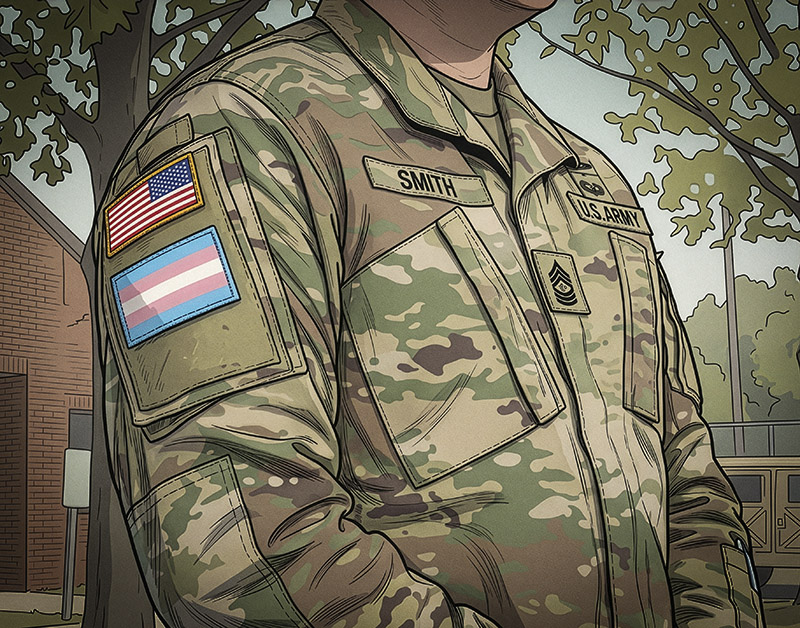
A federal appeals court has ruled that the Trump administration illegally discriminated against transgender service members by banning them from serving in the U.S. military.
The 2-1 ruling from the U.S. Court of Appeals for the District of Columbia Circuit found that the Pentagon's prohibition on transgender service members -- adopted to comply with a January 2025 executive order issued by President Donald Trump -- was designed to exclude people from military service based on their gender identity.
These are challenging times for news organizations. And yet it’s crucial we stay active and provide vital resources and information to both our local readers and the world. So won’t you please take a moment and consider supporting Metro Weekly with a membership? For as little as $5 a month, you can help ensure Metro Weekly magazine and MetroWeekly.com remain free, viable resources as we provide the best, most diverse, culturally-resonant LGBTQ coverage in both the D.C. region and around the world. Memberships come with exclusive perks and discounts, your own personal digital delivery of each week’s magazine (and an archive), access to our Member's Lounge when it launches this fall, and exclusive members-only items like Metro Weekly Membership Mugs and Tote Bags! Check out all our membership levels here and please join us today!









You must be logged in to post a comment.