
Keeping DEI Policies Didn’t Hurt Companies, Study Finds
Firms that retained their diversity programs performed as well as those that rolled them back despite pressure from the Trump administration.
 A new study has found that companies that retained their diversity, equity, and inclusion policies or rejected anti-DEI shareholder resolutions performed just as well financially as those that rolled back their policies.
After taking office last year, President Donald Trump issued an executive order ending diversity, equity, and inclusion policies in the federal government and among federal contractors. The order also encouraged — but did not require — private-sector businesses to abandon DEI policies governing hiring, management, contracting, and suppliers.
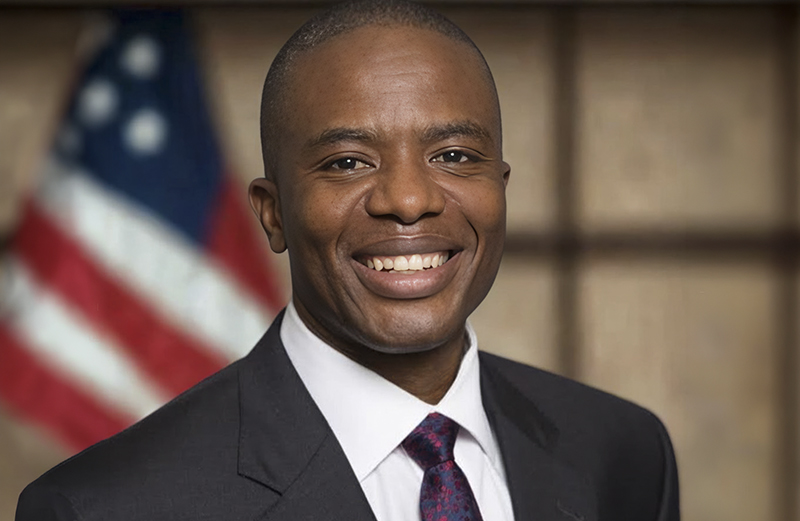
The study, conducted by Jacob Grumbach, an associate professor at UC Berkeley’s Goldman School of Public Policy, analyzed how S&P 500 companies performed following Trump’s executive order.
Grumbach used what economists call “abnormal returns” — the difference between a stock’s expected and actual performance — to isolate the financial impact of a company’s decision to retain or revoke its DEI policies.
Conservatives often repeat the mantra “go woke, go broke” — the idea that companies embracing DEI, racial or social justice, or LGBTQ rights will lose support from a more socially conservative public. But Grumbach’s data did not bear that out. Companies that retained their DEI practices, including Costco, Apple, and Delta Air Lines, performed just as well as those that scuttled such policies.
Grumbach noted that the degree of backlash against a company may depend on its target audience or the products it sells. He speculated that companies publicly standing by their DEI policies may have calculated that they could weather the political backlash. Apple, for example, may have been better positioned to retain its pro-diversity policies than Tractor Supply, which abandoned its own.
The “go woke, go broke” mantra gained traction in 2023 amid a series of conservative backlashes against companies perceived as embracing so-called “wokeness” or supporting LGBTQ rights. Bud Light’s U.S. sales plummeted after conservatives launched a boycott and some bars refused to serve products made by its parent company, Anheuser-Busch, over a March Madness social media promotion featuring transgender influencer Dylan Mulvaney.
That same year, Target came under fire from conservatives who objected to its Pride-themed merchandise. Critics accused the retail giant of attempting to “indoctrinate” children by incorporating rainbow-colored designs into children’s clothing and falsely claimed that it was selling “tuck-friendly” swimwear in the children’s section rather than the adult section. Even Cracker Barrel, once beloved by conservatives, faced anger from longtime customers over the restaurant’s acknowledgment of Pride Month.
Following Trump’s executive orders, many companies scrapped their DEI policies, fearing backlash from conservatives emboldened by the 2024 election, in which Republicans used DEI and LGBTQ rights as cultural wedge issues against Democrats.
“No matter how we measure DEI in companies, we find the same answer,” Grumbach said. His analysis found that retaining DEI policies had no measurable impact on a company’s financial performance.

Grumbach said his findings extend beyond DEI, offering insight into how organizations can fare when they resist pressure from an authoritarian administration.
“What happens when you don’t comply with that executive branch pressure in a moment of great fear in these civil society organizations?” Grumbach asked. “This shows that large U.S. corporations really do have leeway and the ability to sort of do noncompliance to executive branch pressure and end up fine.”

Support Metro Weekly’s Journalism
These are challenging times for news organizations. And yet it’s crucial we stay active and provide vital resources and information to both our local readers and the world. So won’t you please take a moment and consider supporting Metro Weekly with a membership? For as little as $5 a month, you can help ensure Metro Weekly magazine and MetroWeekly.com remain free, viable resources as we provide the best, most diverse, culturally-resonant LGBTQ coverage in both the D.C. region and around the world. Memberships come with exclusive perks and discounts, your own personal digital delivery of each week’s magazine (and an archive), access to our Member's Lounge when it launches this fall, and exclusive members-only items like Metro Weekly Membership Mugs and Tote Bags! Check out all our membership levels here and please join us today!



You must be logged in to post a comment.