A manifesto from a group of evangelical leaders is causing controversy for its anti-LGBTQ content.
The “Nashville Statement,” a manifesto from the Council on Biblical Manhood and Womanhood (CBMW), outlines the group’s views on sexuality and gender in order to act as a guide of sorts for churches.
Perhaps unsurprisingly, the results aren’t favourable towards LGBTQ people.
Comprising 14 articles, it opens with the declaration that “God has designed marriage to be a…union of one man and one woman, as husband and wife.” It adds, “We deny that God has designed marriage to be a homosexual, polygamous or polyamorous relationship.”
“We deny that adopting a homosexual or transgender self-conception is consistent with God’s holy purposes,” the statement continues, adding, “We deny that sexual attraction for the same sex is part of the natural goodness of God’s original creation.”
The statement also notes that transgender individuals should embrace religion to “forsake transgender self-conceptions” and accept the “God-ordained link” between sex and gender identity.
And there’s no hope for those who support the LGBTQ community, as the evangelical leaders consider it “sinful to approve of homosexual immorality or transgenderism.”
“The spirit of our age does not delight in God’s good design of male and female. Consequently, confusion reigns over some of the most basic questions of our humanity,” Council President Denny Burk said in a statement. “The aim of The Nashville Statement is to shine a light into the darkness — to declare the goodness of God’s design in our sexuality and in creating us as male and female.”
However, the use of Nashville in the name — due to a conference of the leaders in the city — has drawn fire from Nashville’s Democractic Mayor Megan Barry, who tweeted: “The [CBMW’s] so-called ‘Nashville Statement’ is poorly named and does not represent the inclusive values of the city and people of Nashville.”
The @CBMWorg's so-called "Nashville Statement" is poorly named and does not represent the inclusive values of the city & people of Nashville
And elsewhere on social media, users rallied against the views expressed in the manifesto. Comedian Kumail Nanjiani, who has spoken out against transphobic jokes, didn’t hold back in expressing his thoughts:
Fuck the #NashvilleStatement. Fuck the evil shit that people justify using religion.
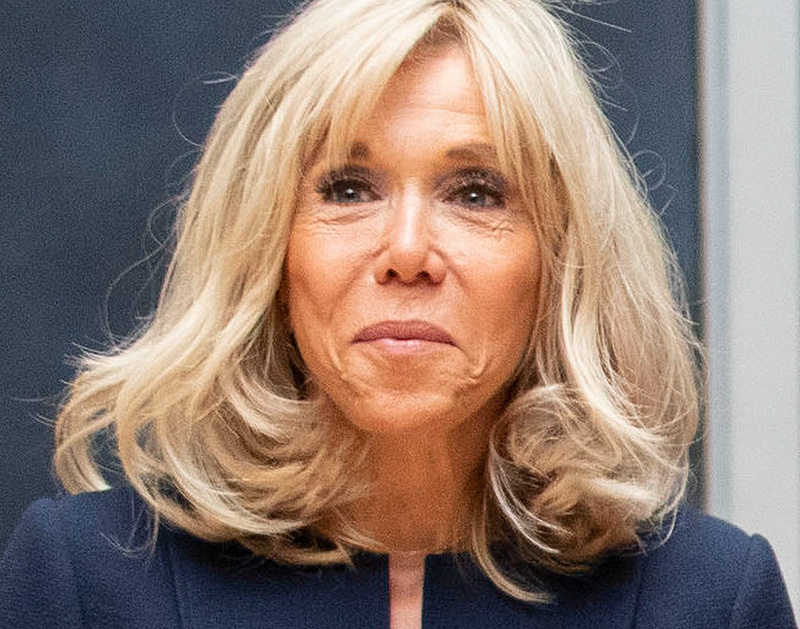
Ten people have been found guilty of cyberbullying France’s first lady, Brigitte Macron, by using social media to spread false rumors that she was transgender and equating the nature of her relationship with her husband, who is 24 years her junior, to pedophilia.
The eight men and two women, ranging in age from 41 to 65 -- three of whom were tried in absentia -- were convicted of online harassment and handed sentences ranging from mandatory cyberbullying awareness training to an eight-month suspended prison term.
The court also fined each defendant 600 euros and ordered them to pay a combined 10,000 euros -- about $11,726 -- in compensation to the 72-year-old Macron, reports The New York Times.
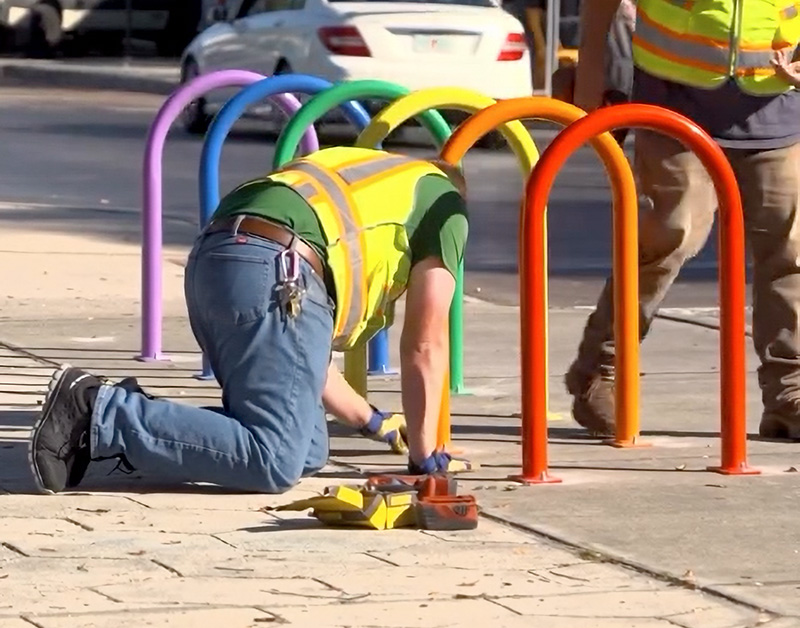
The city of St. Petersburg has installed 11 rainbow-colored bike racks in response to the removal of several street murals -- including a Pride-themed mural -- by the Florida Department of Transportation.
The racks were installed in the Grand Central District at Central Avenue and 25th Street, the former location of one of five murals removed at the direction of federal and state authorities.
The mural at Central Avenue and 25th Street featured colored stripes representing the progressive Pride flag and was located just steps from Ride'em Cowboy, one of the city’s best-known LGBTQ nightclubs and a "safe space" for the community, according to Florida Politics.
A new report finds that acceptance of LGBTQ people is declining across the United States, with nearly three in ten LGBTQ adults saying attitudes toward their community have worsened.
On Thursday, January 15, the Human Rights Campaign Foundation released findings from its Annual LGBTQ+ Community Survey, which drew responses from nearly 15,000 U.S. adults -- roughly two-thirds of whom identified as LGBTQ.
In addition to the survey, HRC last year launched its "American Dreams Tour," traveling to 10 cities and engaging more than 5,000 people through town halls, trainings, and community meetings with local LGBTQ leaders and activists. Those on-the-ground conversations informed the report, which aims to assess the state of LGBTQ life in the United States one year into the second Trump administration.
These are challenging times for news organizations. And yet it’s crucial we stay active and provide vital resources and information to both our local readers and the world. So won’t you please take a moment and consider supporting Metro Weekly with a membership? For as little as $5 a month, you can help ensure Metro Weekly magazine and MetroWeekly.com remain free, viable resources as we provide the best, most diverse, culturally-resonant LGBTQ coverage in both the D.C. region and around the world. Memberships come with exclusive perks and discounts, your own personal digital delivery of each week’s magazine (and an archive), access to our Member's Lounge when it launches this fall, and exclusive members-only items like Metro Weekly Membership Mugs and Tote Bags! Check out all our membership levels here and please join us today!





You must be logged in to post a comment.