Democratic presidential candidate Rep. Tulsi Gabbard sought to clarify her record on, and explain how she evolved to become a supporter of marriage equality, nondiscrimination legislation, and other protections for LGBTQ people during a CNN town hall Sunday night.
During the town hall, which was held at the South by Southwest conference in Austin, Texas, a prospective voter asked Gabbard about her record on LGBTQ rights and specifically about claims that she supported conversion therapy.
CNN previously reported that, in the early 2000s, Gabbard touted working for The Alliance for Traditional Marriage, the political action committee of the nonprofit Stop Promoting Homosexuality America, which was founded by her father, Mike Gabbard, which successfully pushed for a 1998 amendment to Hawaii’s state constitution to give the state legislature “the power to reserve marriage to opposite-sex couples.” The organization also advocated for conversion therapy.
Gabbard has since apologized for her past anti-LGBTQ views, but during Sunday’s town hall, maintained that she had never personally been involved with any of the nonprofit’s campaigns to promote conversion therapy, saying she “she “personally never supported any kind of conversion therapy. I never advocated for conversion therapy. And frankly, I didn’t even know what conversion therapy was until just the last few years.”
With respect to her views on LGBTQ rights, Gabbard said her views were largely shaped by her upbringing, but that when she deployed to Iraq, and later, to Kuwait, as a member of the Hawaii National Guard, she met and served alongside LGBTQ soldiers, and began to reevaluate her views after going through “some soul-searching.”
“I was raised in a very socially conservative home. My father is Catholic, he was a leading voice against gay marriage in Hawaii at that time. Again, I was very young, but these are the values and beliefs that I grew up around,” Gabbard said.
“My own personal journey, as I went out in different experiences in my life, especially going and deploying to the Middle East, where I saw first-hand the negative impact of a government attempting to act as a moral arbiter for their people, dictating in the most personal ways how they must live their lives,” she added. “And so it caused me to confront that contradiction, where, as a soldier standing for freedom for all people, here in this country, but also how that contradicted with some of those values and beliefs that I grew up with.”
She also touted her record in Congress, and particularly her 100% rating from the Human Rights Campaign, as evidence that her shift on LGBTQ rights is genuine, saying her record “is a reflection of what is in my heart, and it is a reflection of my commitment to fight for equality for all people.” She promised to continue that commitment to equality should she be elected president.
The U.S. Supreme Court on Tuesday signaled it may uphold state bans barring transgender girls and women from competing on female-designated sports teams during oral arguments in two closely watched cases.
Lower courts previously ruled in favor of the two transgender athletes, who challenged bans in Idaho and West Virginia -- two of the 27 states that have enacted laws banning people assigned male at birth from competing on female sports teams.
Proponents of restricting transgender participation argue that people who are assigned male at birth and undergo male puberty prior to transitioning retain physiological advantages that give them an unfair edge over cisgender female competitors.
A man shopping in the cereal aisle of an Alexandria, Virginia, Giant supermarket on Christmas Day was accosted by an angry woman who hurled anti-gay slurs at him while shoving his cart and placing her hands on him.
The confrontation was captured in a video later posted to TikTok. "Just got hate-crimed in the grocery store. TikTok do your thing," wrote the user, who goes by the handle @deonteiy.
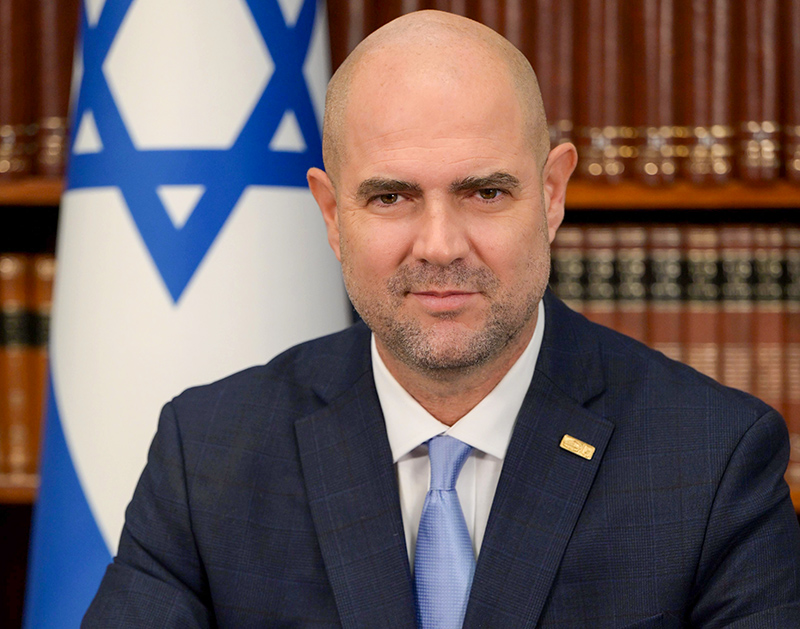
Knesset Speaker Amir Ohana, the first out gay leader of the Israeli parliament, angered the ultra-Orthodox parties within the conservative Likud-led governing coalition after voting in favor of a civil marriage bill last week.
The proposed bill, which was ultimately defeated, was introduced by the centrist Yesh Atid party, the largest faction in the opposition. It would have established a legal framework for regulating same-sex partnerships in Israel, including a couples registry, eligibility requirements, registration procedures, and mechanisms for dissolving civil marriages.
These are challenging times for news organizations. And yet it’s crucial we stay active and provide vital resources and information to both our local readers and the world. So won’t you please take a moment and consider supporting Metro Weekly with a membership? For as little as $5 a month, you can help ensure Metro Weekly magazine and MetroWeekly.com remain free, viable resources as we provide the best, most diverse, culturally-resonant LGBTQ coverage in both the D.C. region and around the world. Memberships come with exclusive perks and discounts, your own personal digital delivery of each week’s magazine (and an archive), access to our Member's Lounge when it launches this fall, and exclusive members-only items like Metro Weekly Membership Mugs and Tote Bags! Check out all our membership levels here and please join us today!











You must be logged in to post a comment.