On Tuesday, members of Baltimore’s transgender and allied communities held a virtual vigil via Zoom in honor of Johanna Metzger, a transgender woman stabbed to death in Baltimore last Saturday.
Metzger, who hailed from Pennsylvania, was staying at a recovery center in Baltimore, according to Baltimore ABC affiliate WMAR. She is believed to be the sixth transgender person murdered in the United States this year.
According to the Human Rights Campaign, 26 transgender or gender-nonconforming people were killed in 2019.
Metzger’s stabbing took place in the 2200 block of Highview Avenue, in Baltimore’s Clifton neighborhood. Few other details have been made available by Baltimore Police at this time, though police and LGBTQ advocates alike are encouraging people with information about the stabbing to come forward with what they know.
Metzger’s death was announced by the local LGBTQ center Baltimore Safe Haven and Baltimore City LGBTQ Affairs, a division of the mayor’s office.
“We are heartbroken to report another rans woman has lost her life to violence here in Baltimore,” Baltimore City LGBTQ Affairs wrote in a Facebook post. “Today, we lift up the name and honor the life of Johanna Metzger. We wish comfort to those whose life she touched.
“We are working with BPD to get details surrounding her homicide and with Baltimore Safe Haven to coordinate a response.”
Metzger was a college graduate and talented musician who had taught herself how to play multiple instruments, her mother told WMAR.
During the virtual vigil held in Metzger’s honor, advocates noted that Baltimore has experienced several transgender murders over the past decade.
“The trans community, LGBTQ, nonconforming community matters, and they need to step up and address this throughout the city,” Iya Dammons, the founder of Baltimore Safe Haven, said. “This has gone on for way to long before COVID-19. Ten years, ten bodies! Baltimoreans are you listening? This, it’s a lot.”
Shaun Schroeder, who runs Power Inside Women’s Day Shelter, said that it’s important to check in on people who may be struggling with mental health or depression at a time when people are staying home and socially distancing.
“Being trans is a lonely lifestyle, it can really be a lonely lifestyle at times,” she said. “Now that we are able to roam freely and we’re accepted in community it’s like we’re shut right back indoors. It’s really effecting the mental health of the trans women in communities.”
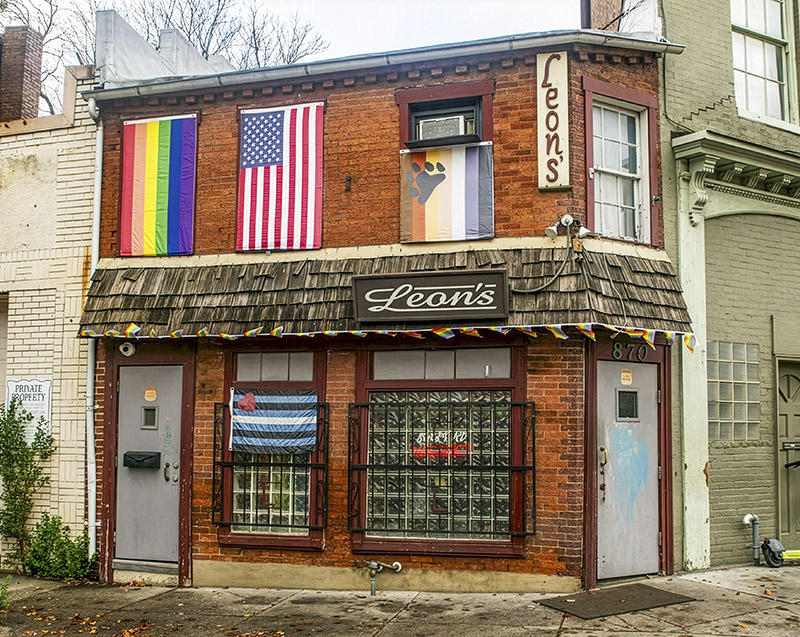
Leon's of Baltimore, a gay bar in Baltimore's Mount Vernon neighborhood, and its adjacent sister bar, Leon's Backroom, will reopen today, September 30, after abruptly closing earlier this year.
Known as Baltimore's oldest gay bar, Leon's has operated since the 1950s. It last opened its doors on July 15 for a special shift before temporarily closing following the death of longtime owner Ron Singer.
Before closing, the bars operated seven days a week, from 4 p.m. to 2 a.m., and touted never charging a cover on their website. Leon's and Leon's Backroom -- with entrances on Park Avenue and Chase Street -- regularly hosted karaoke nights, drag shows, bingo nights, and viewing parties, and offered daily happy hour drink specials from 4 to 9 p.m.
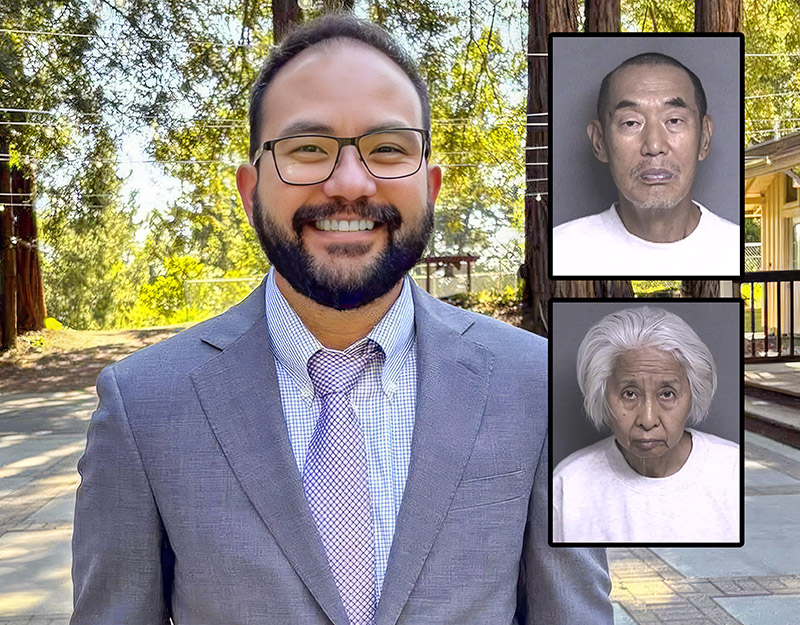
Jonathan McKinsey, a transgender engineering executive at The New York Times, was allegedly killed by his estranged wife's parents on September 26 amid a contentious custody dispute.
McKinsey, 40, the Times' head of engineering and games player experiences, was shot multiple times shortly after 3 p.m. at Dublin Sports Grounds in Dublin, California. He was pronounced dead at the scene.
Responding to calls from witnesses, Dublin police arrested Shouyong Zhang and Shili Chen, both 77, the parents of McKinsey's estranged wife, Candice Jang, reports NBC News.
Sophie Lee, a transgender woman, was shot and killed early on September 11 in Baltimore's Barclay neighborhood.
Baltimore Police responded to a call at 1:16 a.m. and found Lee lying in the intersection of North Calvert and East 24th streets. She was pronounced dead at the scene.
According to NBC affiliate WBAL-TV, homicide detectives were seen knocking on doors later that morning, asking neighborhood residents for security footage or information. No arrests have been made, and police have not identified a suspect or established a motive for the killing.





You must be logged in to post a comment.