Anyone who ever hoped for justice in the baffling 2006 murder case of late D.C. attorney Robert Wone should prepare to be outraged all over again by the Peacock original two-part documentary Who Killed Robert Wone? (★★★★☆).
It’s not that this well-assembled true crime chronicle, directed by Jared P. Scott, fumbles its presentation of the facts revisiting Wone’s brutal stabbing death inside a Logan Circle rowhouse.
What’s disturbing is the mere fact that the case remains unsolved, despite the presence inside the house that night of three men — Joe Price, Victor Zaborsky, and Dylan Ward — who most certainly know more about the circumstances of Wone’s murder than they have ever revealed to the authorities, or to Robert’s grieving widow, Katherine.
As a Metro Police Department detective puts it in the film, you’ve got four people in the house, one person dead, and three others all saying, “It’s not me.” Then again, more than one person interviewed here blames the MPD for botching the case, blinded by anti-gay bias, because the rowhouse’s three residents, Joe, Victor, and Dylan, all were successful fixtures of D.C.’s LGBTQ community who happened to be involved in a polyamorous relationship.
Who Killed Robert Wone — Photo by: Peacock
All three, to varying degrees, knew and were trusted by Robert Wone, whom everyone interviewed insists was straight and not curious.
Glenn Kirschner, then chief of homicide in the U.S. Attorney’s office for D.C., clearly had to wonder if perhaps the victim was not so straight, and if therein lay some crucial evidence of the crime. Frankly, any reasonably worldly viewer who’s dealt with a DL or closeted guy would have their suspicions, too.
Kirschner, appearing still haunted by the case — a common condition of the friends, loved ones, paramedics, police detectives, and everyone involved who appears onscreen — admits that he and his investigators also made mistakes that might have led to the murder remaining unsolved.
Lingering questions abound, but, unquestionably, Robert Wone’s killer or killers so far have yet to be held accountable for the crime.
Joe, Victor, and Dylan eventually were tried, not for murder but for obstructing justice. None of the three participated in this film, but, with access to their police interrogation recordings and some evidence that was ruled inadmissible at trial — like the inventory of Dylan and Joe’s extensive collection of BDSM gear — the filmmakers reconstruct the scene of the crime in graphic, salacious detail.
Led by commentary from Kirschner, and his defense attorney nemesis Bernie Grimm, who represented Joe Price at trial, the film also replays the uphill battle to solve this case.
As the camera roves around a scale model of the rowhouse at 1509 Swann Street, the film probes all the dead ends and false leads. Investigators found definitive proof that Robert Wone either was sexually assaulted or involved in some consensual sex act that night, maybe even alone, but, frustratingly, could not piece together the whole puzzling story.
Who Killed Robert Wone? does an admirable job stitching together the frayed tapestry of players and events, though there’s no getting around that gaping hole at the center: who did it?
The sinister nature of this crime and alleged cover-up cast a macabre atmosphere even for this sort of true crime fare, but the documentary does offer hope that someday, somehow, a dam might break, the truth will be revealed, and Robert Wone’s family will be granted the justice they’ve long been denied.
Who Killed Robert Wone? is available for streaming on Peacock. Visit www.peacocktv.com.
A Wisconsin man is maintaining his innocence after being accused of using Grindr to carry out a sinister catfishing scheme against another man.
Matthew Huebschman, 32, of Appleton, pleaded not guilty to a single charge of stalking during a December 15 hearing before Outagamie County Judge Carrie Schneider, according to Seehafer News.
Police allege that Huebschman used the gay dating app Grindr to impersonate the victim and invite men to the victim’s home without his knowledge, then watched from a nearby location as the men arrived.
Documentaries generally don't need an onscreen host. The camera can play host, and real-life stories can tell themselves, with offscreen prompting from research and production, and shrewd direction and editing providing context.
If a filmmaker wants to put the prompting onscreen, there's a delicate art to inserting themselves or an on-camera host into the story without stealing the spotlight from their subject.
Ryan Ashley Lowery, director and creator of the LGBTQ doc Light Up, is anything but delicate in inserting himself and two on-camera host-interviewers -- Michael Mixx and Maurice Eckstein -- into the film's still-compelling portrait of Atlanta's "community of Black same gender loving men and trans women."
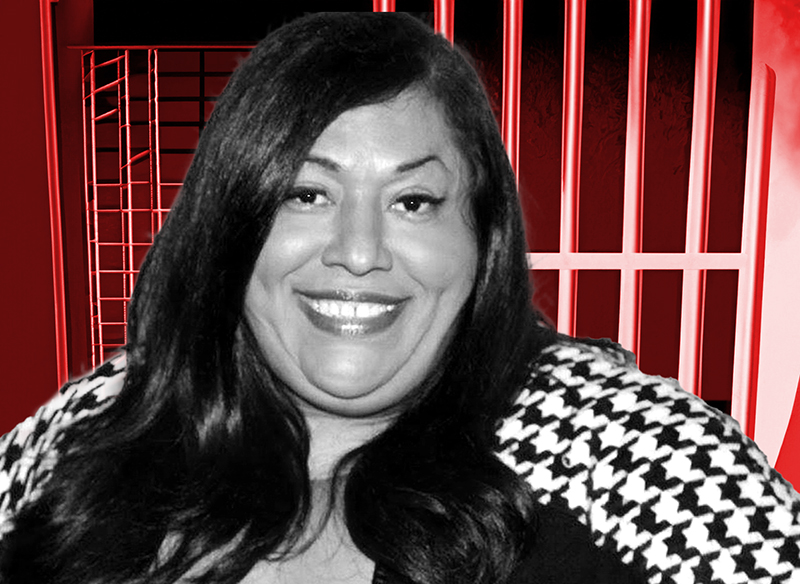
A federal judge has sentenced Ruby Corado, the founder and former executive director of the now-shuttered D.C. nonprofit Casa Ruby, to 33 months in federal prison for wire fraud -- a punishment that could ultimately lead to her deportation from the United States, despite her status as a legal permanent resident.
On January 13, U.S. District Judge Trevor McFadden granted federal prosecutors’ request for a more severe sentence, exceeding the 15-21 months recommended under federal sentencing guidelines.
The U.S. Attorney’s Office for the District of Columbia argued that Corado betrayed the trust of Casa Ruby’s clients by transferring $200,000 to personal offshore bank accounts in her native El Salvador, held under her birth name, for what prosecutors said was the purpose of enriching herself.
These are challenging times for news organizations. And yet it’s crucial we stay active and provide vital resources and information to both our local readers and the world. So won’t you please take a moment and consider supporting Metro Weekly with a membership? For as little as $5 a month, you can help ensure Metro Weekly magazine and MetroWeekly.com remain free, viable resources as we provide the best, most diverse, culturally-resonant LGBTQ coverage in both the D.C. region and around the world. Memberships come with exclusive perks and discounts, your own personal digital delivery of each week’s magazine (and an archive), access to our Member's Lounge when it launches this fall, and exclusive members-only items like Metro Weekly Membership Mugs and Tote Bags! Check out all our membership levels here and please join us today!






You must be logged in to post a comment.