Recently released data from a national survey of transgender and nonbinary individuals reveals that detransitioning is not as common as opponents of transgender rights assert, and that the overwhelming reason for detransitioning is rooted in social stigma and lack of support.
Recently released data from a national survey of transgender and nonbinary individuals finds that detransitioning is far less common than anti-trans activists claim. When it does happen, it’s largely due to external pressures like stigma and lack of support, not regret over transitioning.
According to the 2022 U.S. Trans Survey, which was administered online in English and Spanish to transgender and nonbinary individuals aged 16 and older living across the United States, found that 91% of trans or nonbinary individuals aged 18 and older never reversed course after transitioning.
Of the 9% of trans or nonbinary individuals who reported returning to assigned sex at birth at any point, only 4% — just 0.36% of all survey respondents — said it was because they realized “gender transition was not for me.”
Another 29% — or 2.95% overall — said they detransitioned because their gender dysphoria didn’t improve as they had hoped.
The bulk of other detransitioners cited external pressure — from parents, family members, partners, friends, employers, religious counselors, or mental health professionals — along with social stigma or medical barriers, such as the inability to afford transition-related care.
The most common reason, cited by 41% of respondents, was that it was “just too hard to be trans in my community,” followed by 37% who pointed to parental pressure and 33% who said they faced harassment or discrimination for transitioning.
“I think what the data is showing us here is that detransitioning is extremely rare, and is often misunderstood,” Ash Lazarus Orr, press relations manager for Advocates for Trans Equality, told Metro Weekly.
“Past research does show us that the vast majority of people who do detransition, do so due to external factors like family rejection, discrimination or lack of access to care, not regret over their transition itself,” Orr said. “In contrast, the [U.S. Trans Survey] found that trans people with supportive families and access to affirming health care have dramatically better health outcomes. So, for example, 69% of those with supportive families reported having good health, compared to just 56% of those without supportive families.”
Among all U.S. Trans Survey respondents, 37% reported being satisfied overall with their lives, while 59% expressed varying levels of dissatisfaction, and 4% felt neutral about their lives.
In response to a question about whether their satisfaction had improved after receiving gender-affirming care, 98% of those who underwent hormone therapy and 97% of those who had surgery said they felt more satisfied with their lives.
“The data shows us that the overwhelming majority of trans people who at least have access to transition-related health care report improved health, wellbeing, and life satisfaction,” Orr said. “It shows us that those transitioned, be it socially, medically, or both, they are still reporting better overall health and higher levels of happiness and thriving, compared to those who have not.”
However, actually pursuing gender-affirming care is not as common as many assume.
For instance, while 88% of respondents said they had wanted hormone therapy, only 56% had actually received it. Surgical interventions were even less common, despite many expressing a desire to pursue them.
For example, among trans individuals assigned female at birth, 62% desired chest reconstruction surgery and 55% percent desired a hysterectomy. By comparison, desire for various types of “bottom surgery” ranged from 16% to 21%, and only 7% desired laser hair removal or voice therapy. But desiring something does not necessarily make it a reality — among those same respondents, 32% pursued chest surgery, only 10% received a hysterectomy, and less than 2% received any other gender-affirming surgical procedures.
For example, among trans individuals assigned female at birth, 62% expressed a desire for chest reconstruction surgery and 55% wanted a hysterectomy. Interest in various types of “bottom surgery” ranged from 16% to 21%, while just 7% expressed interest in laser hair removal or voice therapy. But desiring something does not necessarily make it a reality — only 32% pursued chest surgery, 10% received a hysterectomy, and fewer than 2% underwent any other gender-affirming surgical procedures.
Rates of surgical pursuit were even lower among nonbinary individuals assigned female at birth. While 52% expressed a desire for chest surgery, only 10% received it. Forty-seven percent wanted a hysterectomy, but just 2% obtained one. Fewer than 6% expressed interest in other surgical interventions — and less than 1% actually pursued them.
Among trans individuals assigned male at birth, 58% desired voice surgery, 54% desired laser hair removal or electrolysis, fewer than half desired some form of bottom surgery, 45% considered pursuing a “tracheal shave,” which reduces the size of the Adam’s apple, and 39% desired a breast augmentation or facial surgery.
However, only 40% of that group received laser hair removal or electrolysis, only 19% received voice surgery, and 11-13% received bottom surgery, with 10% receiving breast augmentation or facial surgery, and 7% receiving a tracheal shave.
“The narrative we often hear from the extreme right and anti-trans politicians is that once you come out as trans, you are automatically undergoing medical care. That is simply false,” Orr said. “They are not taking into consideration insurance not covering gender-affirming health care.
“Another issue that a lot of folks run into, especially in red states and rural areas, is that it is incredibly difficult to find a health care provider that is well-versed in gender-affirming health care,” he added. “So this is not something that you can just automatically walk into. There are steps in procedures in place, and there are so many hurdles that one has to jump through just to get basic health care when you are a trans person. These are things left out of these anti-trans narratives crafted by right-wing politicians.”
Orr also noted that it’s difficult to precisely define what “transitioning” entails, since some transgender people only socially transition, while others choose to pursue medical interventions, a fact often ignored — or omitted from debates — surrounding transgender identity and access to health care.
“When we think about transitioning socially, especially for younger generations, transitioning could just be coming out as trans, non-binary, or gender-diverse and going by different pronouns, or going by a different name, or changing how they style their hair and their clothing,” Orr said. “Some folks, like myself, do decide to medically transition. I am on hormone therapy, because I’m a trans man, and on my journey, I wanted to utilize hormones so I could have more masculine features. But some folks never opt to medically transition. And that is valid as well.”
He added, “There is no right or wrong way to be a trans person or for people to transition. Each trans person’s journey is unique and different. But one of the things this data is showing us is that those who have transitioned — socially, medically, or both — are reporting overall wellbeing and happiness.”
A former Australian police officer has pleaded not guilty to murdering his ex-boyfriend and the man's new partner, as prosecutors describe months of alleged stalking before the two men were shot in Sydney.
Prosecutors say Beau Lamarre-Condon, 31, watched the Sydney home of his former boyfriend, TV presenter Jesse Baird, before entering dressed as an Uber Eats delivery worker. He is accused of shooting Baird, 26, and Baird's partner, Luke Davies, a 29-year-old flight attendant.
Baird cut off contact with Lamarre-Condon in November 2023. In his opening statement, prosecutor Brett Hatfield SC said Lamarre-Condon had developed an "obsessive and jealous infatuation" with Baird, and that his behavior escalated after the relationship ended.
Hunter Hardin, a gay adult film star and burlesque dancer known as LuLu LoveBottom, has died at 30.
According to Out, Hardin died by suicide on September 7 after posting a message on Instagram saying goodbye to friends and followers.
"I love you and I'm sorry I was unable to make it to the end," Hardin wrote. "Goodbye forever. Love, LuLu." In the accompanying caption, he wrote: "Been hurt for the last time by someone I shared my heart with."
Hardin made adult content for his OnlyFans page and often shared previews and photos from shoots on X.
In a March 2025 Outsports interview, the former football player and member of a state championship high school crew team discussed his journey from athlete to burlesque star. He said discovering ballroom dancing helped him express his feminine side and shape his performances.
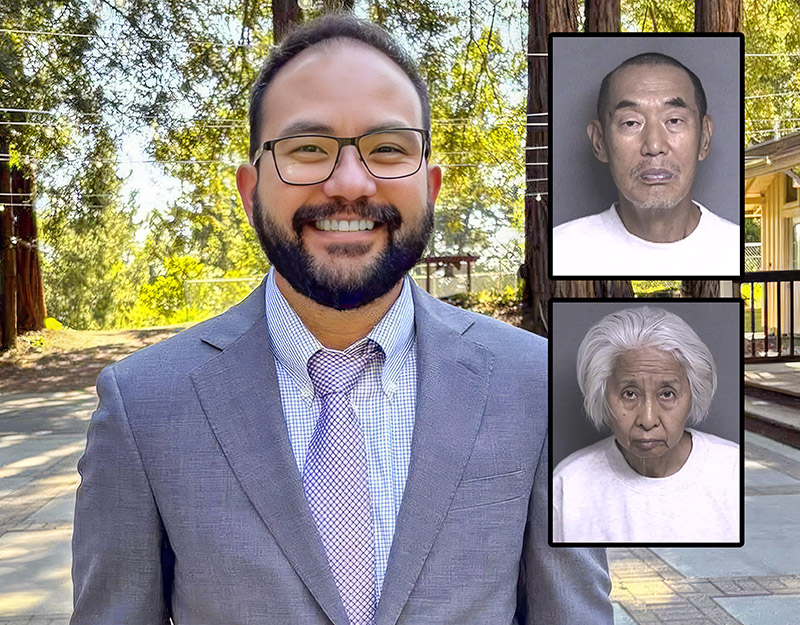
Jonathan McKinsey, a transgender engineering executive at The New York Times, was allegedly killed by his estranged wife's parents on September 26 amid a contentious custody dispute.
McKinsey, 40, the Times' head of engineering and games player experiences, was shot multiple times shortly after 3 p.m. at Dublin Sports Grounds in Dublin, California. He was pronounced dead at the scene.
Responding to calls from witnesses, Dublin police arrested Shouyong Zhang and Shili Chen, both 77, the parents of McKinsey's estranged wife, Candice Jang, reports NBC News.










You must be logged in to post a comment.