Fresh off directing the scintillating period drama Hedda, Nia DaCosta shows impressive range and artistic ambition helming horror sequel 28 Years Later: The Bone Temple. Differing significantly in tone and genre, and utterly in design, the two films exist worlds apart, with respective protagonists who hardly could live in more disparate circumstances.
The Bone Temple continues the journey of plucky 12-year-old Spike, introduced in 28 Years Later, Danny Boyle and Alex Garland’s 2025 reboot of the post-apocalyptic rage-virus film series they started 24 years ago.
Spike (the estimable Alfie Williams) had decided to go it alone in the brutal hellscape of the British mainland. Quarantined from the world, the land’s been overrun for years by flesh-eating, virus-infected, formerly normal humans.
Yet the lad chose to cut himself off from the safety of the only community he knew, inside the fortified island village where he grew up. On the mainland, he’s found himself another community, whether he likes it or not, in a gang of vicious human marauders led by survivor and psychopath Sir Jimmy Crystal.
Add Sir Jimmy to Jack O’Connell’s devilishly good run of big screen villains, following his scene-stealing Sinners vamp Remmick, and charismatic turn as Amy Winehouse’s “Blake incarcerated” in the otherwise lackluster biopic Back to Black.
Sir Jimmy isn’t just a strung-out bad boy — he’s the unhinged product of an orphaned childhood in a living hell, and he wields a powerful magnetism over his flock of similarly stunted followers. All the members of his so-called Finger Gang bear his name — as in Jimmy Jimmy (Robert Rhodes), Jimmy Snake (Ghazi Al Ruffai), Jimmy Ink (Erin Kellyman), and Jimmima (Emma Laird) — and they gleefully do his evil bidding.
The film, written by Garland, goes to excruciating lengths to depict their depraved devotion to Sir Jimmy. He often demands blood and flesh “charity” to appease their god, “Old Nick,” resulting in scenes of gruesome violence and inhuman cruelty dealt with taunts and giggles.
28 Years Later: The Bone Temple – Jack O’Connell
DaCosta and cinematographer Sean Bobbitt (Hedda, The Marvels) concoct stunning, fiery tableaux you’ll nevertheless want to shield your eyes from. One disturbing sequence of torture — an intense, gory escalation of Last House on the Left-style lunatic mayhem — might be a red line for many viewers. It nearly was for me. Will it be the red line for still-impressionable Spike?
The kid’s innocence is lost, but can his humanity survive this environment? A question for his times and ours. Humanity has deserted most of the humans he encounters. They’ve seen too much and done too much. From the downfall of society and devastating isolation, fear and anarchy have become order.
This deeper descent into madness might be too bleak were there not the shred of hope provided by a parallel plot-line following Ralph Fiennes’ endearingly eccentric Dr. Kelson, introduced in the previous film.
The one seemingly benevolent soul Spike has met out here in the wasteland, Kelson spends the film customarily devoted to his life’s work, memorializing the countless dead by adding their remains to his towering bone temple. He’s still fending off the raging alpha infected Samson (Chi Lewis-Parry), using pharmaceutical methods to soothe the savage beast.
Might he find a trace of humanity left in Samson? An entertaining Fiennes and the prosthetic-suited, former MMA pro Lewis-Parry make it worth watching the doctor try his best. Fiennes squeezes every ounce of compassion, pathos, and humor from his screen time, as Kelson occasionally blows off steam dancing around his bunker to Duran Duran records.
Fiennes and the film hit their peak with a bravura scene of Kelson in his bone temple performing a ritual dance that elicited enthusiastic applause from the audience at the promo screening I attended. The crowd burst into applause once more during the film, which should bode well for those hoping not only for humanity, but for another, final entry in the 28 Years Later trilogy, as planned by its creators.
28 Years Later: The Bone Temple (★★★☆☆) is rated R and playing in theaters nationwide. Visit www.fandango.com.
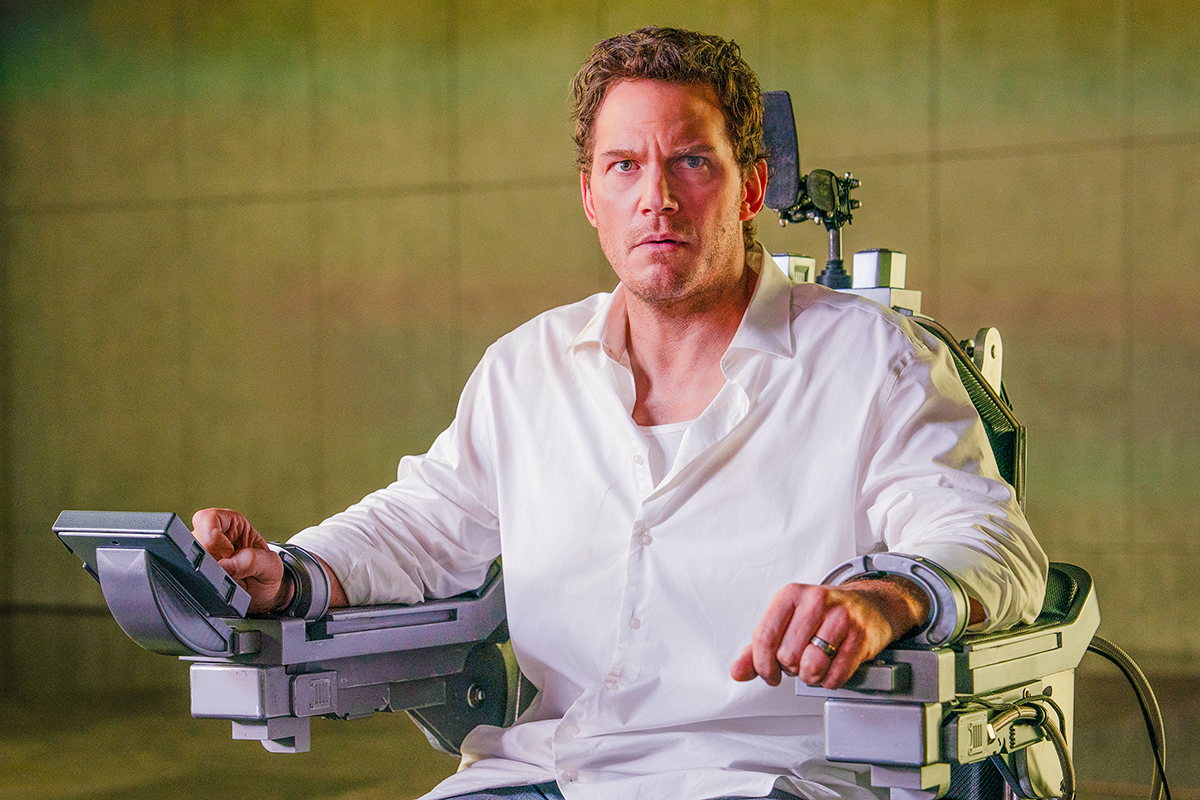
As one-word movie titles go, Mercy sits near the top of the popularity heap. A quick glance at IMDb turns up more than a dozen films with the same title, at least eight of them released since 1995.
That 1995 entry, starring John Rubinstein (forever beloved by me as Broadway's original Pippin) and Sam Rockwell, is log-lined as: "A couple of people steal the daughter of a famous lawyer. Now they want money to give her back — but it's not just the money they want. They want revenge."
Or take a 2023 entry, starring Leah Gibson and friend of MAGA Jon Voight, in which "a doctor and former military officer finds herself in a deadly battle for survival when the Irish mob takes control of the hospital where she works and her son is taken hostage."
These are challenging times for news organizations. And yet it’s crucial we stay active and provide vital resources and information to both our local readers and the world. So won’t you please take a moment and consider supporting Metro Weekly with a membership? For as little as $5 a month, you can help ensure Metro Weekly magazine and MetroWeekly.com remain free, viable resources as we provide the best, most diverse, culturally-resonant LGBTQ coverage in both the D.C. region and around the world. Memberships come with exclusive perks and discounts, your own personal digital delivery of each week’s magazine (and an archive), access to our Member's Lounge when it launches this fall, and exclusive members-only items like Metro Weekly Membership Mugs and Tote Bags! Check out all our membership levels here and please join us today!









You must be logged in to post a comment.