Heated Rivalry: Hudson Williams and Connor Storrie – Photo: Sabrina Lantos/HBO
Heated Rivalry has found an unexpectedly receptive audience in Russia, despite the country’s sweeping anti-LGBTQ laws and aggressive efforts by the government to censor queer content.
The popular HBO series, which centers on closeted gay hockey players portrayed by Hudson Williams and Connor Storrie, became a hit in the United States and Canada in December, drawing attention for its explicit sex scenes while also earning praise for its writing and character development.
Western sanctions imposed after Russia’s 2022 invasion of Ukraine have limited access to streaming platforms like HBO and Netflix. In response, Russians seeking out Western television have turned to pirate websites offering all episodes of the series, with clips and full episodes also circulating widely on VKontakte, Russia’s Facebook-like social network.
On Kinopoisk, Russia’s equivalent of IMDb, Heated Rivalry holds an average rating of 8.4 out of 10 from more than 77,000 users — placing it above other major Western series such as Game of Thrones, Breaking Bad, and The Sopranos.
Online fan groups dedicated to the show on Russian social media now count tens of thousands of users, while Russian Instagram Reels have been flooded with clips praising the series, according to The Washington Post.
Russian fans, in particular, may find something resonant in the character of Ilya Rozanov (Storrie), a Russian hockey player from a patriarchal family with deep ties to law enforcement and the military who grew up in a hypermasculine, homophobic environment. Viewers may also connect with the idea that Ilya will never be fully accepted in Russian society as a bisexual man, nor be allowed to live openly in a committed relationship with another man.
Some have praised Ilya’s monologue explaining why he will never return to Russia, where his sexuality would mark him as a disappointment to his family and lead to his ostracism from wider society.
“If you live as an openly gay man in Russia, you are constantly facing pressure and living in fear,” a Moscow resident, speaking on condition of anonymity, told the Post. “The best option for someone who wants to live openly and freely is to leave.”
Unsurprisingly, the popularity of Heated Rivalry has outraged conservatives. Sorok Sorokov, a conservative Orthodox Christian group that campaigns for “traditional values,” said it plans to ask Roskomnadzor, the state media watchdog, and the prosecutor general’s office to remove the series from streaming platforms and prosecute websites making it available to Russian viewers for violating the country’s anti-LGBTQ “propaganda” law.
“The series is full of sodomite sex scenes,” Georgy Soldatov, the group’s chairman, told Absatz Media. “Russia already has a mortality rate higher than its birth rate, and yet our youth are shown propaganda of unnatural debauchery.”
According to The Washington Post, a law set to take effect in Russia on March 1 bans films that “discredit traditional values” or promote drug use, granting regulators broader authority to pressure cinemas and streaming services to remove such content from their platforms.
Last year, Roskomnadzor blocked 1.3 million pieces of content, a 59% increase over 2024. While virtual private networks, which disguise a user’s internet location, were the most frequently targeted, LGBTQ content ranked as the second-largest category.
Mikhail Zygar, a prominent Russian journalist living in exile, wrote an essay for Vanity Fair describing how the series resonates with him and other LGBTQ Russians, drawing parallels between Ilya’s story and his own life.
“Like the character, I was born toward the end of the Soviet Union, a time when homosexuality was still a criminal offense,” Zygar wrote. “My father was a military officer. I grew up in a society where coming out never seemed possible; it was always clear that being gay in Russia would mean being an outcast, being cursed, having no chance whatsoever.”
Even as he notes that many gay Russians are skeptical of the season finale’s happy ending — and of the very idea of living freely and openly — Zygar told the Associated Press that the series is nonetheless inspiring as “an attempt to normalize the discourse” and potentially shift some viewers’ perceptions of homosexuality.
Zygar also told the AP that the show’s popularity on underground streaming services reflects a quiet form of resistance to the Russian government’s censorship efforts.
“It shows us that they’re trying to remain normal, they’re trying to remain resistant to the attempt of Putin’s regime to brainwash them,” Zygar said, referring to his fellow Russians. “They are not brainwashed; they are not ready to agree with the propaganda and with official anti-LGBT mantras. They live their life, and they watch what they want to watch.”
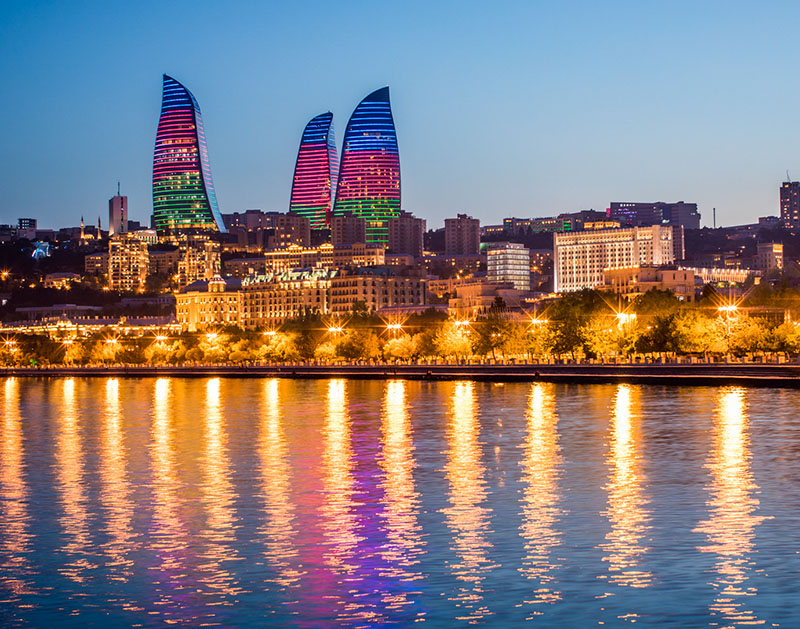
International LGBTQ rights advocates are condemning a brutal police raid on a queer-friendly nightclub in Azerbaijan that resulted in the mass detention of more than 100 people.
As first reported by Qiy Vaar!, a website run by an Azerbaijani LGBTQ advocacy organization of the same name, police raided Labyrinth nightclub, a queer-friendly venue in Baku, around 1 a.m. on Saturday, December 27. More than 106 patrons were detained and held in custody for 12 to 13 hours.
Security forces reportedly entered the club and forcibly escorted patrons onto the street before loading them en masse into police vehicles and transporting them to the Nasimi District Police Department in Baku.
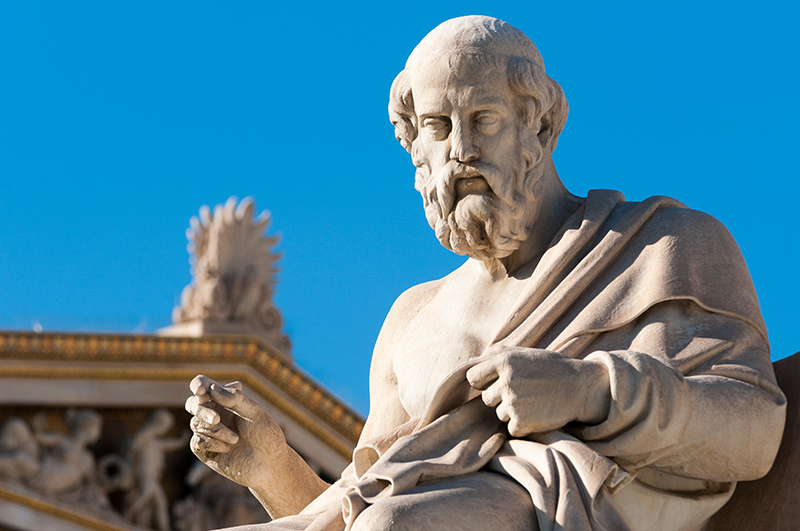
After Texas A&M University barred philosophy professor Dr. Martin Peterson from teaching parts of Plato’s Symposium involving same-sex love, he replaced the censored lessons with lectures on free speech and academic freedom, using coverage of the university’s own actions as course material.
Peterson teaches the introductory philosophy course "Contemporary Moral Problems." He was told he would have to remove the Plato readings under new Texas A&M University policies restricting course content that references sexual orientation or gender identity.
Lovell Holder's debut novel, The Book of Luke, arrives at a precipitous moment for queer literary fiction. The heated tale of a handsome gay ex-athlete romancing a rival (or two) on a hit reality TV competition, the book seems custom-built to reach the ravenous audience that's turned the Heated Rivalry books and TV series into a phenomenon.
Of course, Holder, who's also a filmmaker, started writing The Book of Luke several years ago, with a different intention than riding the wave of a gay hockey hit.
Holder started the book, which chronicles the life and reality TV adventures of Luke Griffin, the soon-to-be ex-husband of a gay Republican U.S. Senator, in 2019. "I was really interested, at that time, in the idea of complicity and how underrepresented communities can sometimes oppress members of other underrepresented communities," he says.
These are challenging times for news organizations. And yet it’s crucial we stay active and provide vital resources and information to both our local readers and the world. So won’t you please take a moment and consider supporting Metro Weekly with a membership? For as little as $5 a month, you can help ensure Metro Weekly magazine and MetroWeekly.com remain free, viable resources as we provide the best, most diverse, culturally-resonant LGBTQ coverage in both the D.C. region and around the world. Memberships come with exclusive perks and discounts, your own personal digital delivery of each week’s magazine (and an archive), access to our Member's Lounge when it launches this fall, and exclusive members-only items like Metro Weekly Membership Mugs and Tote Bags! Check out all our membership levels here and please join us today!








You must be logged in to post a comment.