Lïa Lake, an intersex transgender activist running for the D.C. Democratic State Committee as part of the progressive Free DC slate, has won the right to appear on the Democratic primary ballot under the name she uses in daily life, a decision that could ease the path for future transgender, nonbinary, and intersex candidates seeking office in the District.
The Free DC slate is running on a progressive platform that challenges the current leadership of the D.C. Democratic Party. Its members argue that party leaders, running under the banner “Democrats United to Free DC,” have failed to sufficiently organize District residents to defend D.C. autonomy and local self-governance from federal interference.
Each slate includes candidates for national committee positions, at-large seats, and ward committee posts, with party rules requiring gender-balanced representation.
Lake was approached about running for the D.C. Democratic State Committee by organizers with the Free DC movement, a project of the national nonprofit Community Change and its advocacy arm, Community Change Action, with which she has previously volunteered.
“I was invited to join a team of 46 others to run together and really push for an electoral uprising from within the D.C. Democratic Party, in order to push the party to align more closely with Free DC values,” she says.
Lake agreed to run as an at-large committeewoman, requiring her and her fellow slate members to file jointly for ballot access. As part of those filings, she submitted her original surname “Kuduk,” which she rarely uses but which links the name she goes by publicly to her legal name.
“I wanted to ensure that it wouldn’t be confusing in any way, and that the D.C. Board of Elections knew there was a connection between my given name and the name that I go by,” she explains.
Unlike some other transgender members of the Free DC slate, Lake has not legally changed her name. She said doing so would place her in a “lose-lose” situation, as the federal government, particularly under the Trump administration, does not recognize transgender identity as valid.
“I can’t promise I will change my name,” she told Metro Weekly. “I could, but by changing your government name, you are outing yourself to the government, and we’re currently living under a government controlled by authoritarian forces who are very hostile towards the trans community.”
She argues that changing her name could also create complications in validating her identity and notes that current Trump administration policies prohibit transgender people from changing the sex marker on federal identity documents, including passports.
“I currently just use the ID I currently have with my government name,” she says. “I’ve actually never had an issue with it, even at airports. They’re mostly checking that the ID is valid and that it looks like you — they’re not getting into your gender and name. They’re looking at your birth date and the fact that it’s a valid ID and that the picture looks like you. And my picture looks similar to me, enough.”
During the ballot access petition circulation period, Lake learned that the Board of Elections had ruled her preferred name ineligible and intended to place her male birth name on the ballot.
“They also made sure that I knew that I did have the right to appeal if there was a substantive disagreement on my end with the name that they chose to appear on the ballot,” she says.
Lake filed an appeal, although she understood the reasoning behind the board’s initial decision.
“There are standards, based on DCBOE previous case law that require that a name appearing on the ballot is not confusing or misleading,” she says. “So someone may try to run on the ballot as “John ‘Statehood’ Brown” and they’ll try to get a campaign-type message in there, which is not central to their identity. There’s other existing cases where someone will have a common name, like ‘Bob Smith,’ and their opponents will round up someone else that has the same name and convince them to file to run, just so there’s two Bob Smiths on the ballot, to intentionally confuse voters and reduce the number of votes that candidate receives. So I think the BOE, on their part, was doing their due diligence by requiring me to appeal their initial ruling.”
Lake attended a formal hearing via Zoom on March 30, where she presented evidence — including social media profiles — demonstrating that she regularly uses the name Lia Lake.
Lake also submitted statements from people attesting that she uses the name in her daily life. In its ruling, the board found “overwhelming evidence” that Lake “has been known in her professional and private life as ‘Lïa Lake Kuduk,’” and that listing her by her birth name “would likely actually confuse voters.”
“In addition, the name ‘Lïa Lake Kuduk’ is not associated with a political message,” the ruling states. “Accordingly, voters would not be confused about the identity of the candidate if their name on the ballot appeared as ‘Lïa Lake Kuduk’ and there is no improper use of the ballot associated with placing the name ‘Lïa Lake Kuduk’ on the ballot.”
Lake says no one contested her identity or testified against her during the hearing, and that DCBOE Chair Gary Thompson and board member Karyn Greenfield were sympathetic to her challenge.
“The chair even apologized to me that the hearing even had to be held,” she says.
Stevie McCarty, president of the Capital Stonewall Democrats, praised the DCBOE’s decision, calling it a “breakthrough” for future candidates seeking office in the District.
“As the federal government tries to diminish trans rights across the country, D.C. is taking a stand,” McCarty told Metro Weekly. “D.C. can be a role model for other boards of elections and secretaries of state when it comes to ballot access for trans people.”
Lake says the ruling — the first of its kind in D.C. — sets an important precedent.
“It sends a strong signal and statement about D.C. and our values,” she says. “From this point forward, trans, nonbinary, and intersex candidates in D.C. have a clear pathway to run for local elected office, even when hateful neo-Confederates are seated at the controls of the federal government.”
LGBTQ Black Pride events and Washington, D.C., share a compelling history that goes as far back as at least the late 19th century. That's when William Dorsey Swann, a former slave, was hosting parties of Black men in fine ladies' attire. It was enough to get him and some fellow celebrants thrown in jail. It's also why city leaders more recently moved to commemorate the already existing Swann Street NW in his honor in this century.
But just as Swann navigated the fraught terrain between party and peril, so too do the Black Pride celebrations of today. As Kenya Hutton, president and CEO of the D.C.-based Center for Black Equity (CBE), prepares for this year's D.C. Black Pride, May 22 to 25, he says there are warning signs flashing for his and similar events around the country, if not the world.
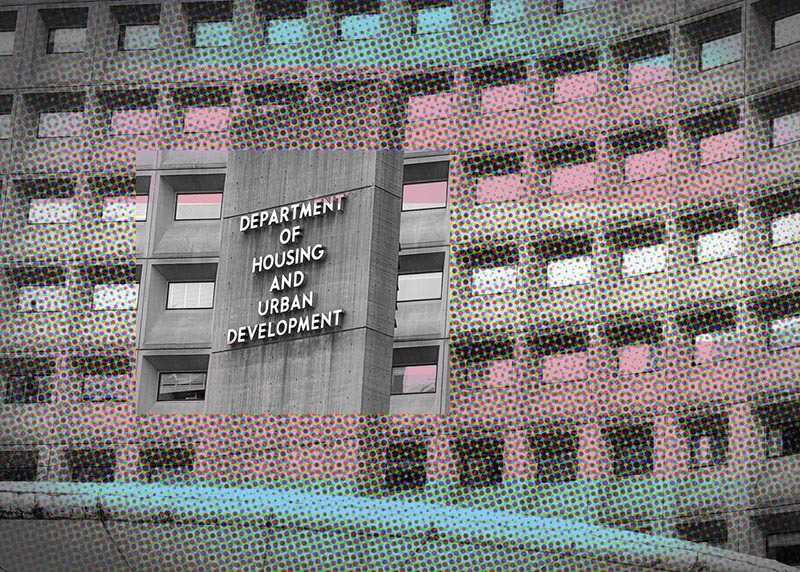
The U.S. Department of Housing and Urban Development has proposed a new rule that would allow federally funded shelters and temporary housing providers to discriminate based on gender.
Under the proposal, homeless shelters and other housing providers could bar transgender people from single-sex facilities that do not match their assigned sex at birth.
The rule removes all references to "gender" and "gender identity" from HUD regulations, replacing them with "sex," as defined by an executive order issued by President Donald Trump last year. The order states that federal agencies will recognize only a person's assigned sex at birth on government-issued documents and for purposes of accessing government services or housing options.
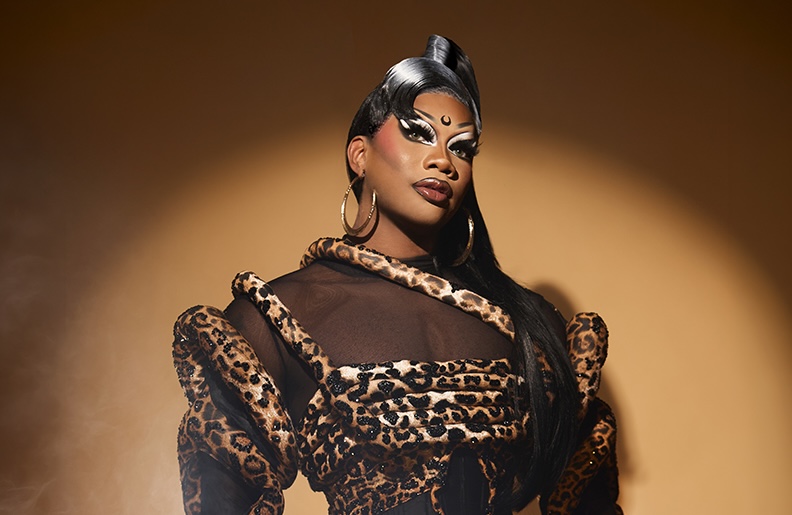
It takes a village to raise a drag queen -- some kind of support system for feedback and friendship, dressmaking, wig gluing, and whatever other sticky situations might arise. Even an enterprising entertainer like D.C.'s "magical drag goddess" Cake Pop! sometimes needs a little help from her friends to fulfill a fabulous vision.
Cake Pop! assembled her crew recently for a very special production. In collaboration with director Marty Nee, Cake (a.k.a. John Marsh) aimed to create a visual performance piece to play during her DJ set at the highly anticipated Kitty Kat Ball, a national tour featuring the stars of RuPaul's Drag Race Season 18, including winner Myki Meeks, finalists Nini Coco, Darlene Mitchell, Juicy Love Dion, and special guests in each city.
These are challenging times for news organizations. And yet it’s crucial we stay active and provide vital resources and information to both our local readers and the world. So won’t you please take a moment and consider supporting Metro Weekly with a membership? For as little as $5 a month, you can help ensure Metro Weekly magazine and MetroWeekly.com remain free, viable resources as we provide the best, most diverse, culturally-resonant LGBTQ coverage in both the D.C. region and around the world. Memberships come with exclusive perks and discounts, your own personal digital delivery of each week’s magazine (and an archive), access to our Member's Lounge when it launches this fall, and exclusive members-only items like Metro Weekly Membership Mugs and Tote Bags! Check out all our membership levels here and please join us today!






You must be logged in to post a comment.