Blessedly free of any epic catastrophes, The Divine Tragedy is rather a lighthearted, Mexico City-set sex dramedy, with a few dark, despairing passages.
Writer-director Sergio Tovar Verlarde (4 Moons) tries to have it both ways, balancing frolicsome gay sexcapades with a moralizing tale of heavy consequences for taking the licentious liberation too far. Its opening scene of two guys sniffing poppers before diving into a naked, sweaty hookup aptly sets the tone for a film aiming to titillate before eventually punishing its promiscuous lead for his many excesses.
It seems mixing clubbing and casual sex (and the occasional party drug) can only lead to compulsive crashouts, as far as filmmakers are concerned. Either you’re a shy romantic, or a “junkie slut,” as someone describes the film’s free-loving protagonist Roy (Pablo Gómez).
In the running sub-genre of queer films depicting party boys who party too hard, Roy distinguishes himself with his sheer appetite for one-on-one and group encounters. He is as insatiably horny as his older half-brother Cristián (Artús Chávez) is utterly uptight.
The film contrasts the gay brothers’ conduct and lifestyles by throwing them together as odd-couple roommates after Cristián’s husband of 24 years, Carlos (Rosendo Gázpel), suddenly demands a separation. Of course, Gen Z hedonist Roy and prim and proper elder-Millennial Cristián get off to a rough start as roomies. Yet their sibling friction and affection form the film’s backbone, as both spin off into their own subplots.
Self-proclaimed free spirit Roy falls for hot new neighbor Esteban (Christian Ramos, in a stiff but appealing turn), while Cristián stubbornly holds out for his estranged hubby to have a change of heart.
Thinly drawn, though they may be, the characters generate compelling tension, thanks to the believable rapport between Gómez and Chávez portraying bros who have the same dad but otherwise grew up separately. Verlarde, who co-wrote with Orlando Manrique, trusts the audience to decipher Roy and Cristián’s odd family dynamics without spelling out all the details of their family’s history.
The film also endears with its cast of quirky side characters, from Roy’s daydreaming ex-roommate Jacobito (Eduardo España), to their clairvoyant pal Rosita (Helena Puig). They’re a free-thinking, non-judgmental crew of queer friends, with the notable exception of Cristián, who, unsurprisingly, judges Roy for being too free-spirited.
Once the two agree to help each other out — Roy to clean up his act, lest he sabotage his budding romance with Esteban, and Cristián to dive into single life with zest and an updated Grindr profile — the film clicks into a formula of foregone conclusions. Virtuousness is rewarded, while lasciviousness brings suffering.
There’s zero subtlety to the depiction of Roy’s trajectory down a dangerous path, and the comedy doesn’t hit consistently enough to compensate for the heavy-handed lesson learning. Cristián and Carlos arguing over who gets custody of their piece of signed Madonna memorabilia is about as funny as it gets.
Roy and Esteban’s up-and-down romance is more affecting, their attraction fueling the film’s most sensual scene, when part-time barber Roy gives Esteban an ultra-attentive home haircut. Even the movie’s consistent bad lighting and poor sound can’t sink the potent atmosphere of lust and youthful abandon. Yes, Roy takes his thirst for pleasure way too far, but he has a really good time on his way down before he hits bottom.
★★☆☆☆
The Divine Tragedy is available via VOD, digital platforms, and on DVD. Visit cinephobiareleasing.com.
It’s rare, though not impossible, for great comedians to blossom into brilliant directors. Mike Nichols and Elaine May managed to make this jump half a century ago. More recently, Ben Stiller has shown impressive versatility in the director’s chair.
Chris Rock, alas, has never quite made the leap. He’s tried, of course. But Rock’s work as a writer-director -- from the early-aughts flop Head of State (2003) to the fitfully compelling showbiz rom-com Top Five (2014) -- has lacked the ingenuity and electrifying thrill that made his stand-up routines so legendary. Rock has taken a break from directing in the 12 years (Jesus, has it been that long?) since Top Five, and now he’s back.
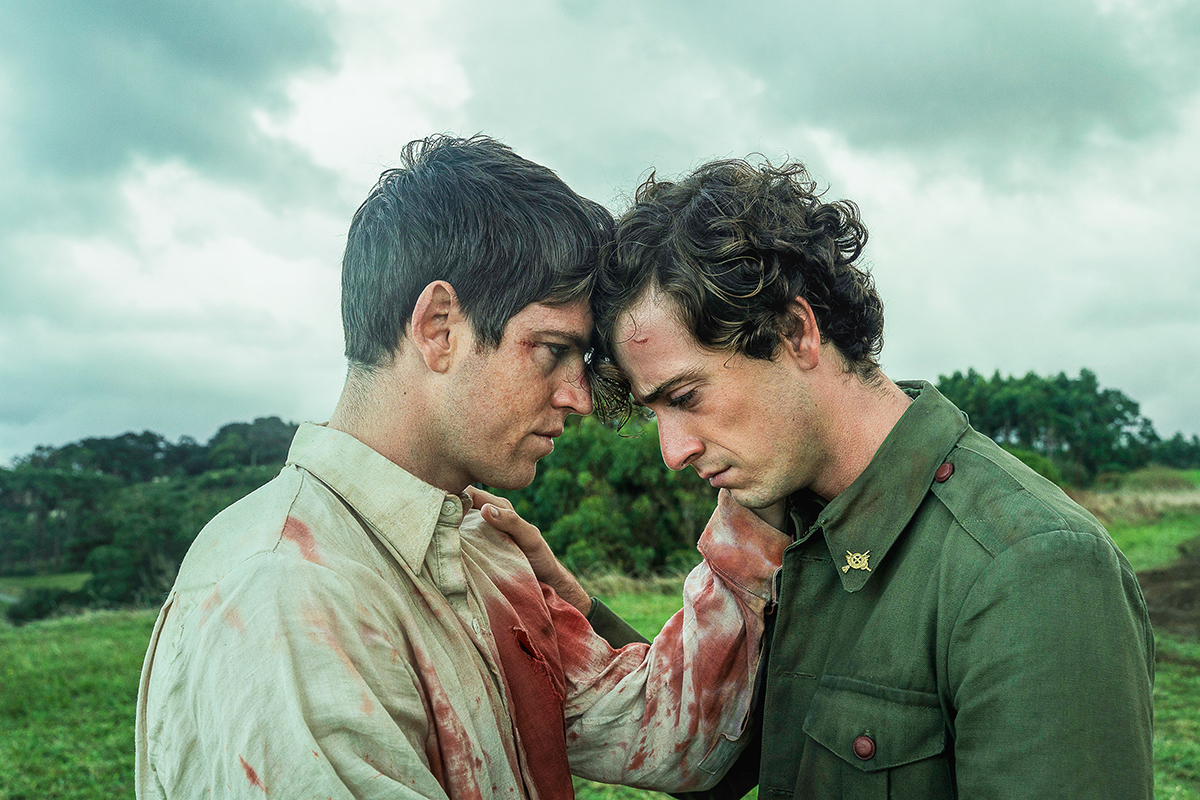
The eras-spanning Spanish epic La Bola Negra unfolds in an intricate pattern of plot and atmosphere summoned by filmmakers Javier Calvo and Javier Ambrossi (Los Javis). The duo, who also teamed to create HBO Max’s fierce trans-themed mini-series Veneno, layer the film with three interconnected plot lines: a modern-day generational mystery based in Madrid, a steamy gay romance between soldiers on opposite sides of the Spanish Civil War, and the scorching melodrama of a gay son of 1930s Granada society being blackballed from an exclusive club casino. Hence, la bola negra.
Through it all, one message that emerges especially clearly is that it’s better to be remembered as a homosexual than a fascist. Many present-day power brokers would be wise to keep that in mind.
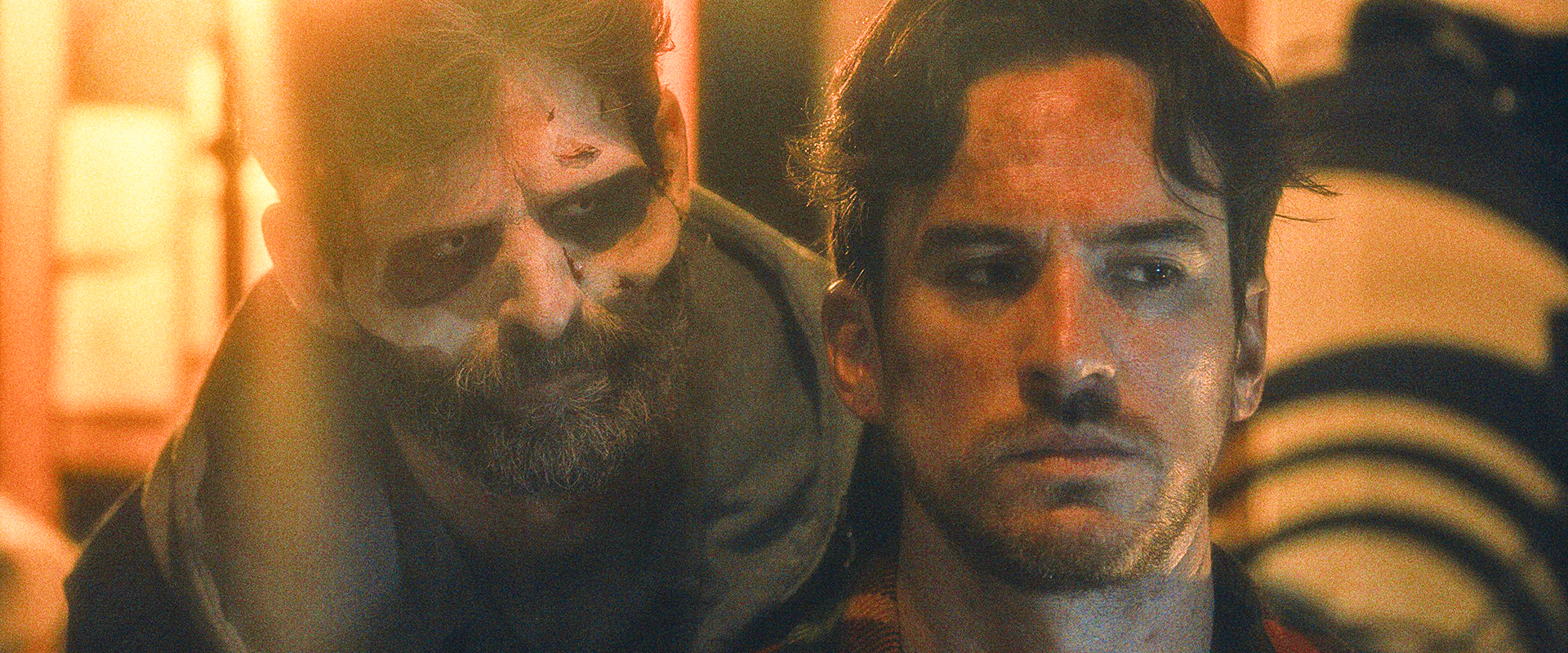
There is sex after the apocalypse, even for the last gay man on Earth, in Brendan Haley’s queer apocalyptic horror misfire Scorch Marks.
Hooking up actually isn’t what Beckett (Brandon Shypkowski) is worried about when he wakes up shirtless, alone, and nauseous on a bizarrely red-tinted morning. He’s more concerned about the apparent end of the world.
He might not be the last man on Earth, but he’s alone in this house, and, as he confirms after a quick run outside in the blood-red light, he’s seemingly the only living thing for miles.
He’s the only living thing onscreen for the film’s opening nine minutes, which is rough going, not just for the off-putting intensity of the red filter. Shypkowski’s solo act -- as Beckett thinks aloud and rants to himself, and screams at the heavens in frustration, when not throwing up -- amounts to a lot of wooden banging and heaving that might leave you begging for the other actors to clock in already.







You must be logged in to post a comment.