Oregon Gov. Kate Brown (D) signed a bill into law earlier this week making Oregon the fourteenth state to bar defendants accused of violent crimes from using their victims’ sexual orientation or gender identity to argue for a more lenient sentence.
Under the bill’s provisions, defendants accused of second-degree murder cannot argue they were “under the influence of extreme emotional disturbance” upon learning of a victim’s LGBTQ identity.
State Rep. Karin Power (D-Milwaukie), the House sponsor of the bill, said it would “send a strong message” that perpetrators will not be able to “excuse the crime simply based on who their victim is,” reports The Register-Guard.
California was the first state to ban the use of the so-called “panic defense” in 2014, with several other Democratic-leaning states following suit.
The District of Columbia also passed a law outlawing the use of LGBTQ panic defenses, but the implementation of the law has stalled due to two factors: 1) not being ready to transmit to Congress until mid-February, and 2) an additional delay in starting the clock on a 60-day congressional review period, due to increased Capitol Hill security — following the Jan. 6 breach of the U.S. Capitol building by a mob — that made it difficult to physically deliver bills to the Congress in person.
If no additional objections to the bill are raised within the next few weeks, the 60-day review period is scheduled to end soon, allowing the law to go into effect.
Gay or trans panic defenses have traditionally been employed to argue for a lesser sentence or more leniency by playing on the anti-LGBTQ prejudices of judges or juries.
Such tactics were employed — both successfully and unsuccessfully — in a number of high-profile cases involving LGBTQ murder victims, including Matthew Shepard, Brandon Teena, Marco McMillan, Gwen Araujo, Angie Zapata, and Islan Nettles.
At least eight other states are considering similar legislation to ban the panic defense, although some defense lawyers object to such bills because they allege it hamstrings their ability to defend their clients if they can’t convince judges or juries that there were extenuating circumstances leading to the crime.
HRC announced Brown had signed the bill into law earlier this week.
🥳 Good news! @OregonGovBrown has signed into law a bill ending the so-called LGBTQ “panic defense.”
The LGBT Bar Association has been one of the chief proponents of bills similar to the one signed by Brown, arguing that allowing defense lawyers to employ the argument to seek a more lenient sentence maintains an “unjust status quo.”
“The LGBTQ+ ‘panic’ defense frequently draws on stigmas particular to LGBTQ+ people, their sexualities, and their genders to justify horrific violence against LGBTQ+ individuals,” the group wrote on its website. “The defense is rooted in homophobia and transphobia.”
According to Oregon Public Broadcasting, the Oregon Department of Justice says that the state’s response hotline for bias crimes recorded 287 reports of crimes or incidents against LGBTQ people since January 2020.
The Human Rights Campaign, a national LGBTQ advocacy group, notes that anti-LGBTQ violence has risen in recent years, particularly against transgender and gender-nonconforming individuals, with 44 being killed in the United States last year — the highest number since the organization began tracking the murders of LGBTQ victims in 2013.
State Rep. Anna Williams (D-Hood River) argued during the House debate on the bill that such a law banning the use of the LGBTQ panic defense is long overdue.
“From a legal standpoint, when the state tells you that the discovery of someone’s gender, whether actual or perceived, or their sexual orientation creates a diminished capacity … the state is telling you that someone else’s life matters less because of who they love or how they express themselves,” Williams said. “I find that very offensive.”
A Florida man has been charged with a hate crime after allegedly beating a 5-year-old boy for "being gay," leaving the child with severe injuries.
According to a news release from the Polk County Sheriff's Office, Andre Brown Jr., 33, of Davenport, Florida, was watching three children when a 9-year-old girl texted her mother to report that he was physically abusing them.
"I'm scared, he's whooping him so hard, I'm scared," the girl allegedly texted her mother about the treatment the 5-year-old was receiving.
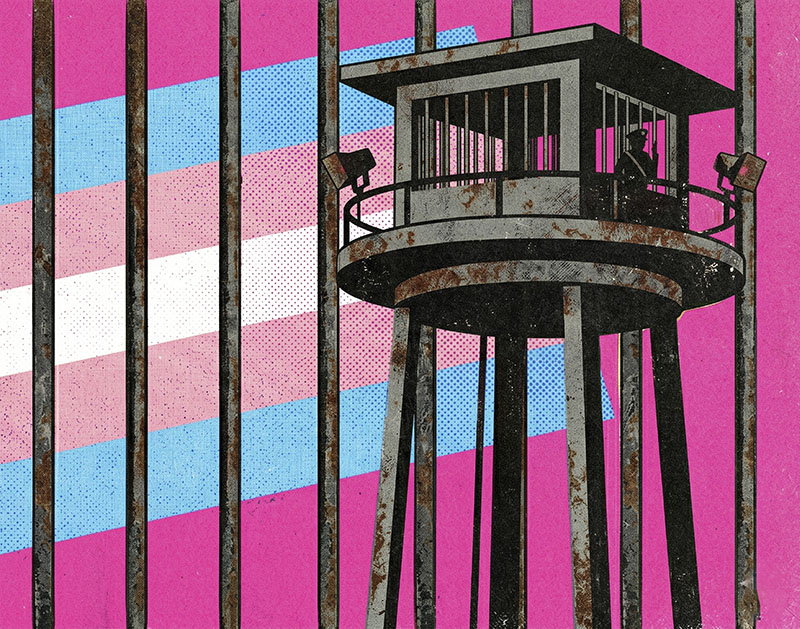
U.S. Magistrate Judge Mark Clarke, of the U.S. District Court of Oregon, issued a preliminary injunction on April 29 blocking the placement of transgender women in men's prisons and ordering the Oregon Department of Corrections to conduct individualized safety assessments for transgender inmates -- directly conflicting with President Donald Trump's executive order requiring inmates to be housed according to their assigned sex at birth.
The case stems from a class-action lawsuit brought by two prisoners on behalf of current and future transgender inmates, accusing the state of failing to protect transgender women from sexual and physical violence by housing them in men's prisons.
These are challenging times for news organizations. And yet it’s crucial we stay active and provide vital resources and information to both our local readers and the world. So won’t you please take a moment and consider supporting Metro Weekly with a membership? For as little as $5 a month, you can help ensure Metro Weekly magazine and MetroWeekly.com remain free, viable resources as we provide the best, most diverse, culturally-resonant LGBTQ coverage in both the D.C. region and around the world. Memberships come with exclusive perks and discounts, your own personal digital delivery of each week’s magazine (and an archive), access to our Member's Lounge when it launches this fall, and exclusive members-only items like Metro Weekly Membership Mugs and Tote Bags! Check out all our membership levels here and please join us today!










You must be logged in to post a comment.