Following the commercial and critical success of last year’s sequel reboot Scream, directors Matt Bettinelli-Olpin and Tyler Gillette, and screenwriters James Vanderbilt and Guy Busick, almost immediately started to work on the next film in the franchise. Yet, that development soon was overshadowed by reports that one of the franchise’s foundational stars would not be returning.
But rest easy, Roger Jackson fans, the Voice of the Ghostface Killer in every “Scream” film since the original is back in the series’ latest — and, yes, goriest — sequel, Scream VI (★★★☆☆), to once again bitchily quiz his victims on scary-movie trivia.
Somehow, after years of Ghostface murders and dozens of victims throughout California, the nefarious makers of voice modulator tech still haven’t been banned from including that voice as an option. That’s a shame, since anybody can get their hands on one of those voice boxes to jumpstart their next killing spree.
And anybody does. The usual Scream rules still apply, as the killer behind the voice and Ghostface mask might be anyone in the cast, including the so-called “Core Four” who survived the last Ghostface massacre.
Those four — sisters Sam (Melissa Barrera) and Tara (Jenna Ortega), and twins Mindy (Jasmin Savoy Brown) and Chad (Mason Gooding) — have relocated from Woodsboro, California to New York City, hoping to put an entire continent between them and their horrific shared past. Of course, the past catches up to them in the form of a new Ghostface Killer who pointedly references all the previous psychos who have donned the mask.
So are we dealing with a copycat? A psycho scary-movie stan? A former perpetrator back for more blood? The mystery loops and turns with ample suspense, appealing camaraderie from the Core Four, and buckets of blood.
Bettinelli-Olpin and Gillette double-down on the graphic, gory deaths-by-stabbing. Favoring the vigorous technique that’s all the rage with crazed movie killers these days, Ghostface pounces on his victims, and then it’s STAB-stab-stabstabstabstabstabstab. Talk about overkill.
Whereas Hitchcock’s Psycho shower scene famously never showed the killer’s knife breaking flesh, here the camera lingers on impalements and slashings, to sometimes bitter effect. And, while the Scream movies have gotten progressively more gruesome — perhaps to keep up with audience appetite, or our exposure to all kinds of violence — they are not, in direct proportion, getting any funnier.
Franchise creators Kevin Williamson and Wes Craven mastered a blend of slasher horror and self-referential dark humor that only occasionally bubbles to the surface in Scream VI. A deadpan line of dialogue noting that a suspect was obsessed with Argento might get a chuckle out of serious horror fans, but references aren’t jokes. The comedy needs more punch.
The stalk-and-chase sequences, on the other hand, are pretty nifty — tense, twisting, and crisply edited, as in a standout scene following the Core Four onto the subway during Halloween weekend. The train cars and platforms are loaded with costumed revelers, giddy, noisy, and free, though some are guised balefully as familiar movie monsters. Everywhere, it seems, our fleeing Four are tossed in a sea of staring Freddy Kruegers, Pinheads, and Ghostfaces.
Fearing masked strangers in public places takes on new meaning in the COVID era. By the same token, Scream takes on new meaning set in a city of countless strangers.
The Four feel paradoxically more alone in a place like this — so alone, that they welcome the assistance of self-serving journalist Gale Weathers, portrayed as ever by Courteney Cox, who still looks like she’s having a ball playing the character, and definitely knows a thing or two about being there for her friends.
Scream VI is playing in theaters nationwide. Visit www.fandango.com.
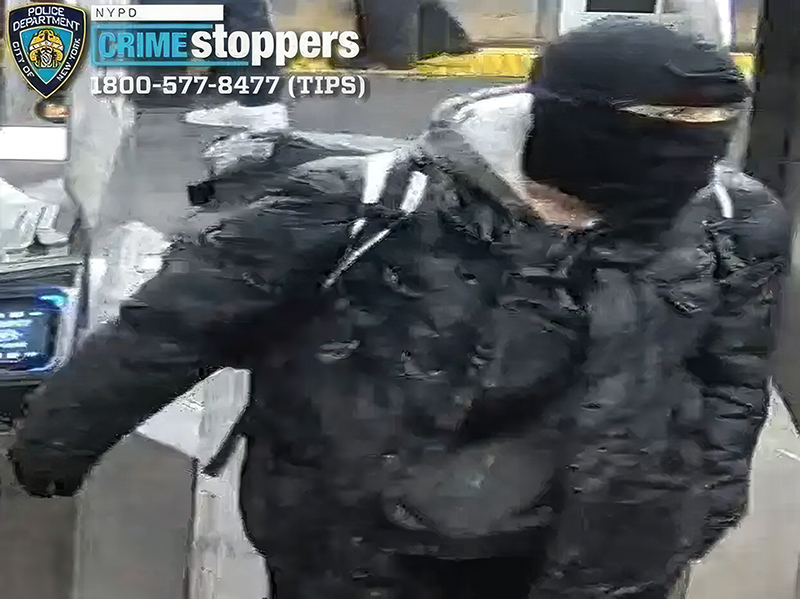
A New York City subway rider was slashed in the face earlier this month by an unidentified assailant who took offense to him kissing his transgender partner. The attack occurred around 7:50 p.m. on January 10 aboard a southbound No. 6 train as it traveled through Manhattan.
According to police, the 28-year-old victim was kissing his partner when the suspect began shouting anti-gay slurs. The verbal abuse quickly escalated into a physical confrontation. During the argument, the suspect struck the victim with a sharp object, causing a deep laceration on the right side of his face, according to New York CW affiliate WPIX.
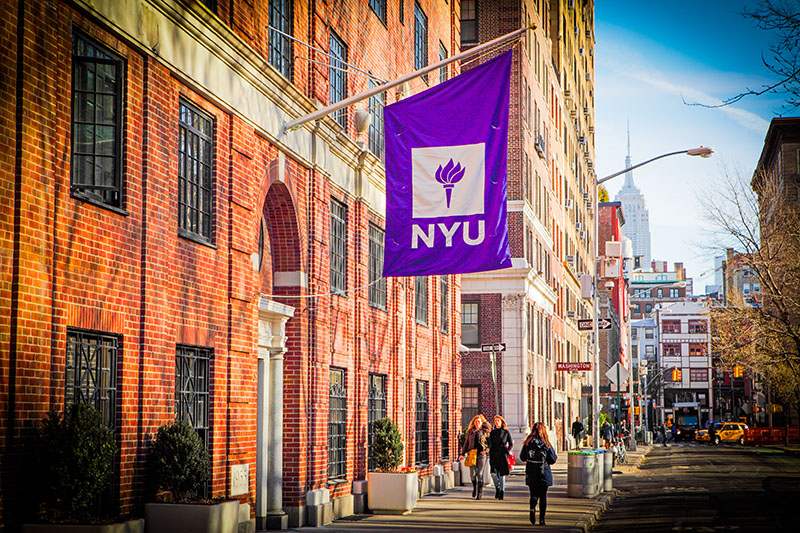
The New York Police Department has increased its security presence at New York University after the school received multiple emails containing bomb threats, anti-LGBTQ rhetoric, and other bigoted messages.
On January 22, shortly after 7 a.m., NYU announced that two emails had threatened violence at separate on-campus locations. One email contained a bomb threat targeting Palladium Residence Hall, while the other "included a threat to space within the Silver Center," home to the university’s College of Arts and Sciences, reports Gay City News.
Electronic downloads of Heated Rivalry, the second novel in author Rachel Reid’s six-book Game Changer romance series, surged after New York City Mayor Zohran Mamdani name-dropped the book while addressing the public during a major winter storm on Sunday.
As the storm battered the East Coast and dumped at least 11 inches of snow on New York City, Mamdani urged residents to stay home to avoid endangering themselves and to prevent interference with city sanitation crews clearing the streets. He also offered suggestions for how New Yorkers might spend their time indoors.
These are challenging times for news organizations. And yet it’s crucial we stay active and provide vital resources and information to both our local readers and the world. So won’t you please take a moment and consider supporting Metro Weekly with a membership? For as little as $5 a month, you can help ensure Metro Weekly magazine and MetroWeekly.com remain free, viable resources as we provide the best, most diverse, culturally-resonant LGBTQ coverage in both the D.C. region and around the world. Memberships come with exclusive perks and discounts, your own personal digital delivery of each week’s magazine (and an archive), access to our Member's Lounge when it launches this fall, and exclusive members-only items like Metro Weekly Membership Mugs and Tote Bags! Check out all our membership levels here and please join us today!





You must be logged in to post a comment.