Pete Docter, Pixar’s chief creative officer, has revealed why the studio erased allusions to the title character’s LGBTQ identity from the 2025 animated film Elio.
The film follows the title character, a lonely boy who is beamed into outer space by an intergalactic organization after being mistaken for Earth’s leader. Pixar had originally hired openly gay director Adrian Molina — the co-director of the studio’s Oscar-winning 2017 hit Coco — to helm the film, which he based on his own childhood.
While the original version of Elio didn’t explicitly mention the title character’s sexual orientation or show him coming out, Molina included small hints that the 11-year-old protagonist was gay. In one scene, Elio staged a “trash-ion show,” wearing a pink tank top made from garbage. In others, he rode a pink bike and daydreamed about raising a child one day with a male crush.
The allusions to LGBTQ identity were ultimately cut from the film, with Elio presented in a more traditionally masculine way. References to his “passion for environmentalism and fashion” were also erased, and entire scenes were removed.
The changes were ordered by studio executives after a 2023 test screening in which viewers said they liked the movie. But when asked how many would see it in a theater, no one raised their hands — setting off panic among Pixar higher-ups, including Docter.
In a recent interview with The Wall Street Journal, Docter said the LGBTQ themes were removed from Elio because Pixar did not want the film to cover topics children either weren’t prepared for or hadn’t discussed with their parents.
“We’re making a movie, not hundreds of millions of dollars of therapy,” Docter told the newspaper, adding that “some parents didn’t want entertainment to force them to have a conversation they weren’t ready for with their children.”
He added, “As time’s gone on, I realized my job is to make sure the films appeal to everybody.”
Ultimately, Elio opened to record-low numbers for Pixar, debuting to just $20.8 million domestically and $14 million overseas. The film went on to earn $150 million worldwide but also cost $150 million to produce, not including global marketing expenses. According to The Wall Street Journal, Pixar’s parent company Disney lost about $100 million on the movie.
Some critics argued that removing the film’s gay-coded references may have contributed to its box office failure, saying the alteration of Elio’s personality and identity resulted in a less coherent film. The drastic changes led some creatives working on the project to step down, with Molina eventually departing and being replaced by co-directors Madeline Sharafian and Domee Shi.
“The exodus of talent after that cut was really indicative of how unhappy a lot of people were that they had changed and destroyed this beautiful work,” former Pixar assistant editor Sarah Ligatich, who provided feedback on the film as a member of the company’s internal LGBTQ group PixPRIDE, told The Hollywood Reporter last year.
As Justin Carter noted in a piece for Gizmodo, Pixar films have previously explored potentially heavy or controversial themes, including becoming a widower, speculation about characters having extramarital affairs, the complications of adoption, preteen emotions run amok, running away from home, environmental collapse, existential dread, motherhood, and job burnout.
“Suffice to say, Pixar specializes in playing therapist or mediator for many things parents probably wouldn’t want to chat about with their young’uns,” Carter wrote. “Docter’s comment sucks, and illustrates how empathy and personhood only goes so far.”
Pixar has previously been accused of censoring or removing LGBTQ characters and content from its projects. When parent company Disney faced internal backlash from LGBTQ employees over its initially neutral stance on Florida’s so-called “Don’t Say Gay” bill, Pixar employees blasted Disney and accused the company of deliberately axing LGBTQ content.
Thus far, the only explicitly LGBTQ-focused work released by Pixar is the short film Out, in which a man preparing to move in with his boyfriend struggles to come out to his parents when they drop by for a surprise visit. The film was not released theatrically, instead premiering on the Disney+ streaming platform.
Russian television viewers have noticed that a well-known episode of SpongeBob SquarePants was altered to remove a rainbow, apparently as part of the country's sweeping censorship of media and symbols deemed pro-LGBTQ.
According to independent news outlet ASTRA, the Russian television channel 2x2 replaced the rainbow with a solid yellow arc in a scene where SpongeBob waves his arms while talking about the fun of using one's imagination.
The clip of SpongeBob waving his arms to reveal the rainbow has circulated for years as a popular social media meme. Although the scene has nothing to do with LGBTQ identity, there has long been speculation that SpongeBob and his friend Patrick "code" as a gay couple, which may have contributed to the decision to erase the rainbow.
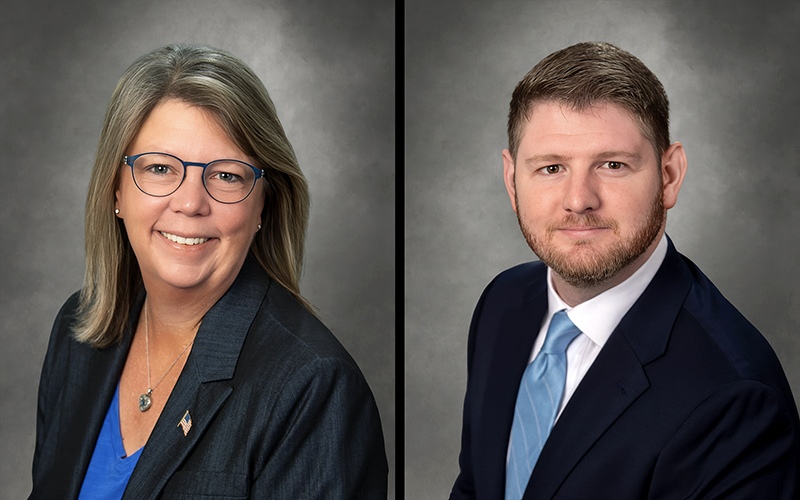
The Fairfax County School Board has elected its first-ever out lesbian as chair of the board governing Virginia's largest school system and an out bisexual man as vice chair.
At its July 9 meeting, the 12-member board selected Robyn Lady (Dranesville), who became the first out lesbian elected to the Fairfax County School Board in 2024, as chair for the 2026-27 school year.
Lady most recently served as the board's vice chair under Sandy Anderson's leadership as chair. She also chaired the Governance Committee, where she oversaw successful revisions to the school district's grading policy. In addition, she served as the board's liaison to the School Health Advisory Committee, the City of Fairfax School Board, and the Fairfax County Athletic Council.
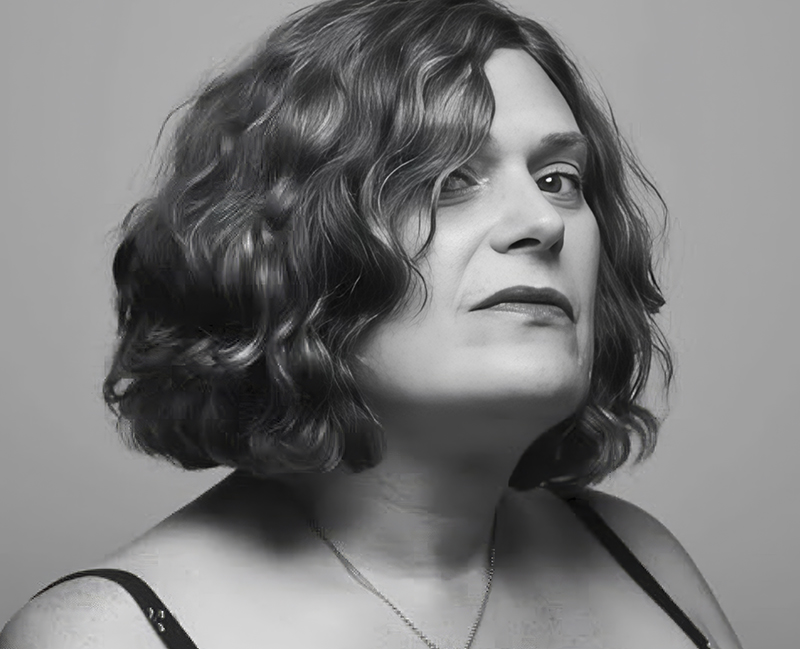
Lilly Wachowski is trying to get her latest project, The Hunted, into production. But the acclaimed filmmaker says no one in Hollywood wants to finance the film because of its all-trans cast.
"People like it, but they really don't want to make it because it's wall-to-wall trans cast," Wachowski, who came out as transgender in 2016, told KCRW's The Business podcast earlier this month. "I have to get creative and figure out different ways that I can get this in front of people."
These are challenging times for news organizations. And yet it’s crucial we stay active and provide vital resources and information to both our local readers and the world. So won’t you please take a moment and consider supporting Metro Weekly with a membership? For as little as $5 a month, you can help ensure Metro Weekly magazine and MetroWeekly.com remain free, viable resources as we provide the best, most diverse, culturally-resonant LGBTQ coverage in both the D.C. region and around the world. Memberships come with exclusive perks and discounts, your own personal digital delivery of each week’s magazine (and an archive), access to our Member's Lounge when it launches this fall, and exclusive members-only items like Metro Weekly Membership Mugs and Tote Bags! Check out all our membership levels here and please join us today!







You must be logged in to post a comment.