E. Jean Carroll considers herself an eccentric personality, she says in Ask E. Jean, Ivy Meeropol’s brisk, engaging documentary about the larger-than-life former columnist and TV host, and, lately, persistent nemesis of Donald Trump.
Judging by her public persona, and this film, Carroll’s self-assessment feels correct. Some might even call her a kook, viewing her present-day hermit’s life deep in the woods somewhere, or watching her appearances on ’90s talk shows assembled here into a succinct introductory montage.
There she is on Oprah, counseling a couple on how to really enjoy sex, on The Charles Grodin Show, flirting with the host while seated between Montel Williams and Dick Clark, on her own live TV talk show Ask E. Jean, doling out frank love life advice to grateful callers.
Always ready to say something brash or provocative, and clearly in love with the camera, Carroll was, and is, a charismatic onscreen personality. Meeropol (HBO’s Bully. Coward. Victim. The Story of Roy Cohn) slyly draws parallels between her film’s extroverted subject and another fast-living New Yorker prominent in the ’90s media, Donald Trump.
Both built their brand on confidence. Carroll credits her rip-roarin’, red-headed mother Betty, a Republican politician in their home state of Indiana, for hers. Both are masterful purveyors of self-promotion. A bouncy sequence combining Carroll’s contemporary narration with old photos and articles details her rise from Montana housewife submitting stories and quizzes to periodicals, to landing a job at Esquire Magazine in New York, then creating her instantly popular “Ask E. Jean” column at Elle Magazine.
The column was so successful, she was invited to turn it into TV for nascent cable network America’s Talking (precursor to MSNBC) by then-network president Roger Ailes. Airing live, Ask E. Jean, the host boasted, would be “The only show on television which stands between the American public and the total brink of hysteria.”
Carroll and Trump both loved to talk a big game. Also, in those days, they ran in similar New York media and society circles, as evidenced by the infamous photo of Carroll, smiling “bigly,” as she and her then-husband, local New York news anchor John Johnson, meet Trump and his first wife Ivana on a receiving line at an event.
Of course, in the film we also hear Trump say — years later when he’s being deposed in Carroll’s civil case against him for sexual assault and defamation — that he’s never met her. “I have no idea who this woman is,” he claims. In defense of her accusation of rape, he insists publicly, “She’s not my type.”
Carroll first revealed the attack in a #MeToo-inspired New York Magazine article listing “The Most Hideous Men in My Life.” She says it was Trump’s public denials and insults after the article was published that compelled her to file suit. “He called me a liar,” she fumes, and that was the trigger for her to finally take him to court.
The movie serves up its conventional, clip-assisted biography of Carroll really as an appetizer to its persuasive play-by-play of the two major lawsuits she filed against President Trump, and won. The standout scenes in that play-by-play are the deposition videos, his and hers, riveting testimony in what boils down to a she-said/he-said versus a man many consider one of the most prodigious prevaricators of all time.
Obviously, the statement that he’s never met her is debunked by the photo of him meeting her. The statement that she’s not his type, Trump debunks himself. In video many viewers will have already seen, Trump looks at the photo of himself standing face-to-face with this woman he claims isn’t his type, and when asked to identify the woman, he sputters, “That’s Marla. That’s my wife.”
The interviewer, Carroll’s attorney Robbie Kaplan, gives him a few chances to get it right, but no. In amusing video that many viewers may not have seen, Trump apparently also does not recognize that his actual wife at the time, Ivana, is in the photo standing right next to him. Pointing to her in the photo, he asks, “Who’s that?”
Meeropol and editors Leah Goudsmit and Ferne Pearlstein let those moments breathe, so the defendant’s feints and denials, or perhaps genuine confusion, can speak for themselves.
Framing the video as the smoking gun in a case lacking in much physical evidence, the film posits that the case likely turned on the simple fact that the jury believed her, and they did not believe him. We can see why that would be the case.
Certainly it aids Carroll’s case that she produced material witnesses, the writer Lisa Birnbach and newswoman Carol Martin, also interviewed here. Both close friends corroborate that Carroll told them about the attack in the hours after it happened. The jury at trial found Trump liable for sexual assault and defamation to the tune of five million dollars.
But since that wasn’t enough to convince him to stop defaming Carroll in public statements, she sued again, and as we all know, won again, adding another $83 million in damages. This film was completed before Carroll emerged victorious in all of Trump’s subsequent appeals, but still transmits an air of triumph, especially in a conclusion painting Carroll as a feminist hero standing up for all women.
The messaging feels exaggerated, though. While Carroll’s crusade for women and assault victims registers as sincere, the film strongly suggests this particular feud was personal. She previously had not always used her bully platform to support victims.
In perhaps the most revealing source footage, we see Carroll in a ’90s appearance on Geraldo Rivera’s news show calling Anita Hill and Paula Jones “wimps” for not just speaking up and shutting down the offensive actions of their respective harassers.
It’s a powerful and brave acknowledgment that it wasn’t until Carroll was herself a victim that she truly took their stories into account. Now, she offers her story to teach a lesson, and to inspire others to stand up for themselves, and for other survivors still seeking justice.
Ask E. Jean (★★★☆☆) is not rated, and opens Friday, July 24 for a one-week engagement at Angelika Pop-Up at Union Market. Click here for tickets.
The film’s director/producer Ivy Meeropol will be in-person for Q&As on Friday, July 24 after the 6:50 p.m. screening, and on Saturday, July 25 with an introduction by Rep. Jamie Raskin (MD-8th Congressional District), at 6:15 p.m., followed by a Q&A moderated by independent journalist Aaron Parnas.
In Steven Spielberg movies, it's not the aliens you should fear. They don't incubate inside human bodies, à la Alien, or annihilate politicians with fiery ray guns, as in Mars Attacks!. In childhood-defining masterpieces like 1977's Close Encounters of the Third Kind or 1982's E.T. The Extra-Terrestrial, they come in peace and inspire more wonder than menace. If we fear anyone, it's the human officials who seek to capture, control, or suppress them.
At 79, the age at which his hero John Ford died, Spielberg still retains that childlike wonder -- and distrust of authority figures who seek to snuff it out. As he approaches the sunset of his career, Spielberg is coming full circle. With his last film, 2022's sneakily complex The Fabelmans, the beloved filmmaker flipped the camera on his own childhood traumas. Working in a more broadly crowd-pleasing mode, and inspired by a New York Times article about the Pentagon's secret U.F.O. program, he now revisits a different facet of his past: his lifelong fascination with aliens, the theme that powered much of his early moviemaking, all the way back to his unseen 1964 debut Firelight.
The U.S. Department of Education, which launched an investigation into a Colorado public school district for allegedly violating Title IX by allowing transgender athletes to compete on girls' sports teams, may have egg on its face after failing to identify any transgender athletes.
As first reported by Chalkbeat, the Education Department's Office for Civil Rights (OCR) claimed that, as part of its investigation, it obtained athletic rosters from Jefferson County, Colorado -- home to the state's second-largest public school district -- showing that "male students occupy 61 roster positions on girls' sports teams."
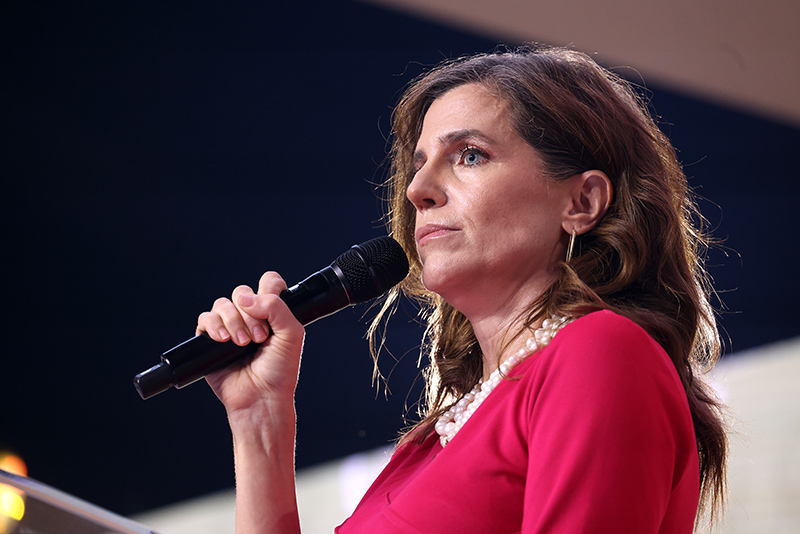
U.S. Rep. Nancy Mace (R-S.C.), one of the transgender community's fiercest opponents, is reportedly considering a bid for the U.S. Senate seat left vacant by the sudden death of Sen. Lindsey Graham on Saturday, July 11.
Graham, 71, spent 31 years in Congress, serving four terms in the U.S. House before winning four terms in the Senate. He developed a reputation as one of the Republican Party's most hawkish voices on foreign policy, consistently advocating for U.S. military intervention abroad and a strong military presence overseas.
According to a statement from his congressional office, Graham died from an aortic dissection caused by arteriosclerotic cardiovascular disease, a condition in which plaque buildup hardens and narrows the arteries, restricting blood flow and increasing the risk of heart attack or stroke.
These are challenging times for news organizations. And yet it’s crucial we stay active and provide vital resources and information to both our local readers and the world. So won’t you please take a moment and consider supporting Metro Weekly with a membership? For as little as $5 a month, you can help ensure Metro Weekly magazine and MetroWeekly.com remain free, viable resources as we provide the best, most diverse, culturally-resonant LGBTQ coverage in both the D.C. region and around the world. Memberships come with exclusive perks and discounts, your own personal digital delivery of each week’s magazine (and an archive), access to our Member's Lounge when it launches this fall, and exclusive members-only items like Metro Weekly Membership Mugs and Tote Bags! Check out all our membership levels here and please join us today!










You must be logged in to post a comment.